Why quartz glass resists thermal shock
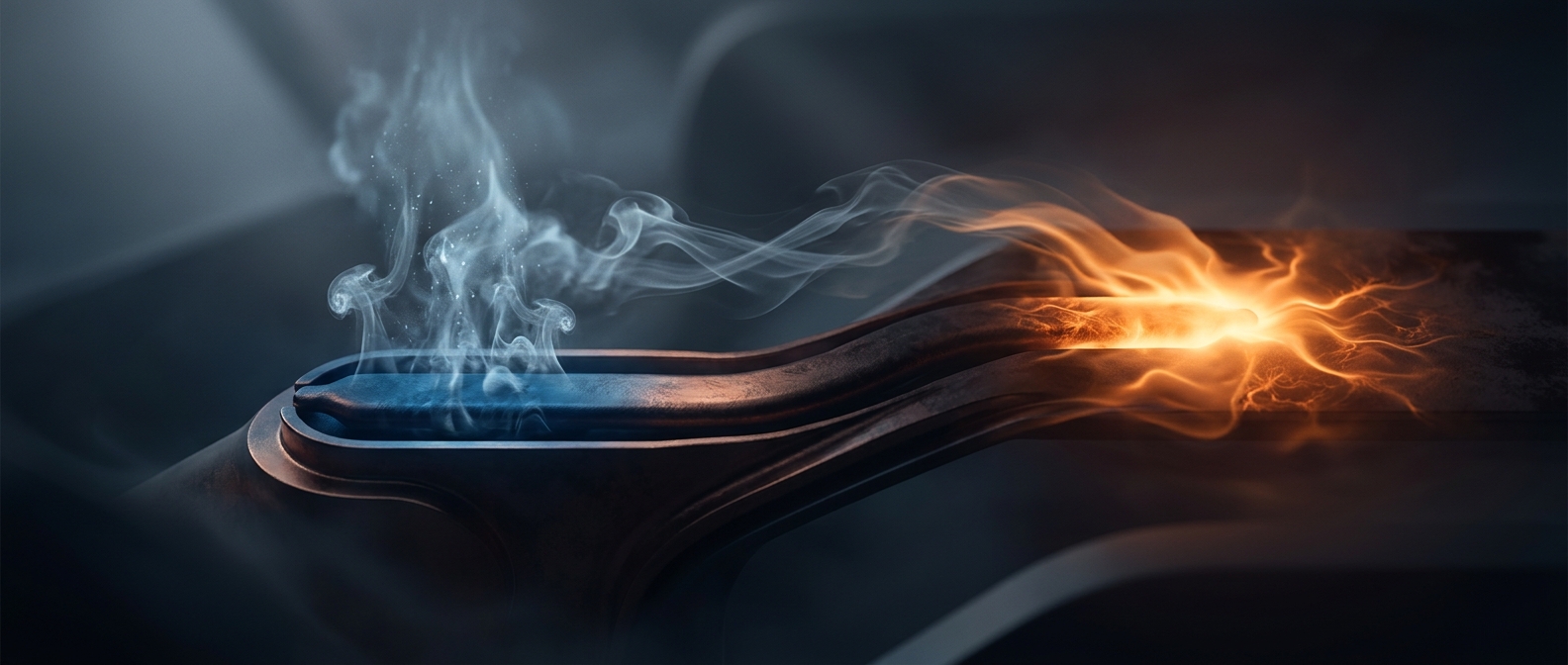
A sudden temperature change is dangerous for glass because its surface and interior do not heat or cool at the same speed. The colder outer layer tries to contract while the hotter material beneath it remains expanded. That mismatch creates stress, and ordinary glass can crack when the stress becomes too great.
Fused quartz—glass made almost entirely of silica—has an unusually low thermal expansion, meaning it changes size very little as its temperature changes. Its silica atoms form a connected, disordered network rather than the orderly repeating pattern of a crystal. When heated, that network can accommodate some movement without the whole object expanding much. With less expansion and contraction, a steep temperature gradient creates less stress.
Useful where temperatures swing fast
This resistance matters in equipment that is heated directly and then cooled, including laboratory vessels and industrial parts. A crucible, for example, must contain material at high temperatures; if it were easily cracked by uneven heating or cooling, it could fail during handling or disrupt a process.
Fused quartz is not unbreakable: flaws, impacts, uneven heating, and the object’s shape still matter. Its advantage is that a rapid temperature change is less likely to produce the damaging internal strain that ordinary glass experiences. That lets a vessel move between extremes without requiring the temperature to change only gradually.