How Pressurized Carbon Dioxide Removes Caffeine
Coffee beans are decaffeinated while they are still green, before roasting. In the carbon-dioxide method, the beans are first exposed to water or steam so they swell and their pores open. That makes it easier for caffeine inside the bean to move outward.
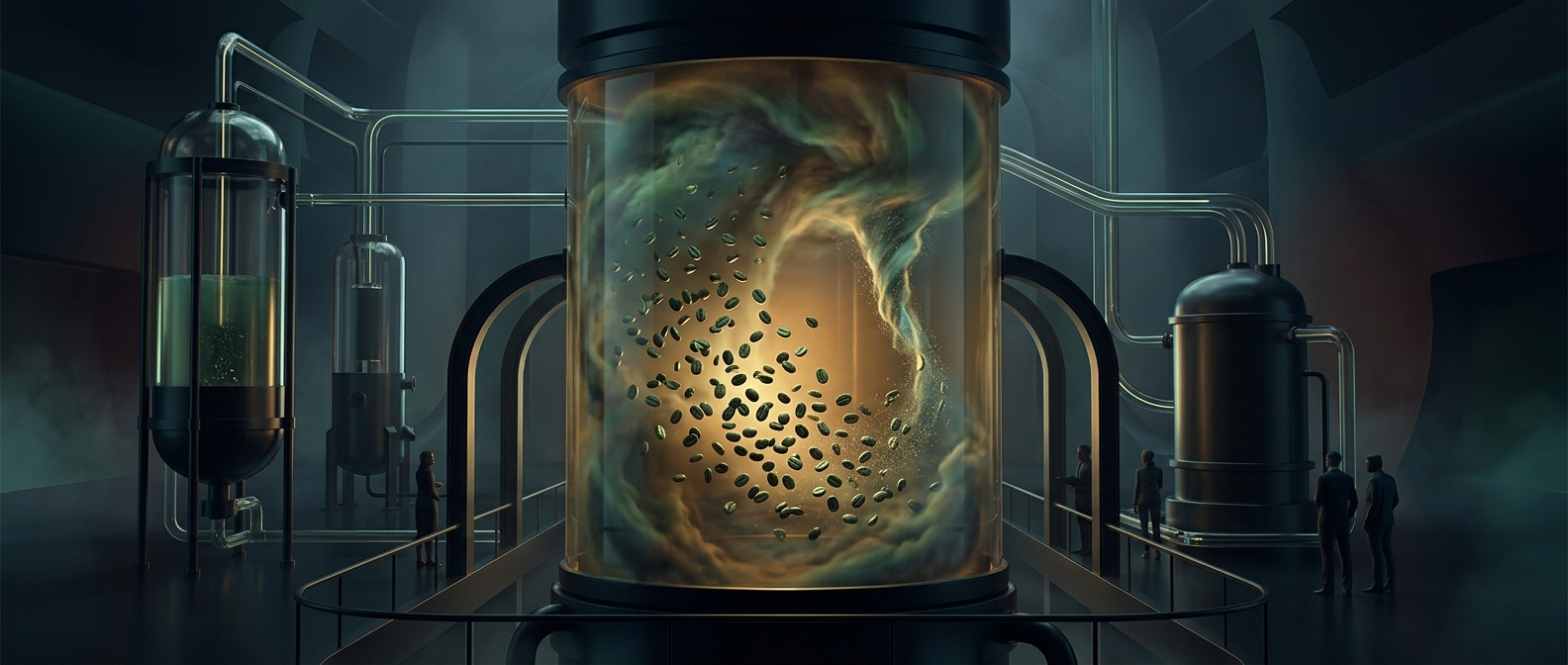
The beans are then placed in a pressure vessel, where carbon dioxide is brought to conditions that make it a supercritical fluid: it flows like a gas but can dissolve substances like a liquid. It penetrates the beans and picks up caffeine, which dissolves readily in the pressurized CO₂.
Separating Caffeine From the Beans
The caffeine-bearing CO₂ is moved away from the beans and passed through a separate chamber or filter that captures the caffeine. The carbon dioxide can then be reused. This cycle continues until the beans have lost most of their caffeine; they are dried and later roasted as usual.
The method relies on a useful difference in solubility. Under these conditions, CO₂ extracts caffeine more readily than many of the compounds responsible for coffee’s aroma and taste. It does not leave every flavor compound untouched, but it can preserve much of the bean’s character while reducing caffeine.
Because the extraction happens before roasting, the beans still develop their familiar roasted flavors afterward. The result is decaf made not by replacing the coffee’s flavor, but by using pressure and a recyclable solvent to draw out one particular ingredient first.