How the V shape shortens an engine
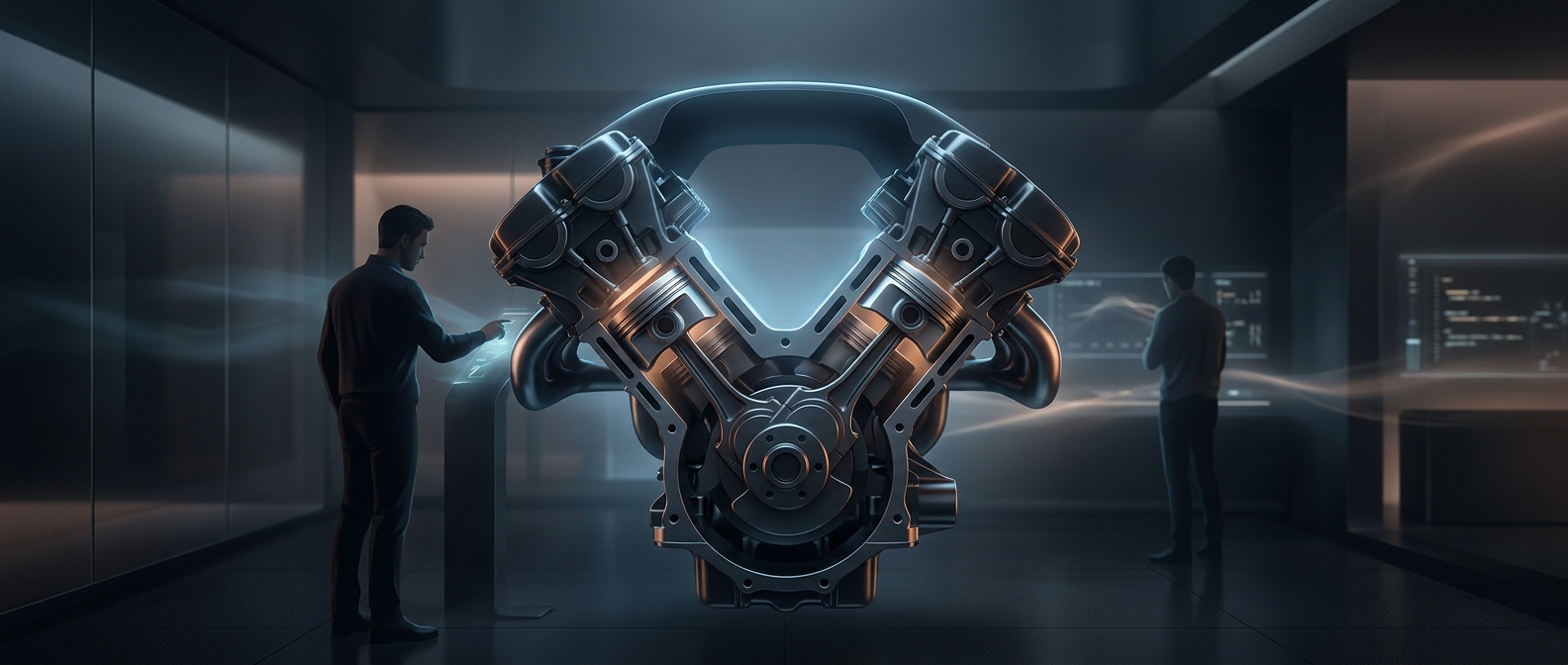
In an inline engine, every cylinder sits in a single row, so adding cylinders generally adds length. A V engine splits them into two angled banks. Pistons in both banks connect to the same crankshaft—the rotating shaft that turns their up-and-down motion into rotation—so the cylinders can be arranged in two rows without requiring two separate engines or crankshafts.
The key is where the cylinders sit, not a special shortcut in how they work: viewed from the front, the banks form a V, while the crankshaft runs beneath them. This lets an engine fit more cylinders into a shorter space from front to back than an inline layout with the same number of cylinders. That compact length can make it easier to package a larger engine in a vehicle.
Compactness comes with a tradeoff
The V layout uses space in another direction: it is generally wider than a comparable inline engine. It also gives designers two cylinder banks to accommodate, which can mean more involved arrangements for the cylinder heads, intake, and exhaust. The precise balance and packaging depend on the engine’s design, including the angle between its banks.
That tradeoff is why the V shape matters: it does not make an engine smaller in every dimension, but it can move cylinders out of a long row and into a more compact front-to-back footprint.