A Vacuum Turns Ghost-Hunting Into a Tug-of-War
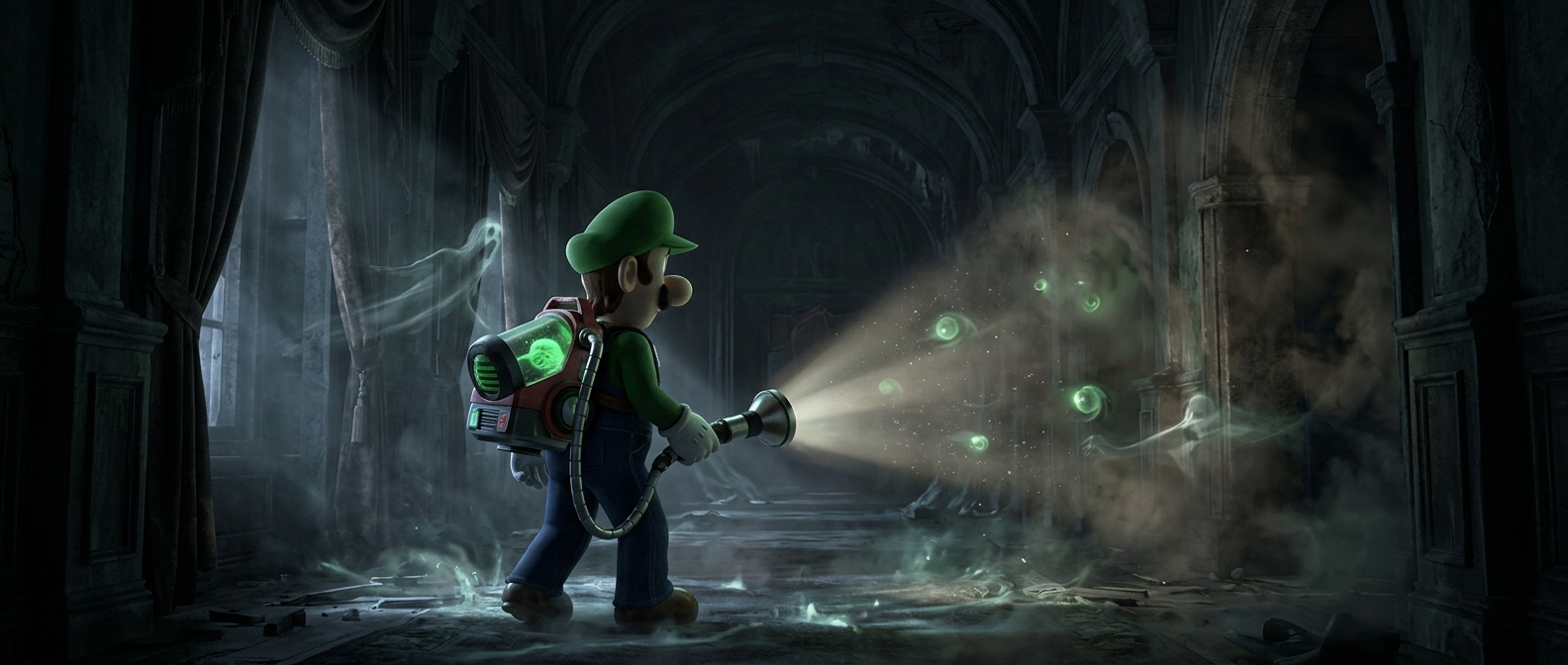
In Luigi’s Mansion, the Poltergust is more than a way to remove ghosts: it makes each encounter feel like a physical struggle. Luigi first exposes a ghost with his flashlight, then tries to draw it into the vacuum. Once the suction catches, the ghost pulls away, and the player has to counter its movement rather than simply aim and fire. The tool’s awkwardness suits Luigi, who is less a confident action hero than a nervous man trying to hold his ground.
That sequence gives the game a distinct rhythm: reveal a threat, get close enough to engage it, then wrestle it under control. The vacuum’s long hose also makes the struggle visible on screen, so capturing a ghost feels less like a hit registering and more like hauling something stubborn across a room.
The Same Tool Makes the Mansion a Puzzle
The Poltergust also interacts with the mansion itself. Luigi can suck up loose objects and pull on things in the environment, turning a room’s furniture and clutter into clues. A space that first seems like a dark backdrop can become something to inspect: What moves? What can be pulled? What might be hiding nearby?
This keeps exploration and combat connected. The player learns to test the room with the same device used to fight its inhabitants, while unlocking more of the mansion gives that searching a practical purpose. The vacuum makes Luigi’s vulnerability part of the game’s design: he cannot just overpower the mansion, so he has to investigate it and work each encounter out.