Why Tomb Raider Makes Archaeology Physical
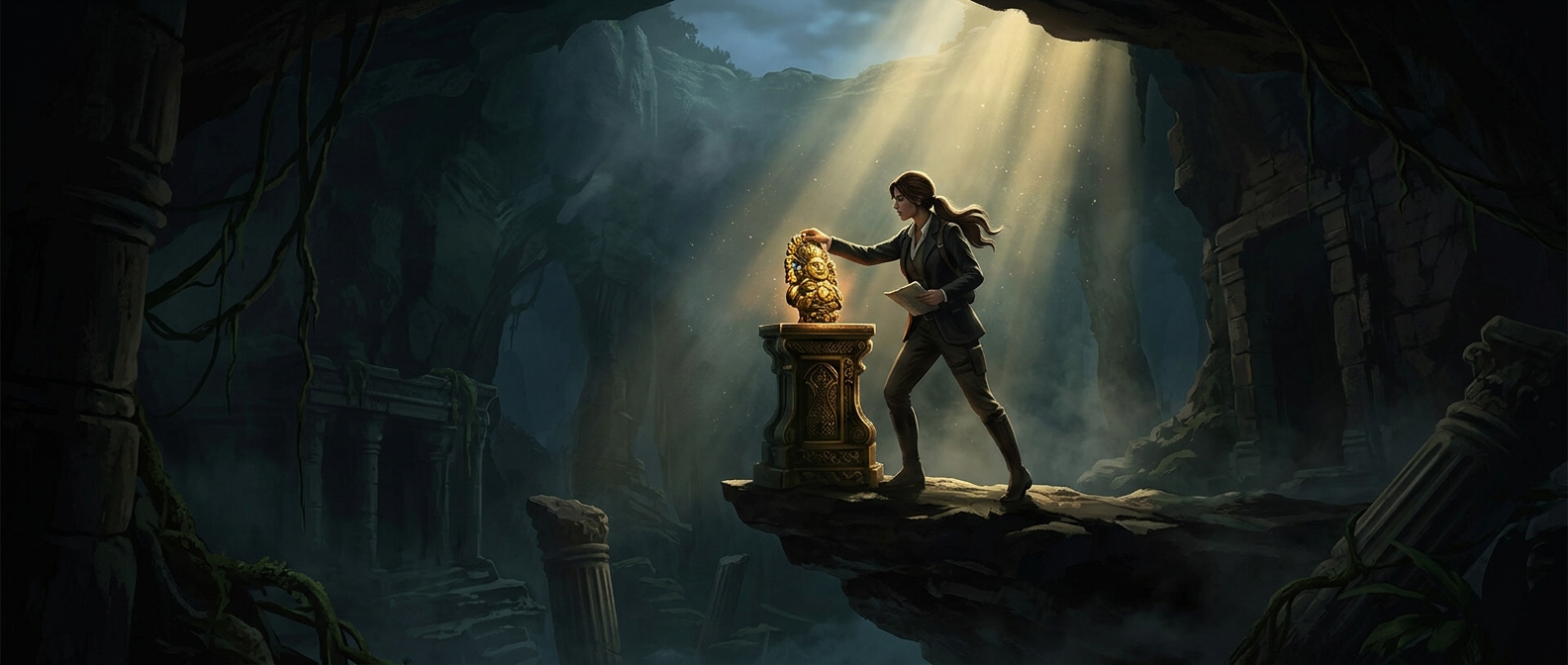
In an adventure game, finding an object is more satisfying when the player has to reach it. Tomb Raider turns a hidden relic into the payoff for navigating a dangerous space: Lara climbs ledges, crosses traps, and solves puzzles before she can claim what lies at the end. The tomb is not just a backdrop; it is a sequence of obstacles that makes discovery feel earned.
That structure also shapes the game’s version of archaeology. Real archaeological work depends on careful recording and preserving an object’s context—where it was found and what surrounded it. Tomb Raider instead borrows the dramatic image of the lone explorer who uncovers a treasure and moves on. That shortcut keeps the focus on momentum, danger, and individual skill rather than on the slower work of studying a site.
The Backpack Is a Game Interface
The improbably capacious backpack is part of the same compression. Games need a clear way to represent what a character has collected, even when carrying it would be physically impossible. The inventory turns discoveries into manageable game objects: a player can gather valuables, weapons, and tools without stopping the adventure to account for weight or transport.
This creates a useful tension. The story presents relics as ancient and precious, while the mechanics treat them as things the player can pick up and store. The tomb’s obstacles make the treasure feel momentous; the inventory makes it easy to keep playing. That gap is one reason Tomb Raider’s archaeology reads as action fantasy rather than a simulation of fieldwork.