Two polar worlds, separated by oceans
The Arctic and Antarctica may both look like realms of ice, but they are not neighboring habitats. The Arctic is an ocean ringed by northern continents; Antarctica is a continent surrounded by the Southern Ocean. Between them lie thousands of miles of open water and warmer regions. No natural land route connects the two, and polar bears are not ocean-crossing migrants.
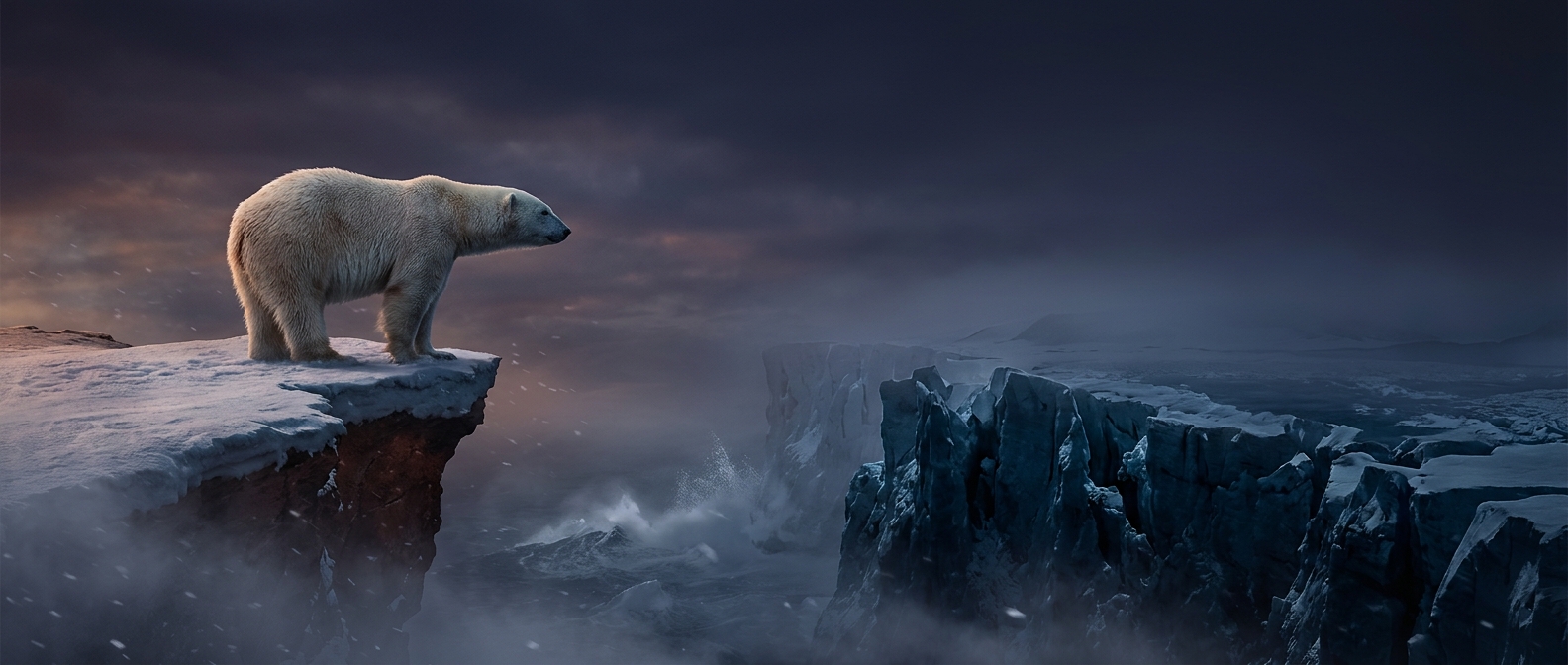
That geography kept their wildlife histories separate. Polar bears developed in the north from ancestors adapted to Arctic conditions. Penguins evolved in the Southern Hemisphere, where many species breed on coasts and islands. Their resemblance as cold-climate animals is a result of adapting to similar challenges—not evidence that they share a home range.
A meeting would change the food chain
On parts of Antarctica, penguins can nest on land without a large, native land predator stalking their colonies. That does not make them universally safe: eggs and chicks face other threats, and adult penguins encounter predators in the sea. But a bear on shore would introduce a kind of hunting pressure the local birds are not adapted to evade.
Moving polar bears south would therefore be more than a wildlife relocation. It could disrupt colonies and the surrounding ecosystem, while the bears themselves would need suitable prey and habitat. Antarctica’s isolation is not just a line on a map; it is part of what has shaped which animals live there—and why a penguin colony has never had to watch for a bear on the beach.