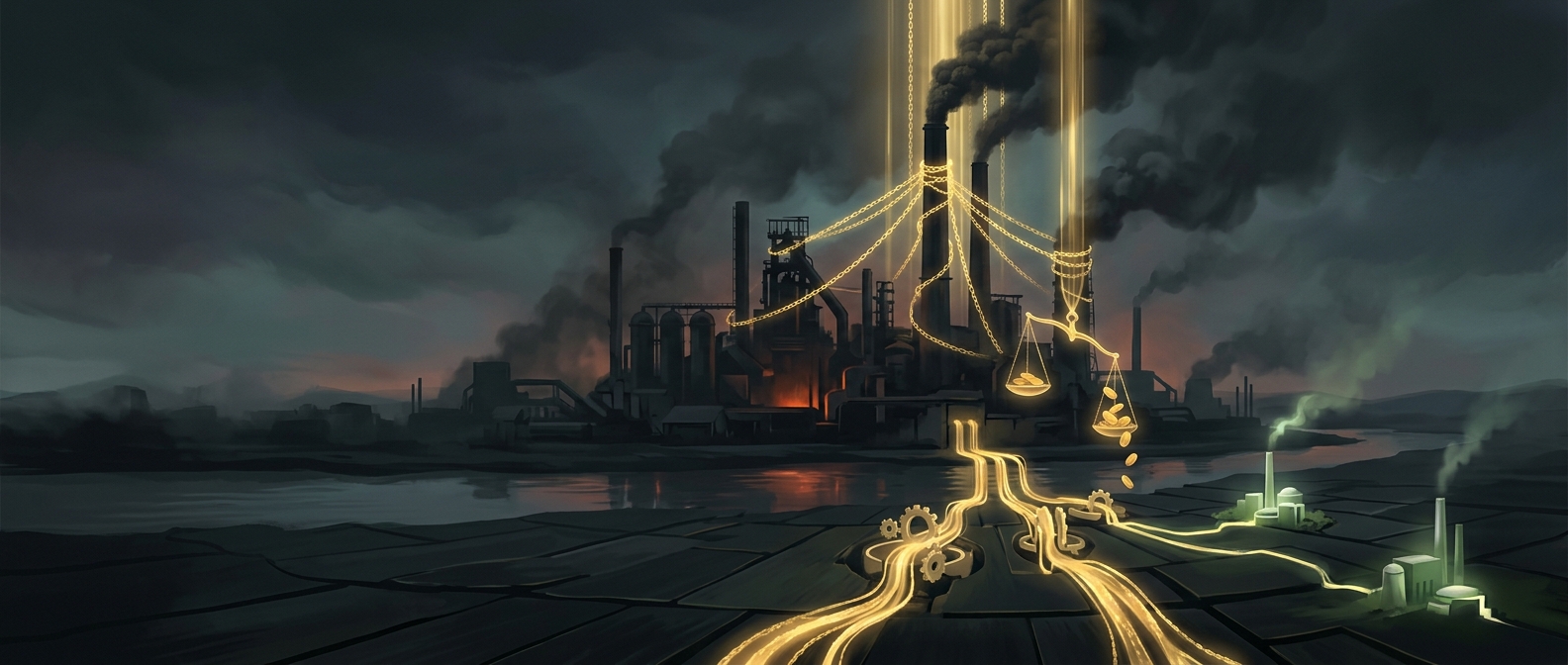
The bill for pollution does not stop at the factory gate
A smokestack releases costs as well as emissions. Fine particles and gases can travel beyond a facility, where exposure may worsen asthma and other breathing problems. Patients and families bear some of the resulting costs through treatment, missed work, and disrupted daily life; health insurers and public programs may pay others.
A factory’s pollution controls, by contrast, show up as a direct expense for the business. That mismatch helps explain why cleaner equipment may not be installed voluntarily: the company may pay for a scrubber, while many of the benefits go to people who never bought its product.
How regulation changes the calculation
Air-quality rules put a price on at least part of that spillover. A scrubber—a device that removes some pollutants from exhaust before it leaves a smokestack—can require substantial investment and ongoing upkeep. But if the emissions it prevents would otherwise cause enough medical spending and other health-related losses, the avoided costs can exceed the equipment’s cost.
The comparison is not simply “factory expense versus hospital bill.” It also depends on how much pollution a control actually removes, who is exposed, and how long the equipment operates. Cleaner air can reduce the need for care across many households, while the control’s price is concentrated on the businesses required to install it.
Why the savings are easy to miss
The factory can see its equipment bill immediately. The health savings are spread across patients, employers, insurers, and public budgets, and may accumulate over time. That makes regulation a way to account for costs that otherwise remain outside a company’s books.
When the avoided medical and related costs exceed the cost of pollution controls, the rule can be economically beneficial as well as protective. The payoff may appear not as one dramatic windfall, but as fewer pollution-related illnesses—and fewer bills arriving downstream.