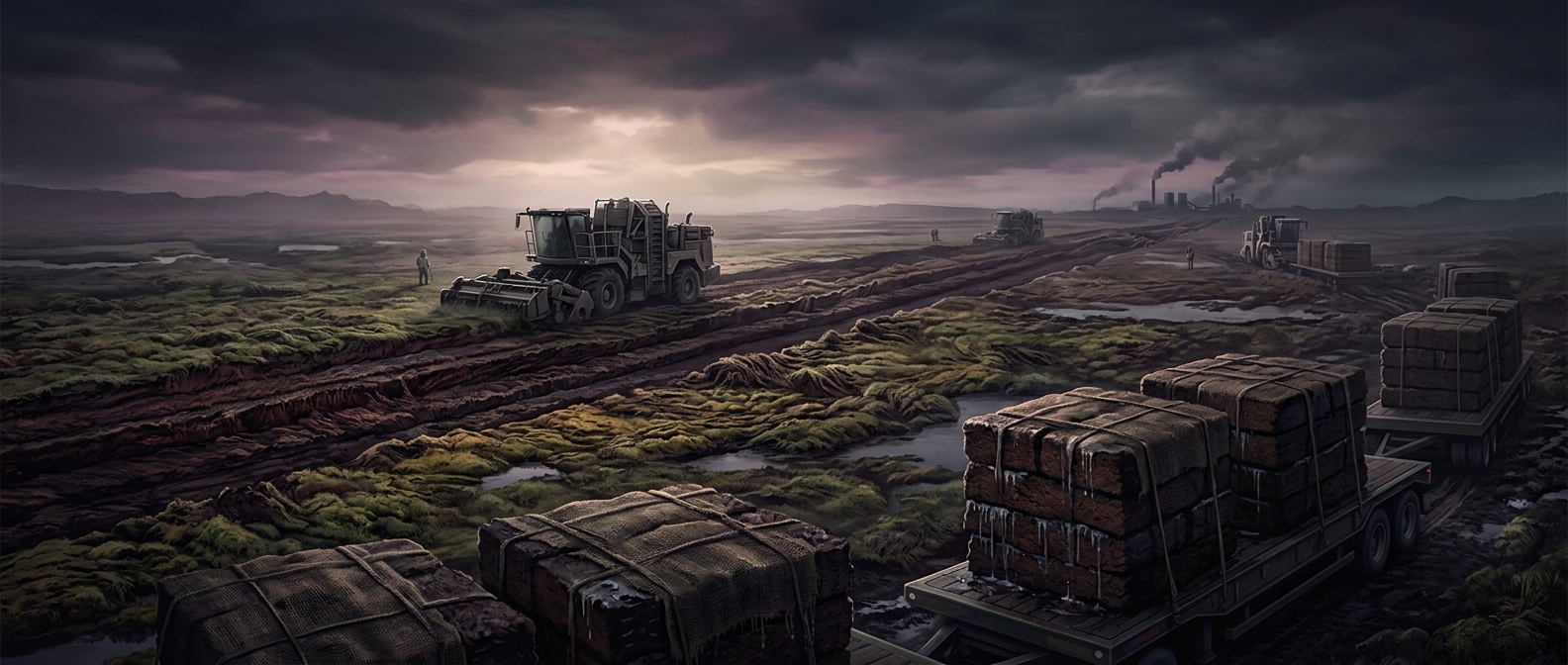
How a wetland becomes potting mix
Peat forms when dead plants accumulate in waterlogged ground. Because saturated soil contains little oxygen, decay proceeds slowly; layer by layer, partly decomposed vegetation builds up over centuries or millennia. The result is a carbon-rich material that can be harvested and sold as a lightweight ingredient for growing plants.
Getting peat out usually means draining or cutting into the wetland. Exposed peat meets oxygen, allowing microbes to break down the stored plant matter and release carbon dioxide. The carbon does not all escape at the moment a bag is opened: extraction begins a process that can continue as the remaining peat dries and decomposes. Replacing the removed material takes far longer than harvesting it.
Why gardeners use it—and what the choice costs
Peat is popular because it holds water while still leaving air around roots, and it is easy to package and handle. Those useful properties make it attractive to growers and gardeners, but they come with a landscape-scale cost that is not obvious from a small bag: the product comes from a wetland built slowly from old plant carbon.
Other growing-media ingredients, such as coir (fiber from coconut husks) or composted bark, can reduce reliance on peat, though each has its own sourcing and performance tradeoffs. Choosing a peat-free mix helps avoid demand for newly harvested peat. The striking mismatch is between the product’s short life in a planter and the centuries or millennia it took for its carbon-rich source to accumulate.