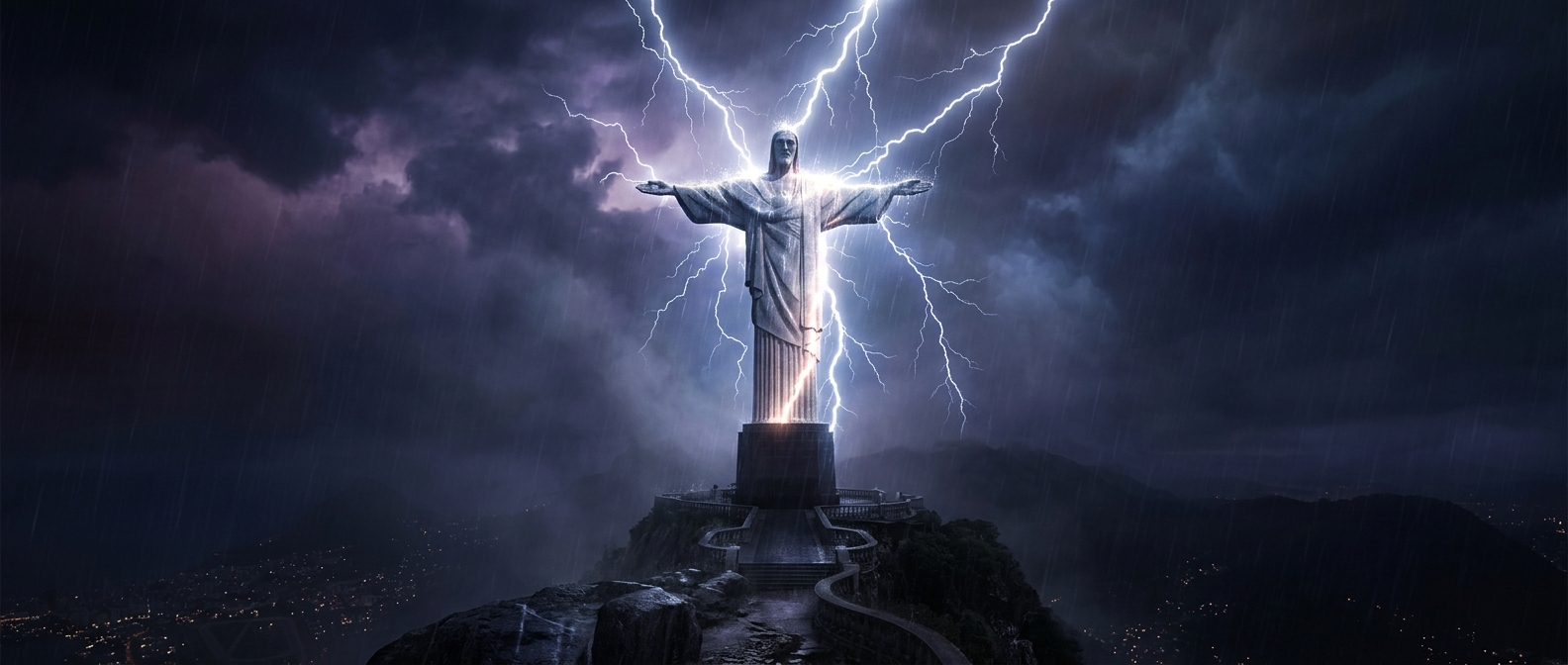
Why Corcovado puts the statue in the strike zone
Christ the Redeemer stands high above Rio de Janeiro on Corcovado, an exposed mountaintop where storms can bring the statue close to the strongest electrical activity in the surrounding landscape. Lightning does not seek out a landmark because it is famous; it follows a path that can carry an electrical discharge between cloud and ground. A tall, exposed structure can become part of that path.
A stone surface can still be damaged
The statue’s surface is covered with small pieces of soapstone arranged as a mosaic over its concrete structure. When lightning hits, the discharge can heat and stress materials along its route. The sudden force and heat may crack or loosen pieces of the outer covering, even though the underlying structure is massive. Outstretched hands and raised facial features such as the eyebrows are exposed edges, where damage can be especially visible.
Repair means restoring the details
Fixing a strike is not simply a matter of filling a hole. Damaged mosaic pieces have to be replaced so the repaired area fits the statue’s distinctive surface. Because the statue remains exposed on the summit, its maintenance must account for the possibility of further storm damage. Each repair is a reminder that the same elevated position that gives Christ the Redeemer its sweeping view also leaves its most delicate surface details open to the weather.