Why the Golden Dawn Turned Against Crowley
The Hermetic Order of the Golden Dawn was a private society whose members studied ceremonial magic through rituals and a sequence of initiatory grades. Joining it in 1898 gave Aleister Crowley access to a formal system of instruction—and placed him inside a group whose authority and direction were already contested.
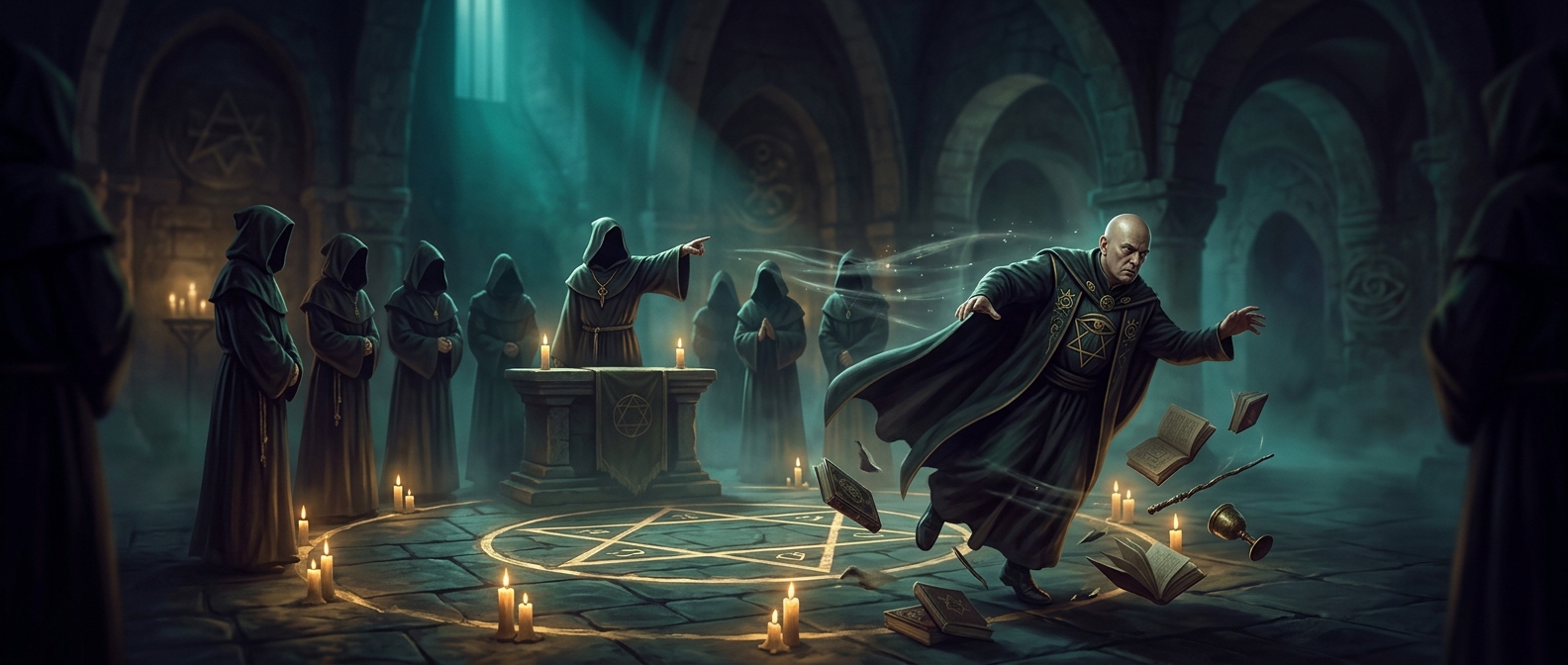
The conflict was not simply a matter of one man behaving strangely. A power struggle divided the order, and poet W. B. Yeats was among the figures involved in the dispute surrounding Crowley’s expulsion. In a secret society built around membership, rank, and control of ritual knowledge, a fight over who belonged could also become a fight over who had the right to lead.
A Private Society, a Public Scandal
Crowley’s unapologetic bisexuality added another source of friction. It scandalized members in an era when same-sex relationships were strongly stigmatized, making his personal life difficult to separate from his standing within the order. The available account points to both the internal power struggle and that social scandal; it does not reduce the expulsion to a single cause.
The episode shows how secrecy could make a group both alluring and vulnerable. The Golden Dawn depended on controlled access to its teachings, but disputes over membership could spill into factional conflict. Crowley’s expulsion was therefore more than a judgment that he was “too weird”: it marked a breakdown in the order’s ability to agree on who could remain inside it.