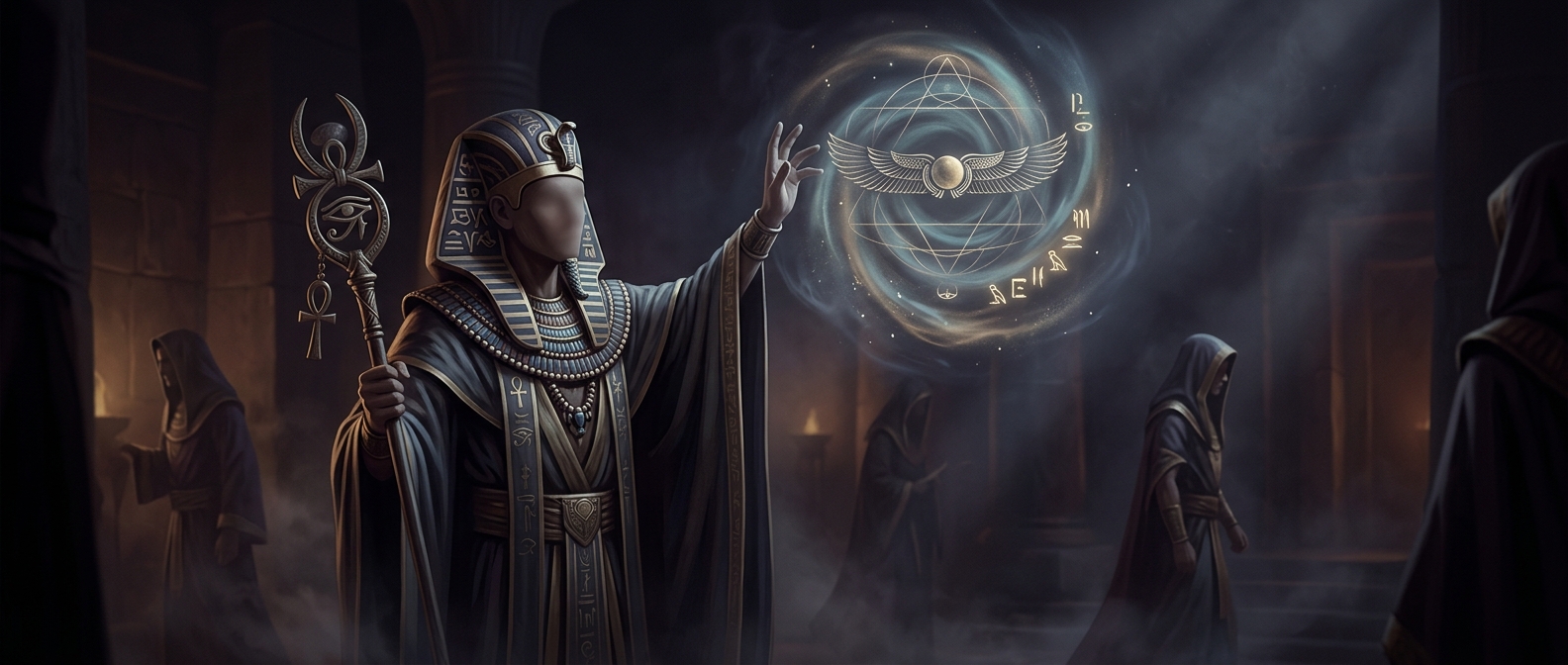
Why Egyptian imagery appeared in Golden Dawn rituals
For members of the Hermetic Order of the Golden Dawn, Egyptian dress was part of a carefully staged ritual language. Late-Victorian occultists often treated ancient Egypt as a storehouse of sacred symbols and wisdom. In ceremonies, robes and headdresses helped make those symbols visible, turning an ordinary room into a setting that felt separate from everyday life.
The costume was theatrical rather than archaeological: paper-mâché headdresses evoked an imagined ancient Egypt, not historically accurate clothing. That distinction mattered less to the ritual’s purpose than the image’s power to suggest antiquity, mystery, and authority.
Ritual as a sequence of signs
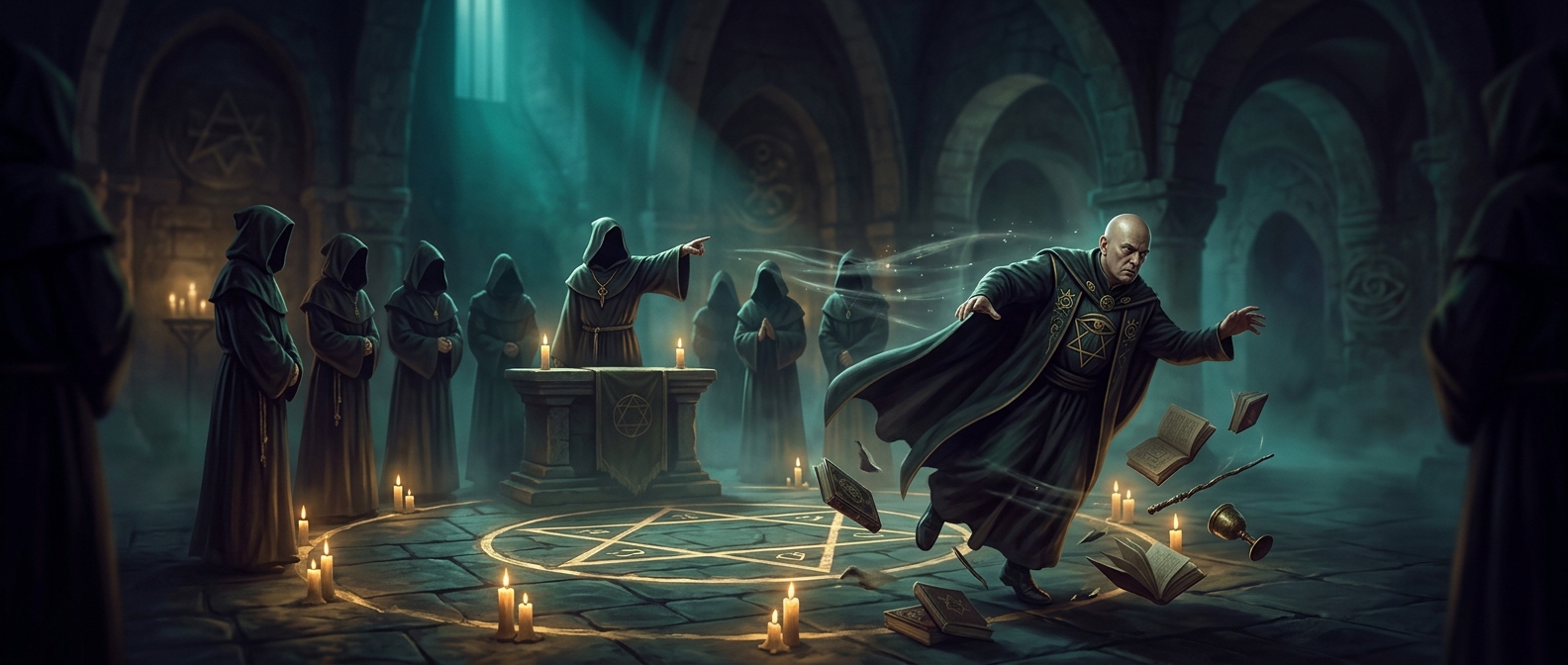
A ceremony could use clothing, gestures, spoken words, and symbolic objects together. These cues gave participants defined roles and helped focus attention on the ritual’s intended meaning. In that sense, the elaborate appearance was not merely decoration; it was part of how the group organized and experienced its ceremonies.
The Golden Dawn drew on several esoteric traditions, and Egyptian imagery was one element in that mix. Its members understood ritual magic as a spiritual practice, but the costumes themselves are evidence of theatrical design—not proof that spells produced supernatural effects. The contrast is striking: a modern, organized society used handmade stagecraft to make its ceremonies feel ancient and otherworldly.