Height as a public display
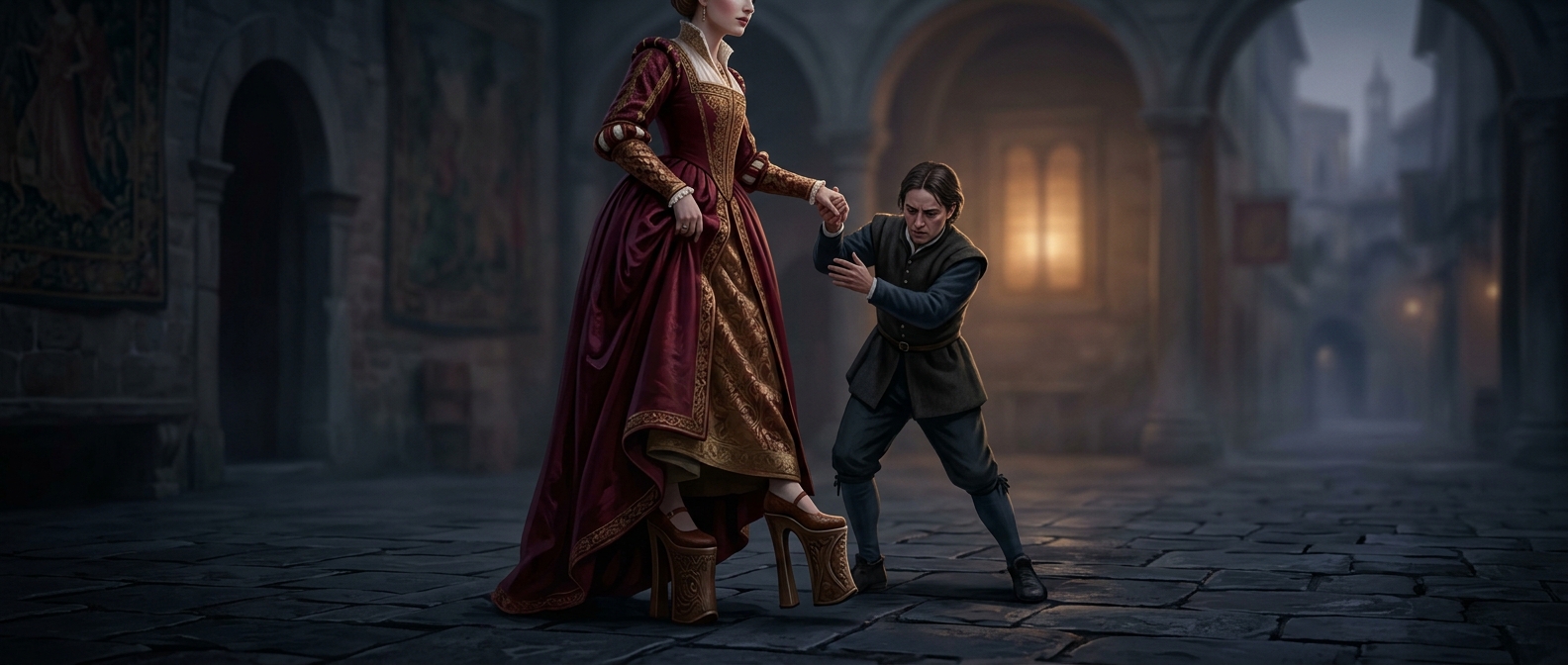
In Renaissance and early modern Europe, chopines were platform overshoes worn mainly by women. Made from wood or cork and covered in leather, fabric, or other decorative materials, they raised the wearer above the street—and above other people in a crowded room. Their height could signal wealth and rank: the wearer could afford elaborate footwear, fine clothes, and the help needed to move in them.
Why walking became a group effort
A chopine lifted the foot on a rigid platform rather than a flexible sole. The higher it rose, the less naturally the wearer could bend an ankle or shift weight to keep balance. A narrow, uneven street made the problem worse, but even a smooth floor could turn a step into a careful maneuver. Some exceptionally tall examples made attendants’ support necessary, not merely convenient.
The shoes therefore changed more than a wearer’s silhouette. An attendant could steady her arm, help her mount steps, or guide her across a room. The footwear advertised status partly because it made ordinary movement look ceremonious—and because that movement depended on other people’s labor.
The cost of standing taller
Chopines were not simply impractical novelties. They offered some separation from muddy streets and made a striking visual statement, but those benefits came with restricted mobility. Their height had to be chosen against the wearer’s ability to walk, the setting, and the assistance available.
That tradeoff is what made the shoes such a conspicuous status object: the platform did not just add inches; it could turn getting from one place to another into a small public performance.