How a nearly invisible oil pattern became a picture
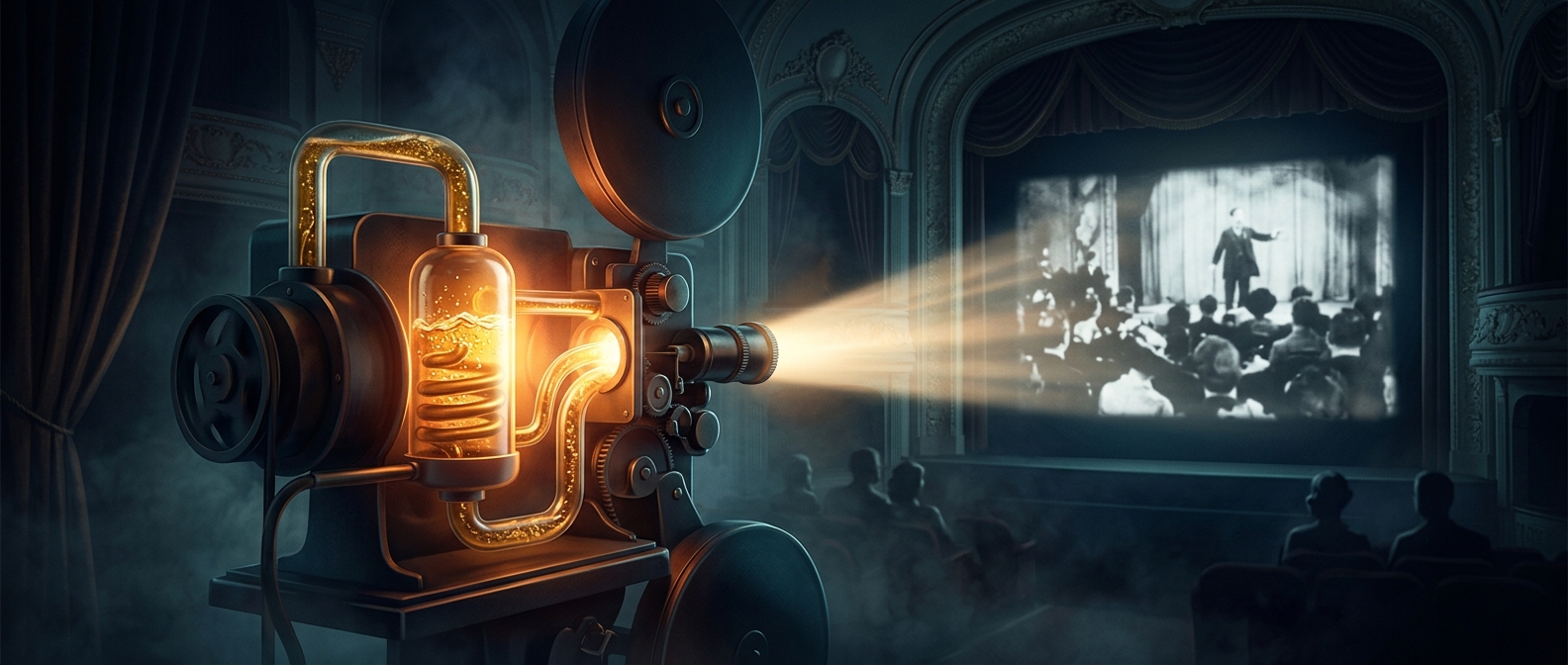
A television signal cannot simply make a powerful lamp brighter and dimmer fast enough to draw a detailed image across a large screen. The Eidophor took a different route: it used the signal to shape a reflective surface, then let light reveal that shape.
Inside the projector, an electron beam scanned the oil film in a pattern corresponding to the television picture. The beam’s electrical charge tugged the thin film into tiny ridges and depressions. These changes were far too small to see directly, but they altered the direction of reflected light. Carefully arranged optics turned those shifts into bright and dark parts of an image.
Why the mirror had to rotate
The film needed to be smooth again for the next image. Rotation helped spread the oil back across the mirror, while the electron beam repeatedly wrote the changing picture onto it. In effect, the projector used the mirror as a temporary screen: the picture existed as a moving pattern of surface distortions, not as a conventional image on a small display.
That optical trick made it possible to project television onto screens large enough for audiences to watch together, including live sports. But it also demanded a substantial, precision-built machine, with a beam system, a carefully controlled oil film, and complex optics working in sync. The Eidophor’s striking achievement was not merely making television bigger; it made a microscopic deformation in oil do the work of a giant screen.