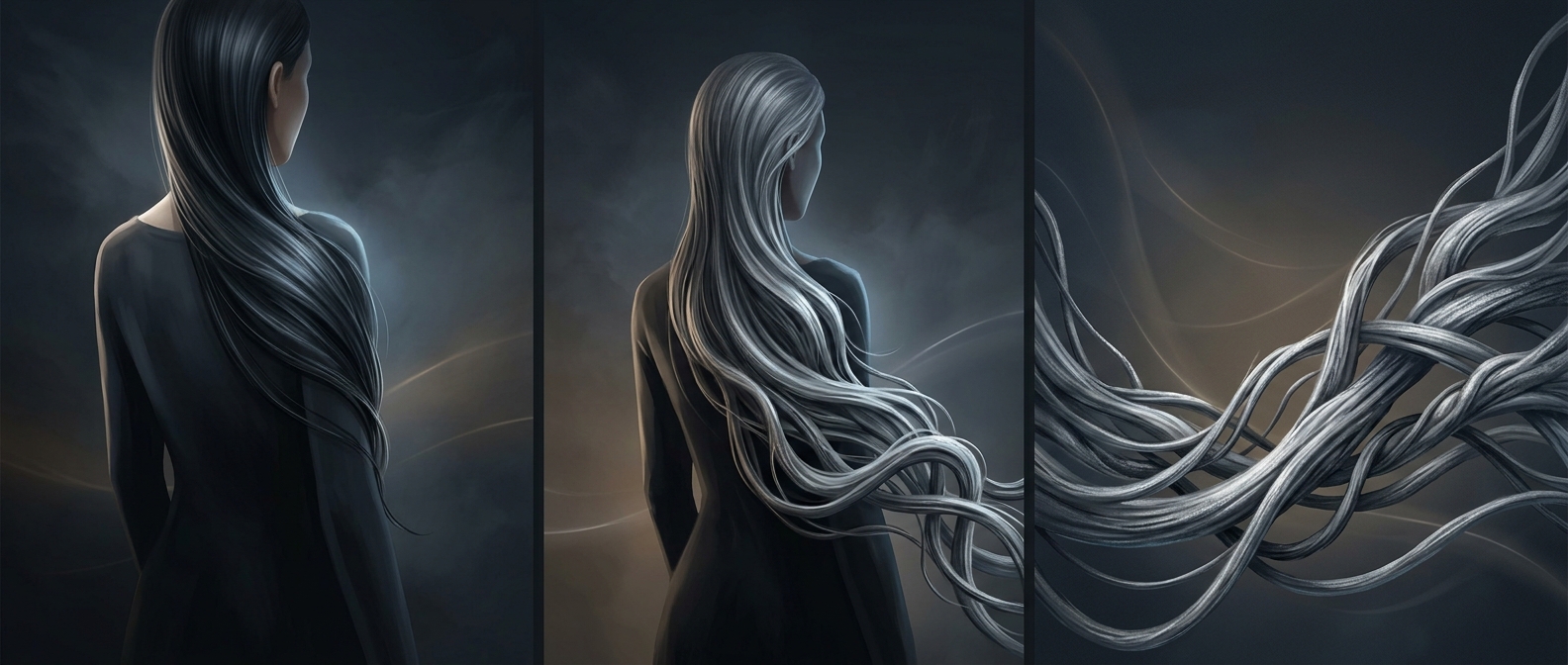
Why Floaters Drift When You Move Your Eyes
The eye’s vitreous is a clear, gel-like material filling the space between the lens and the retina, the light-sensitive tissue at the back of the eye. Fine strands or clumps suspended in that gel can block a little light. Their shadows fall on the retina, where the brain interprets them as spots, threads, or transparent squiggles.
Because these specks are inside the eye, blinking or rubbing the surface will not remove them. When your eye moves, the vitreous shifts slightly, and the specks move with it. They may seem to dart away when you try to look directly at them, then settle into view again.
Why They Stand Out Against a Bright Background
A floater’s shadow is easiest to notice when light is abundant and the background is plain. A bright sky or white screen gives the visual system few patterns to focus on, making a faint drifting mark harder to ignore. In a detailed scene, the same floater can blend into the visual clutter.
Why Floaters Often Increase With Age
Over time, the vitreous becomes less uniformly gel-like. Its structure changes, and collagen—the protein that helps form its framework—can gather into clumps. As the vitreous shifts, those clumps cast moving shadows. The change is common, but a sudden burst of new floaters, especially with flashes of light or a curtain-like shadow in the field of vision, can signal a problem at the retina and needs prompt medical attention. A familiar floater may be harmless; a sudden change is different because the retina itself may be involved.