How a follicle gives hair its shape
A hair strand is built inside a follicle, a narrow pocket in the skin. As cells divide at its base, they form the strand and harden into its familiar fiber. The follicle’s shape and the way the strand forms within it help determine whether the hair grows relatively straight or with bends and twists. Changes in the follicle can therefore affect the texture of new hair.
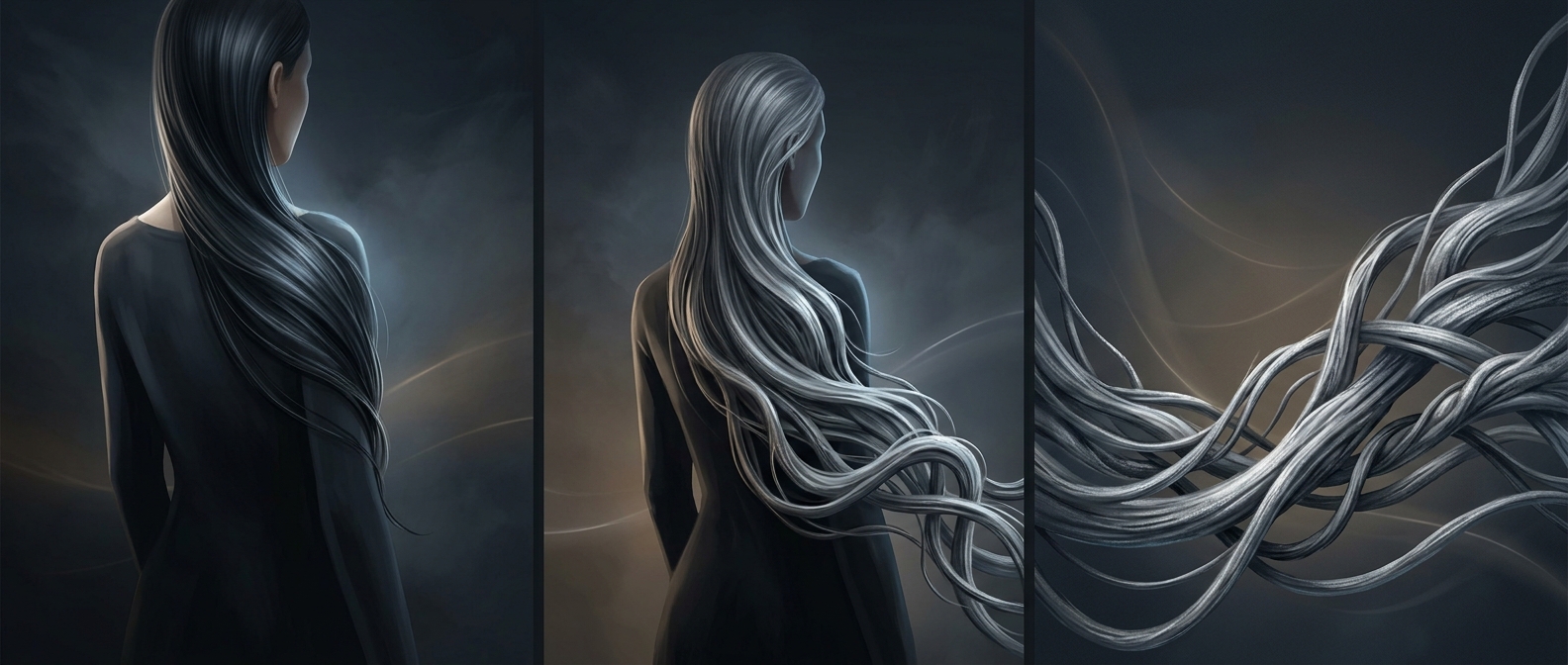
Hormones can influence the skin and hair follicles, and their levels shift at different points in life. Aging can also bring changes in how follicles function. If a follicle’s shape or activity changes, the hair it produces may emerge with a different pattern—sometimes curlier than before. The change need not happen evenly: neighboring follicles can respond differently, so a person may notice mixed textures.
Why the change appears gradually
A strand that has already grown out of the scalp does not reshape itself because a follicle changes. Instead, the difference shows up in hair produced afterward. Since hair grows over time, the old texture can remain visible along the length while new growth near the roots looks different. That can make the transition seem gradual, or leave a temporary mix of straight and curly sections.
So a shift in texture is not necessarily a styling effect: it can reflect a change in the tiny structures producing each new strand.