How air turns a grain pile into a moving stream
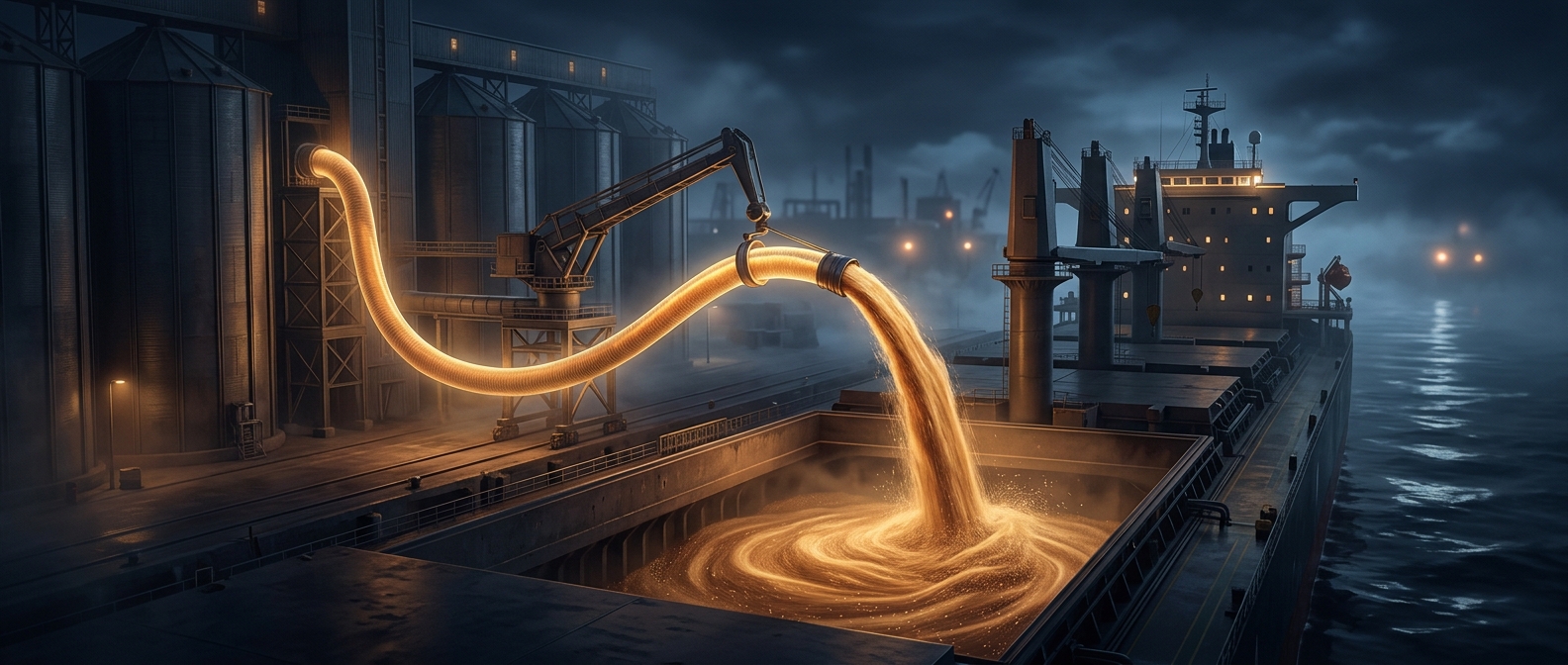
Grain does not dissolve or become a true liquid. Instead, air helps separate kernels from one another so they can flow and be carried through a pipe. At the ship’s hold, an intake head directs air into the grain. The moving air loosens the packed kernels, and the resulting air-and-grain stream travels through enclosed piping toward shore.
This is pneumatic conveying: moving solid material with a flow of air. It is the same basic idea used to carry powders and other bulk materials through pipes, though grain is made of much larger particles.
From pipe to storage
At the shore end, the grain must be separated from its carrier air. The air is vented, while the kernels continue on to storage or another handling system. Keeping the transfer enclosed lets the equipment move grain directly from a ship’s hold without relying on a long chain of open belts or buckets.
The approach also has a limit: the machinery must move enough air to keep kernels flowing, but the grain still needs to be handled without unnecessary breakage or dust. That is why the unloader is more than a giant vacuum: it is a coordinated system for loosening, transporting, and separating a heavy stream of kernels. To an observer, the striking part is that a solid cargo can pour through a pipe—because air keeps its individual pieces moving.