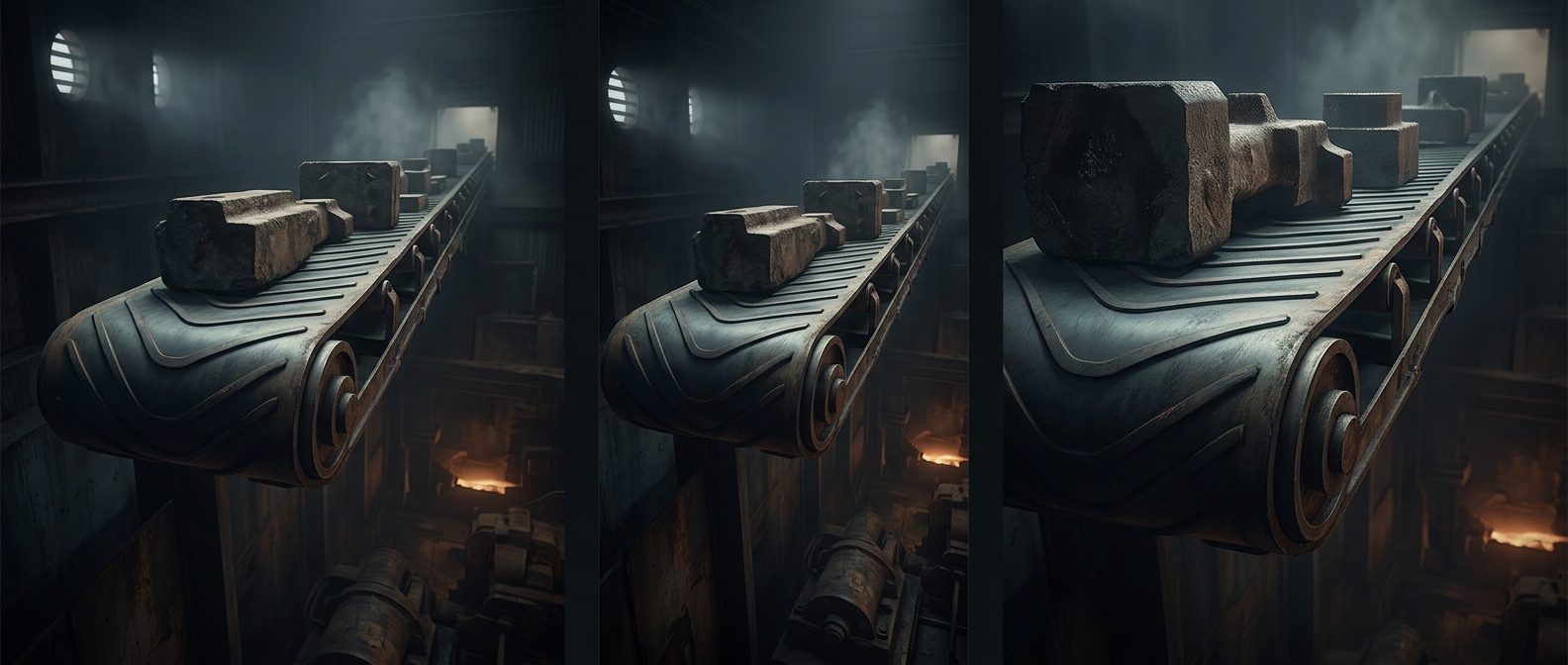
A Conveyor Belt Is More Than a Strip of Rubber
A loaded belt is pulled tight as it carries material and bends around rollers and pulleys. If it were made only of rubber, that repeated tension could make it stretch, sag, or drift out of alignment. The belt therefore has an inner tensile layer—the part designed to carry the pulling force—beneath its outer covers.
That inner layer may be built from woven fabric or steel cords. Fabric layers help reinforce the belt; steel cords provide strong lengthwise support in belts designed for heavy loads or long runs. The rubber around them binds the construction together and keeps grit, sharp edges, and moving material from wearing directly against the reinforcement.
The Outer Layer Takes the Wear
The top cover meets the cargo, while the underside runs against the conveyor’s supporting rollers. Their thickness and rubber formulation can be chosen to suit the work: abrasive rock demands different protection from a line carrying gentler packaged goods. The cover is meant to wear before the load-bearing core does, much like a replaceable shield around a stronger structure.
That distinction matters during inspection. A scuffed or gouged cover may be a surface problem; damage that reaches the fabric or steel can weaken the belt’s ability to hold tension. Conveyor belts are thus designed to accept visible wear while keeping their hidden reinforcement intact—the outside absorbs the daily punishment, and the inside preserves the belt’s shape under load.