Why Standing Can Work in a Canoe
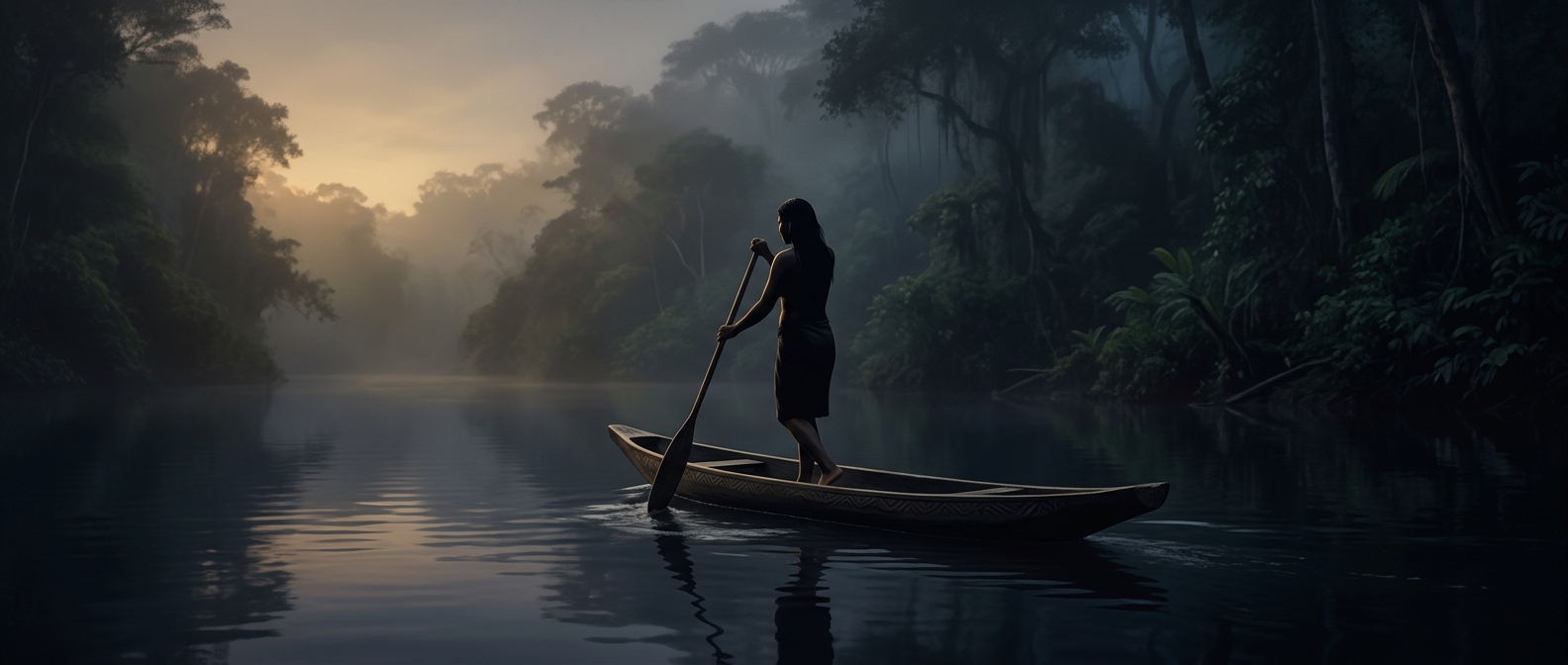
A standing paddler can bring the shoulders and torso into each stroke, not just the arms. That lets the body’s weight help drive the paddle through the water, while a longer reach can place the blade farther from the hull. The stroke can then move the canoe without requiring the paddler to sit low and reach awkwardly over the side.
The posture works only if the paddler manages the canoe’s balance. A narrow hull responds quickly when weight shifts, so the paddler generally needs to keep movements controlled and close to the canoe’s centerline. Each stroke is both propulsion and a small adjustment: push unevenly on one side, and the canoe may turn as well as move forward.
A Better View, With a Tradeoff
On a river, the useful view is not just scenery. Looking ahead from a higher position can help a paddler read the water’s surface and choose a route around obstacles or through a narrow passage. That matters because the canoe must often be steered while it is already moving; stopping to inspect every stretch would cost time and momentum.
Standing raises the paddler’s center of gravity, however, making a sudden shift or rough water more consequential. The technique is therefore a practical exchange: a broader view and an efficient stroke in return for more demanding balance. The canoe becomes a moving platform from which the paddler must read the river and respond in the same motion.