Why an iceberg looked like a water supply
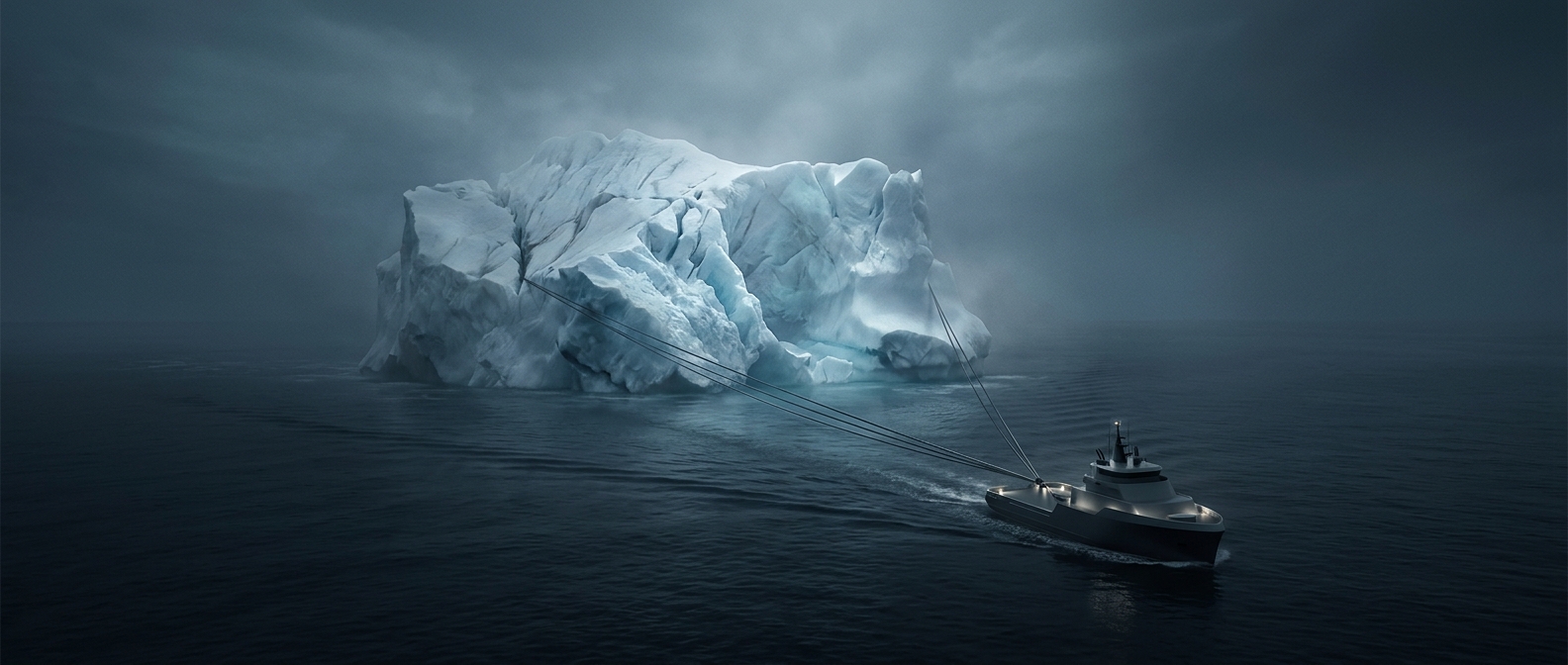
For a dry region near the coast, an iceberg offered an unusual shortcut: move water rather than build a pipeline across land. Icebergs calve—break off—from glaciers, carrying fresh water far from where it formed. In principle, a tug or towing vessel could pull a berg toward shore, where the ice could be harvested or allowed to melt into a usable supply.
The attraction was also the engineering trap. A berg’s visible tip is only a small part of it; most of the ice lies underwater. That hidden mass makes the load enormous, while its irregular shape creates drag and makes it difficult to steer. Waves, currents, and wind can all push the berg and the tow in different directions.
The skirt was meant to protect the cargo
A protective skirt—a flexible barrier around the iceberg—was proposed to reduce the exchange of heat with seawater. It would not make the berg invulnerable to melting, but it could slow the process by separating some of the surrounding water from the ice. The barrier itself would have to survive rough seas and remain in place as the berg shifted and changed shape.
The central calculation was not simply whether a boat could move an iceberg. It was whether enough ice would remain after a long, difficult tow to justify the vessels, equipment, and time required. Warm water could melt the berg along its submerged surface; freshwater lost during the journey would no longer be available at the destination.
A moving water source, with a narrow margin
Even arrival would not finish the job. The iceberg would need to be brought close enough for water to be collected without exposing workers and equipment to an unstable mass of ice. Its meltwater would also need to be captured and stored rather than dispersing into the sea.
That is why iceberg towing was a striking transport idea but not a simple substitute for local water infrastructure. The cargo was plentiful, yet every mile of ocean crossed threatened to turn part of it back into seawater.