How anti-fouling paint keeps a hull clear
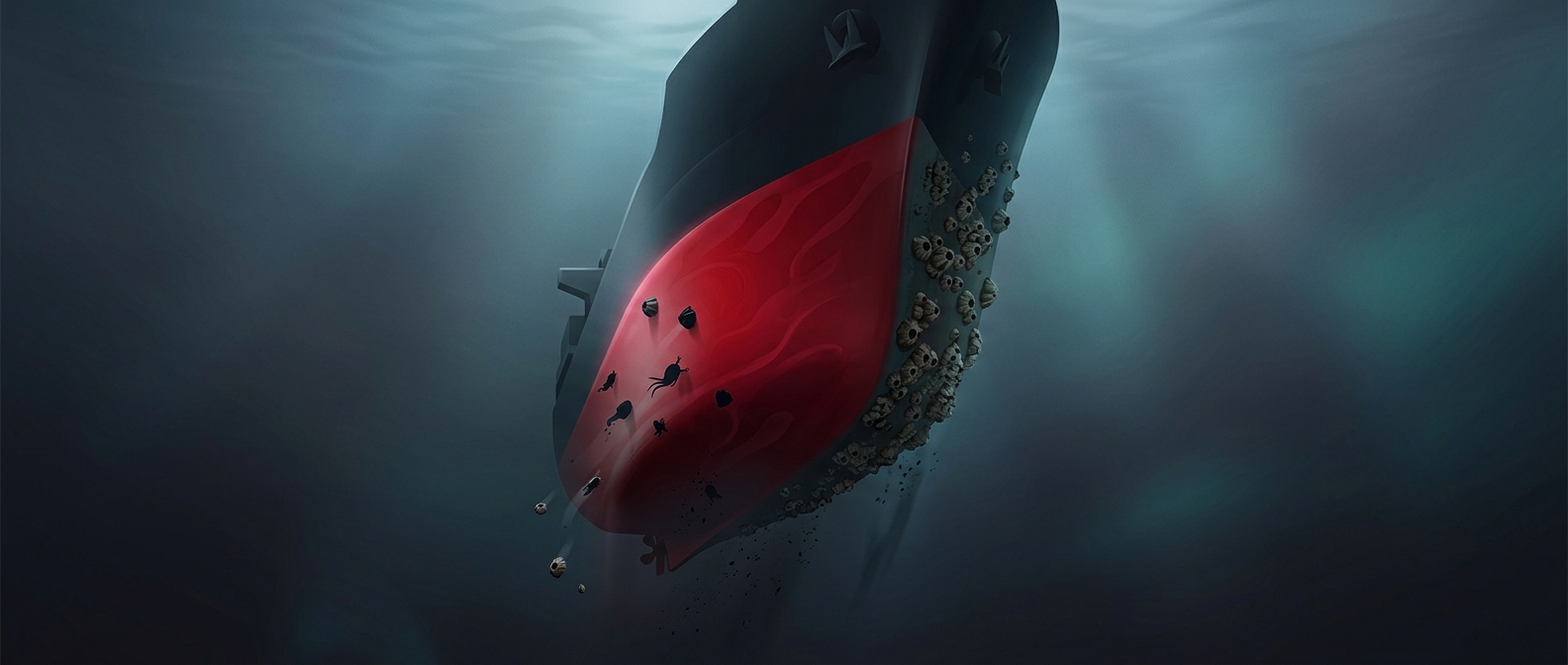
A ship’s underwater surface is an inviting place for marine organisms to settle. Barnacle larvae and other small life can attach, grow, and build up into a rough layer. Anti-fouling paint is designed to interrupt that first foothold: as seawater contacts the coating, it releases substances that discourage organisms from attaching or surviving on the hull.
The coating is not simply a permanent, impenetrable shell. Its active ingredients are gradually carried away at the surface, so the paint’s effectiveness depends on the type of coating, the conditions it faces, and whether it is maintained and renewed. Some modern hull coatings instead work mainly by making the surface so smooth or slippery that organisms struggle to stay attached, rather than relying on released biocides.
Why a thin layer matters
A clean hull lets water flow past with less resistance. Once growth roughens the surface, the ship must push harder through the water to maintain speed, which can mean greater fuel use. Preventing that buildup is therefore a practical engineering tradeoff: protect the hull’s performance, while choosing and managing a coating whose released substances do not cause unnecessary harm to marine life.
Keeping growth off ships also limits the chance that organisms will travel with them and establish themselves in waters where they did not originate. In that sense, the paint acts not only on the hull’s drag, but on what the hull might carry from port to port.