Why red light helps at the periscope
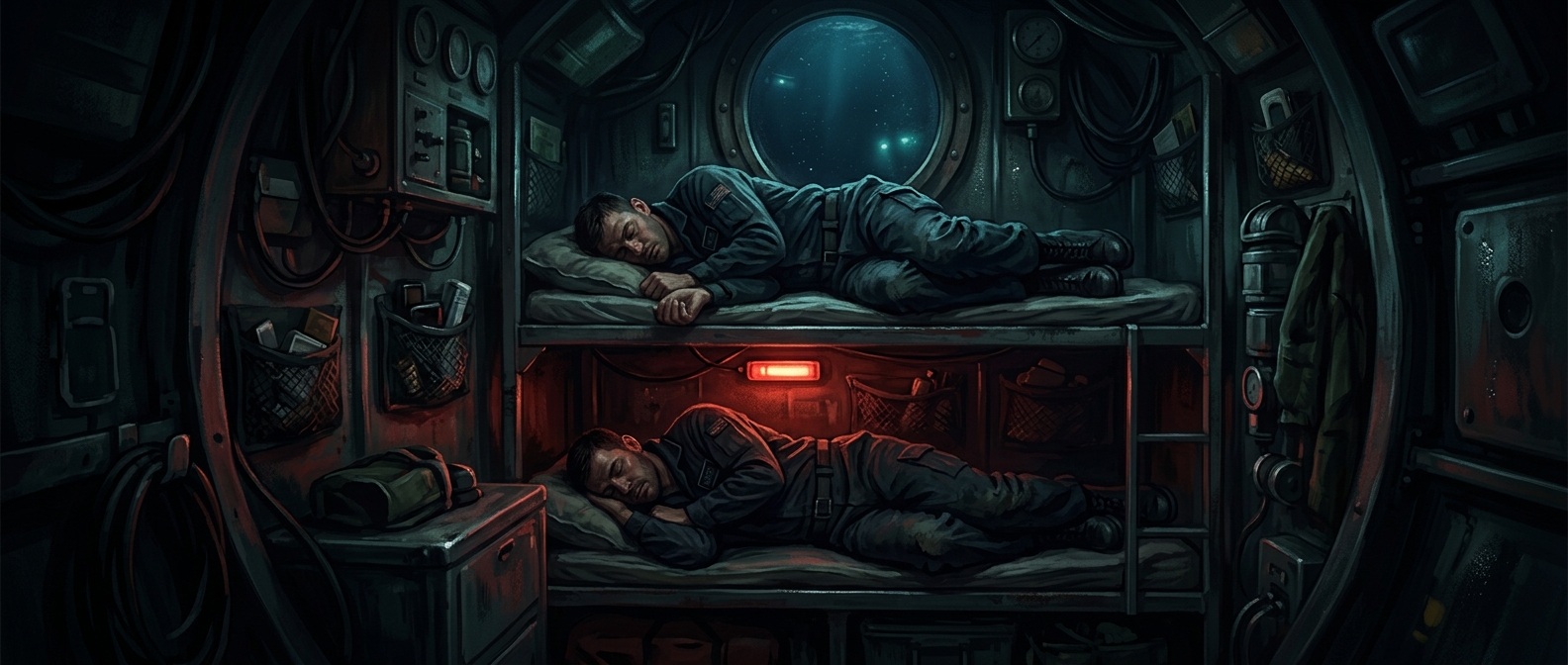
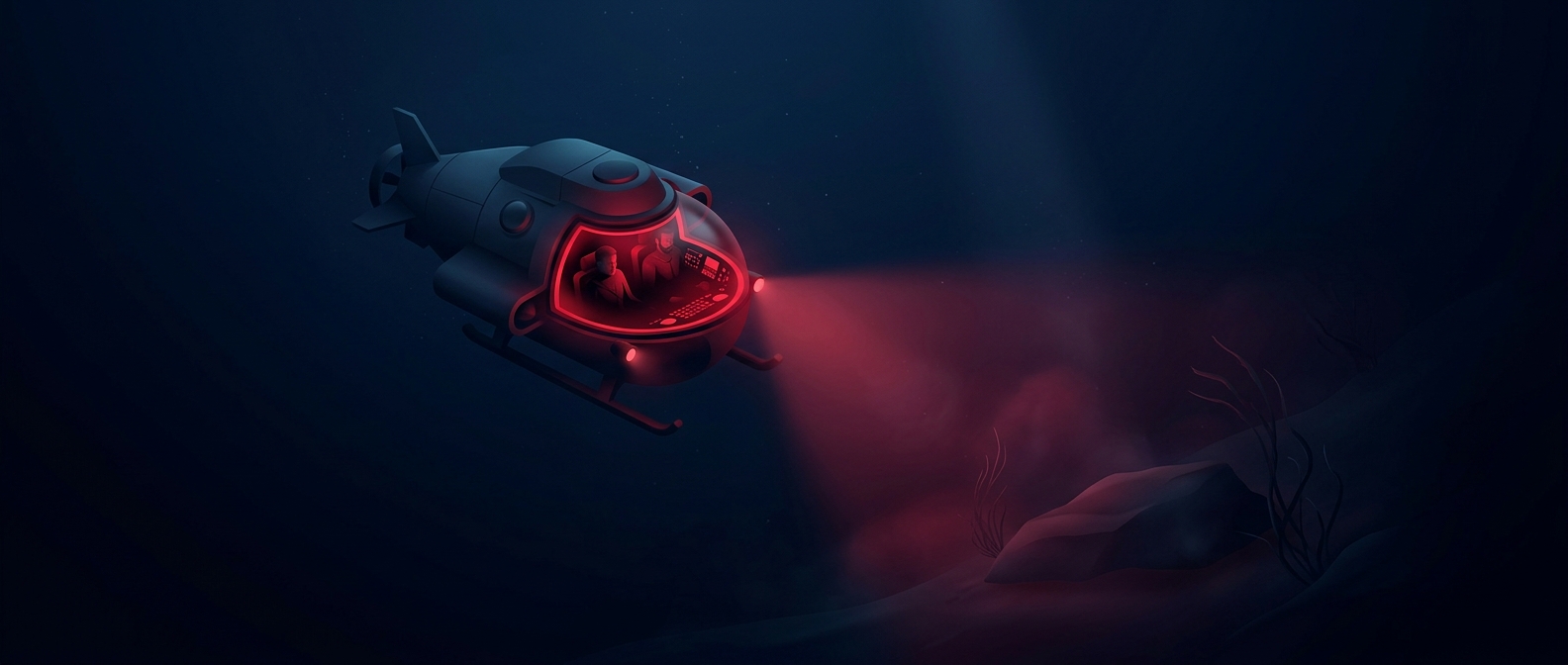
A submarine’s control room can switch to a dim red setting so crew members can read instruments and move around while keeping their eyes adapted to darkness. The advantage matters when someone needs to look outside through a periscope: a bright white light can make the dark view much harder to see.
Two kinds of vision, two different jobs
The retina uses cones for color and detailed vision in brighter conditions, and rods for seeing in dim light. Rods are especially sensitive to blue-green light and respond much less to deep red. Under red illumination, crew members can make out nearby controls without stimulating their rods as strongly as white light would.
That adaptation is not a switch that flips instantly. After exposure to bright light, the eyes need time to become sensitive to faint light again. A sudden burst of white illumination can therefore cost a periscope operator valuable time while their night vision recovers.
A compromise, not darkness
The red-lit room is a practical compromise: enough light for tasks inside, but less disruption when attention shifts to the dark outside. It does not make the room invisible or preserve perfect night vision, and the benefit depends on keeping the illumination dim. The key is avoiding a bright-light reset just before a crew member needs to pick out a faint shape beyond the periscope.