A Bunk Becomes Part of the Watch Rotation
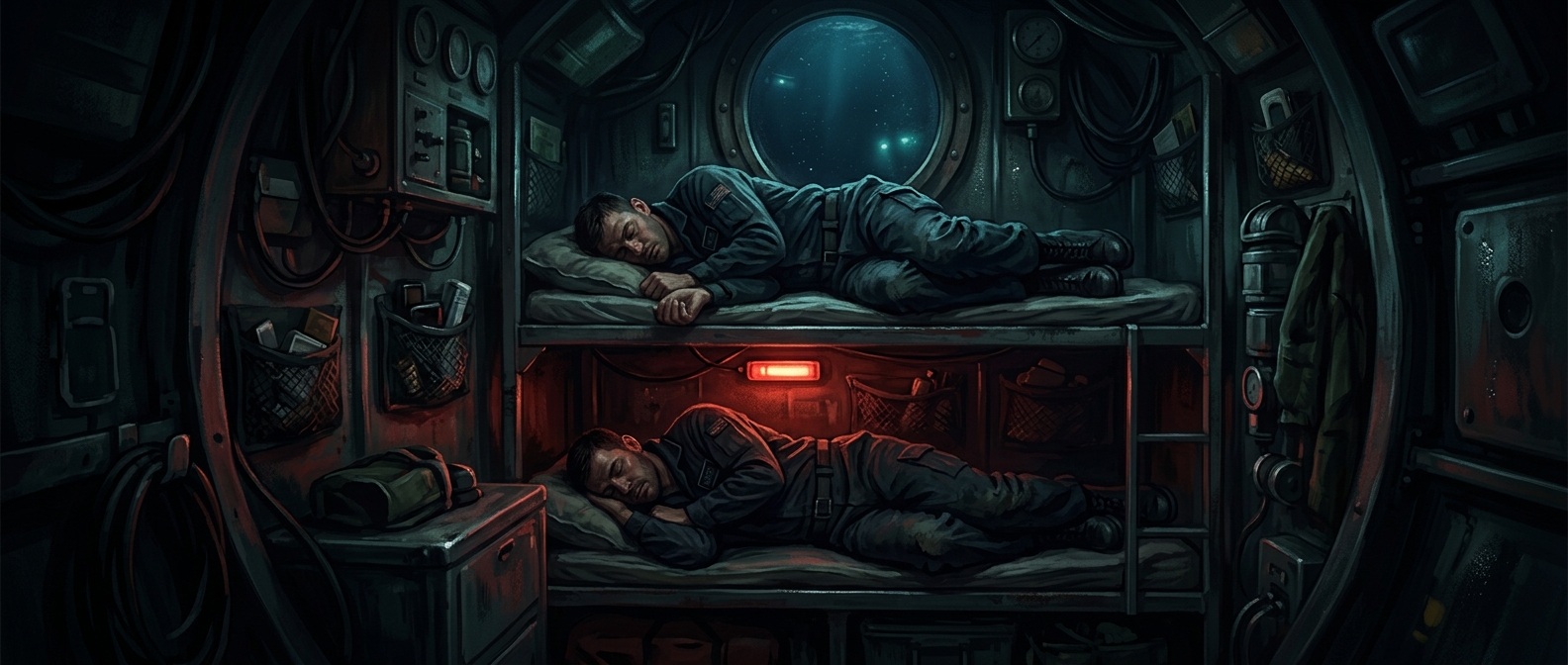
A submarine has to fit its crew, machinery, weapons, supplies, and working spaces inside a narrow pressure-resistant hull. Space for sleeping is therefore limited, even though the boat needs people on duty around the clock. One way to make the layout work is to assign a bunk to sailors whose watch schedules do not overlap.
A watch is a scheduled period when a crew member is responsible for operating or monitoring the submarine. As one sailor finishes a watch and leaves the bunk, another—coming off duty at a different time—can use that same space. The arrangement is sometimes called “hot bunking”: the bed is shared across shifts rather than reserved for one person.
The Tradeoff Is Space for Scheduling
This system makes better use of a limited number of berths, but it ties rest closely to the duty roster. The crew’s watch pattern has to leave each sailor enough time away from assigned duties to sleep, eat, and handle other routines. A bunk cannot simply be shared at random; the handoffs have to fit the schedule.
The result is a small but telling feature of submarine life: a sleeping space is not necessarily private territory. It is one resource the crew rotates through, much like other scarce space aboard the boat. When a sailor gets up, the next person’s place to sleep may already be waiting.