Why a Pig Can Replace a Die
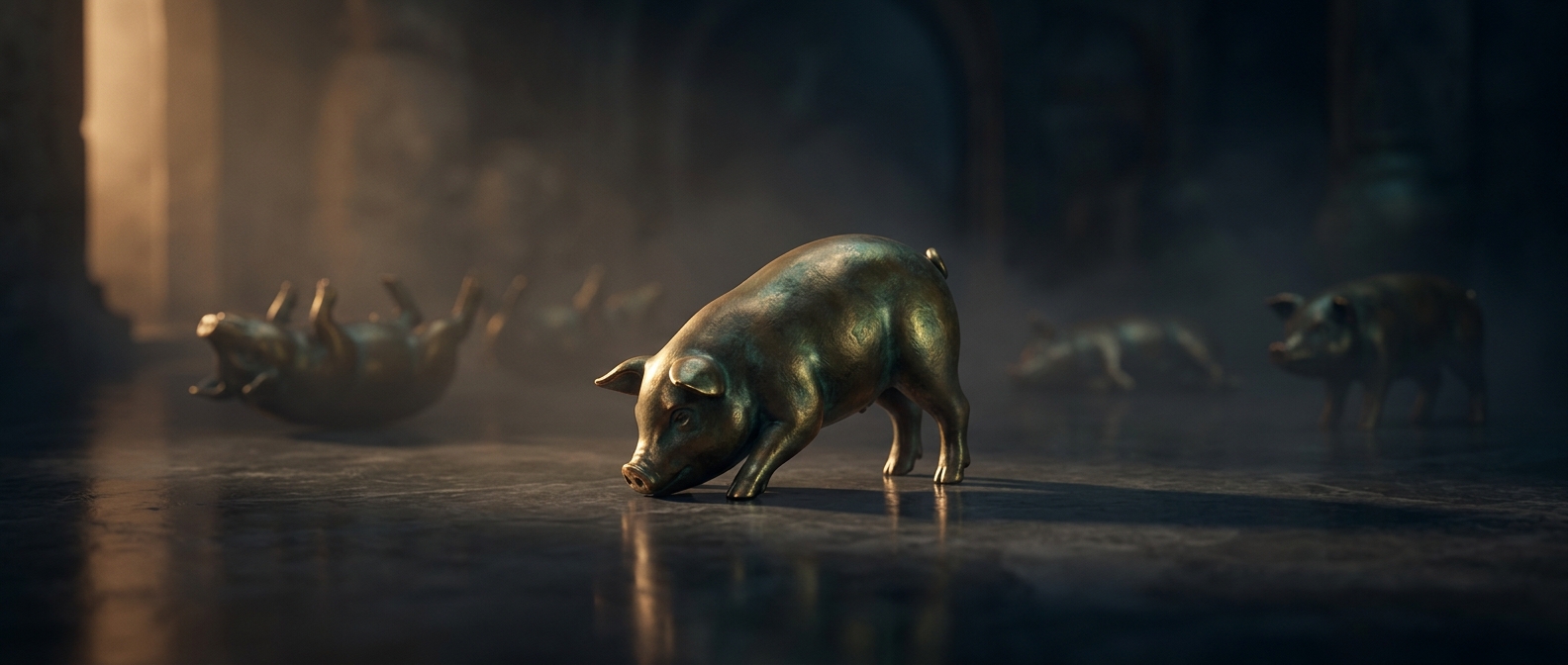
A die is designed to settle on a small set of clearly defined faces. A miniature pig has no such tidy geometry: its rounded body, snout, ears, and legs create several possible points of contact. When tossed, each pig can settle into a recognizable pose, and that pose becomes the game’s random outcome.
The molded shape does the work that numbered faces do on a die. A pig balanced on its side is different from one tipped onto its snout or legs, so players can identify the result by looking at how the toy rests. Because the shape is irregular, the possible outcomes need not be equally likely. A throw is unpredictable, but not necessarily a perfectly even lottery.
The Toss Creates the Risk
Players throw two pigs, so the result depends on both individual poses and how those poses combine. A safe-looking landing may add points; an unusual or matching combination can be worth more, depending on the scoring rules. But the same physical uncertainty that makes a big result possible also makes it hard to control. Players must decide whether to keep accumulating points or stop before another toss produces a costly outcome.
That tension is built into the object rather than added by elaborate equipment. There is no board or complicated mechanism to interpret: the pigs themselves provide the possibilities, and their resting positions make chance visible. A throw can be replayed in the mind as a little physical puzzle—how did the toy balance there?—even as players argue over what the landing means for the score.