The board is built for a different kind of rider
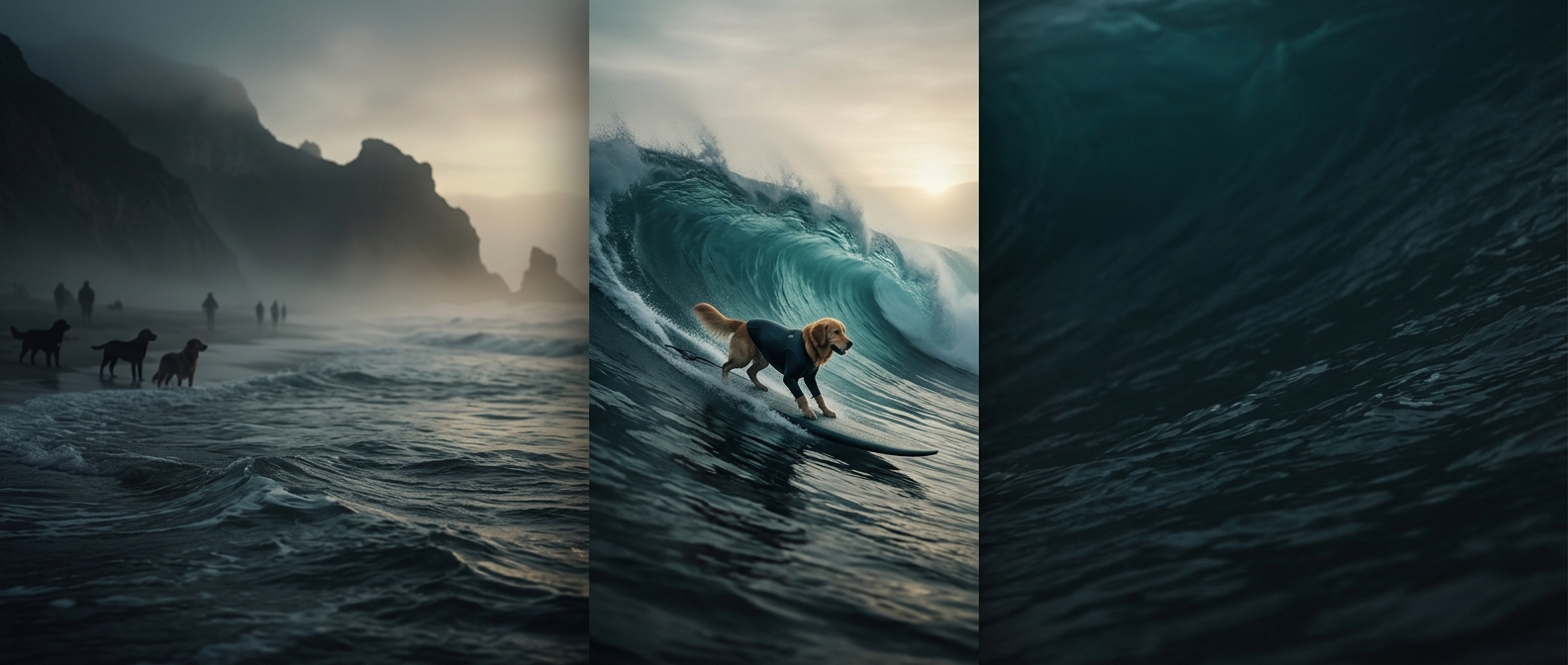
A dog on a surfboard cannot adjust its stance with hands or follow verbal instructions once a wave starts carrying it. A broad foam board gives the animal a more forgiving platform: it floats high, offers room to shift weight, and is less rigid than a hard board. The life jacket adds buoyancy and gives a handler a way to help guide or retrieve the dog if it slips off.
Those choices change the contest’s central test. It is not simply about riding the biggest wave. The dog must tolerate the moving water, remain on the board, and keep its balance as the board accelerates and tilts. A small shift in weight can make the board yaw or tip, so a steady, relaxed ride is the visible result of several things going right at once.
The spectacle depends on keeping the ride manageable
For the people organizing and entering these events, the useful wave is one a dog can ride without requiring it to handle the risks or demands of advanced surfing. That makes board design and a dog’s comfort in the water part of the activity, not just preparation for a performance. The jacket is practical equipment; the foam board turns a brief push from a wave into a stable-enough platform for a dog to experience it.
The memorable sight is a dog standing upright on a moving board, but the real achievement is more modest: staying composed while the ground beneath its paws keeps changing.