A reflection creates a second line of sight
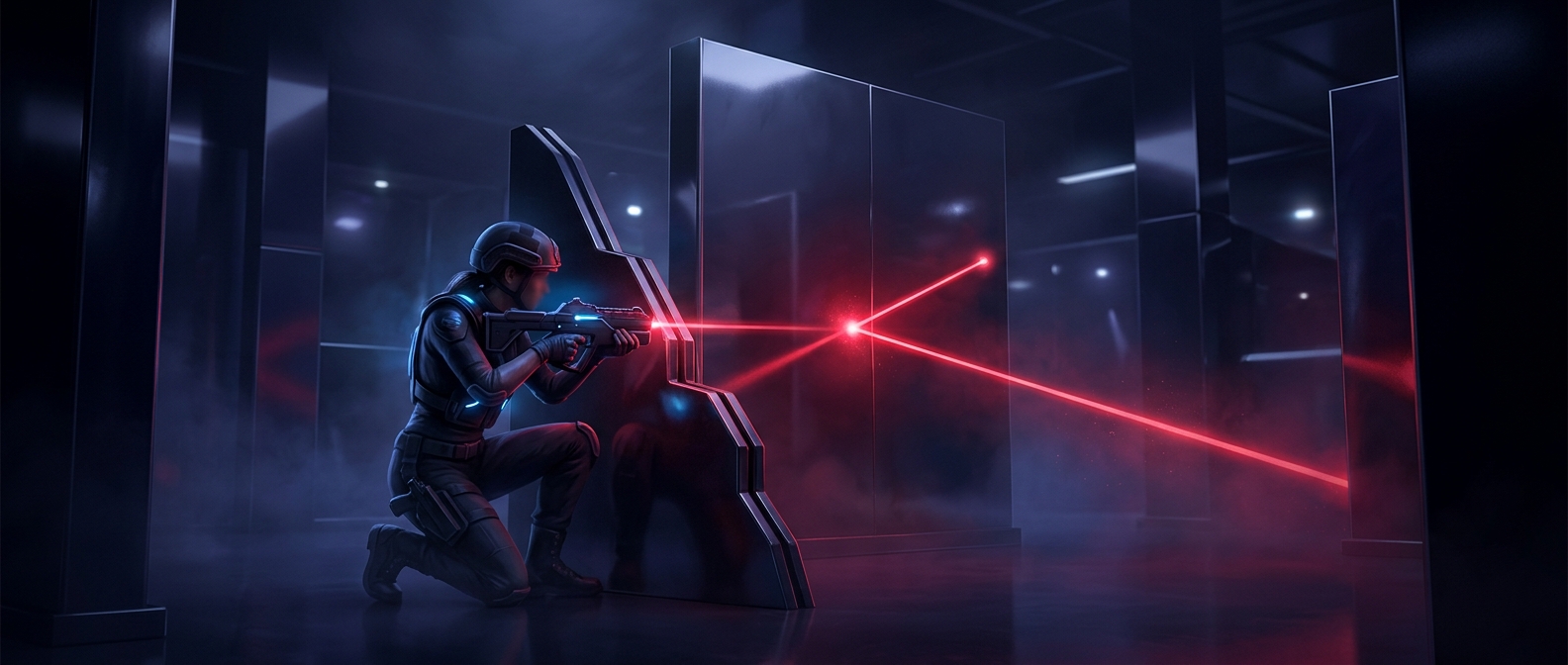
A laser-tag shot does not have to travel straight from the gun to a player’s sensor. When infrared light hits a mirror-like surface, it can reflect in a predictable direction: the angle at which it leaves the surface matches the angle at which it arrived. If that redirected path reaches a sensor on a vest or gun, the equipment may register a hit even though the shooter is around a corner.
That is different from light scattering off a rough surface, which sends energy in many directions. A shiny wall or mirror can preserve a more concentrated path, making the reflected pulse more likely to reach a sensor. The shooter still needs the right geometry; a reflective surface does not send a shot everywhere.
The arena becomes part of the shot
This makes room layout matter. A player who ducks behind a partition may be hidden from a direct shot but exposed to a reflection from a nearby mirror or polished panel. Turning away from the shooter may not help if a sensor faces the reflecting surface.
For players, the practical lesson is to watch the whole room, not just the opponent’s position. A seemingly safe corner can still be in the path of a reflected shot.