Why the Hay Cart Works in a Game
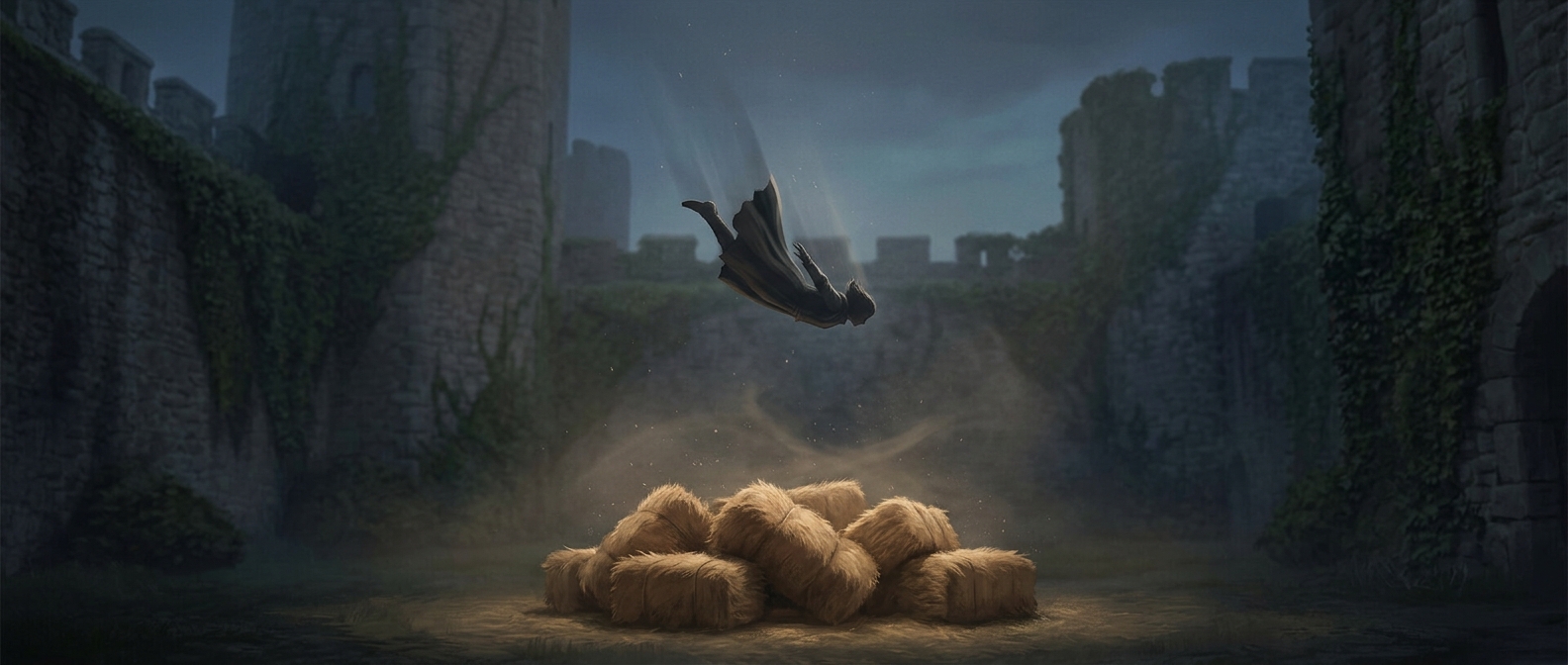
A hay cart beneath a rooftop is more than a soft landing spot: it is a visual promise from the game. The player sees a risky drop, spots a recognizable target below, and can choose to leap. That turns height into a navigation puzzle rather than a barrier that simply says “do not go this way.”
The cart also makes a dramatic shortcut legible. A character disappears into the hay, the cart shifts or scatters, and the player can continue moving. The animation communicates success in an instant, without stopping for a lengthy account of an injury or a complicated rescue.
The Design Tradeoff Behind the Fall
Games often compress consequences to preserve pace. A fall that would end a real person’s life can become a brief transition if the character lands in a designated spot. That exception rewards players for reading the environment and taking a calculated risk; applying realistic damage every time would make many spectacular routes unusable.
In reality, hay is not a magic brake. A fall releases energy that the body must shed when it stops. Loose hay can shift and compress, but it cannot reliably provide enough controlled stopping distance to protect someone from an extreme drop. In a game, the cart’s real job is different: it marks a safe landing zone and lets the player turn a plunge into a deliberate move.