How Cooper’s Ligaments Support the Breast
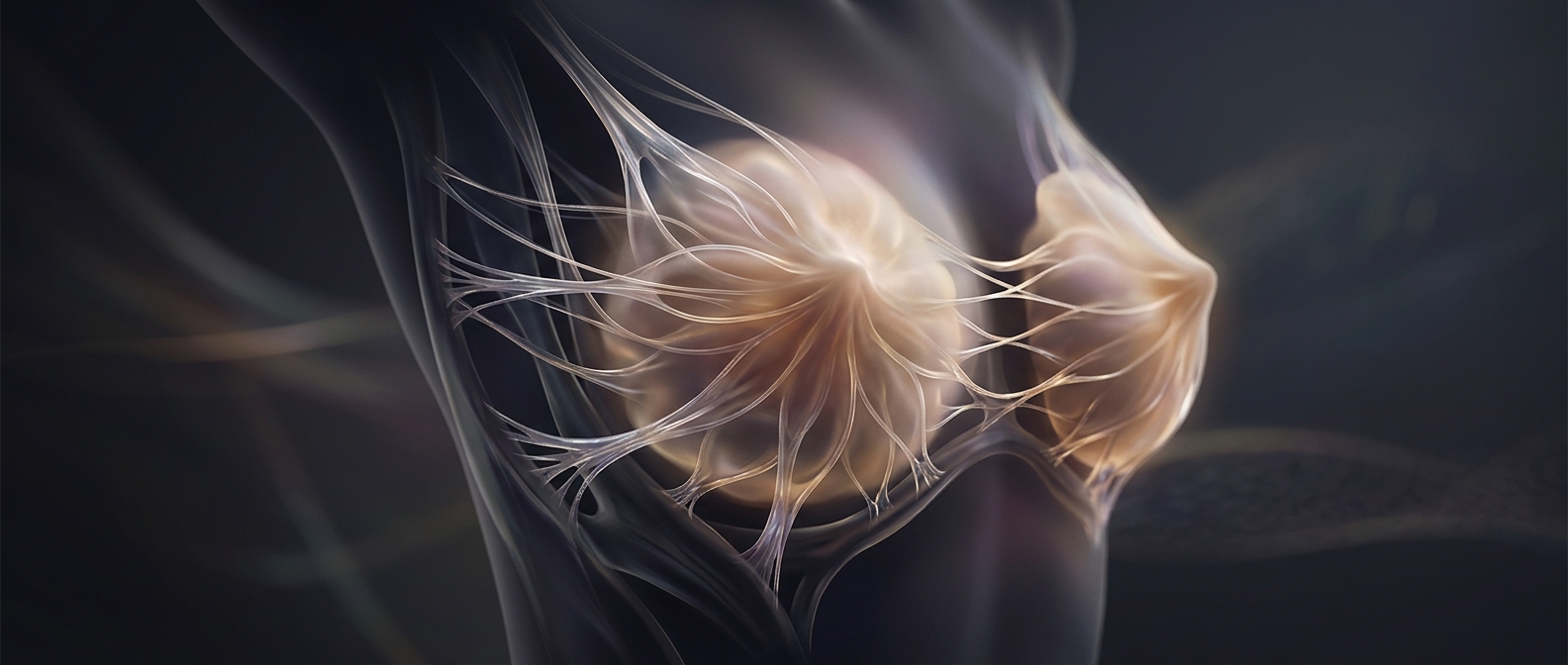
Cooper’s ligaments are thin, branching sheets of connective tissue woven through the breast. They run between deeper tissue near the chest wall and the skin, helping hold the breast’s soft tissue in place. Rather than acting like a single cable, they form part of a supporting network that divides and steadies the tissue.
The breast itself contains no muscle that can contract to lift it. The muscles beneath it belong to the chest wall; support within the breast comes largely from connective tissue and skin. Cooper’s ligaments help distribute the pull of the breast’s weight across that framework.
Why the Support Can Change
Connective tissue is strong but not rigid. Like other tissues in the body, it can gradually lengthen or remodel under repeated tension. Breast size and weight, aging, pregnancy, and changes in body weight can alter the load or the tissue’s properties. The skin and supporting structures may then hold the breast differently than before.
That change is not a sign that the ligaments have simply “broken,” and the ligaments do not determine breast shape on their own. Skin, fat, glandular tissue, and the chest wall all contribute. Cooper’s ligaments provide support, but they are living tissue—not permanent straps that freeze the breast in one position.