How Chang’an Became a Meeting Point
Chang’an’s international character grew from its role as the Tang dynasty’s capital and a destination on far-reaching trade routes. Caravans and travelers connected China with Central Asia and lands farther west, carrying not only goods but also languages, customs, religious ideas, and performance traditions. The capital concentrated demand: merchants could find customers, while entertainers could find audiences among residents, visitors, and officials.
That flow did not make the city culturally uniform. It created settings where people with different origins could meet—and where foreign styles could become part of local urban life.
A Tavern as a Small-Scale Crossroads
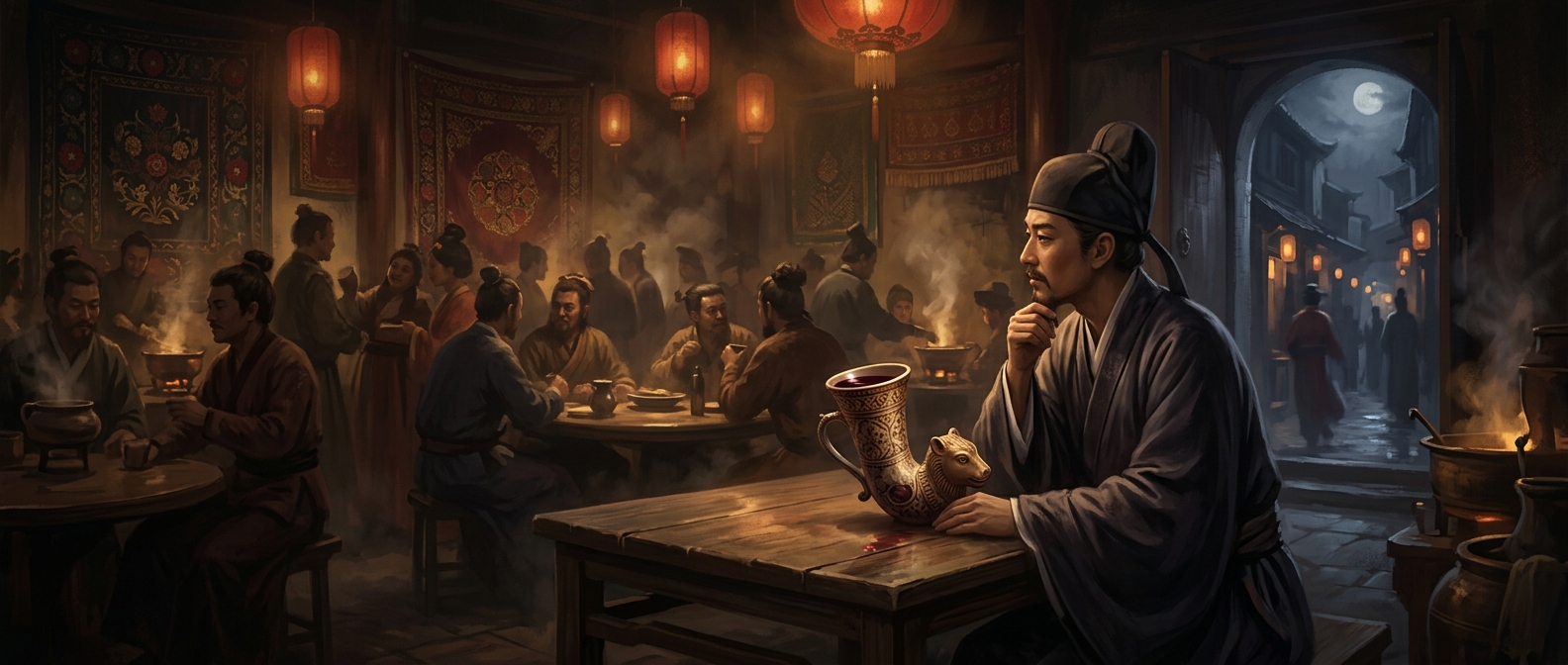
A night out could bring several parts of that exchange together. Imported grape wine offered a taste associated with western regions, while Sogdian illusionists and Central Asian dancers brought performance styles from beyond China. Trade mattered not just because it moved objects into Chang’an, but because it also moved people who made those objects and traditions visible.
For poets such as Li Bai, these encounters could become material for writing as well as recreation. A tavern was not a diplomatic institution, but it could make distant cultures immediate: a drink in a cup, a performer on a floor, an audience gathered around them.
The Reach—and Limits—of the Scene
Such evenings reveal the connections available in the Tang capital, not that every resident had equal access to imported luxuries or foreign performances. Their significance lies in the way long-distance exchange could surface in ordinary urban settings. The routes that linked Chang’an to distant markets also helped turn a local night of drinking and entertainment into an encounter with the wider world.