How Sensurround made a theater tremble
For Earthquake (1974), Universal wanted audiences to feel more than loud sound. Its Sensurround system used powerful low-frequency audio—deep rumbles near the bottom of the audible range—to make the room itself seem to move. Large speaker units pushed substantial amounts of air, sending vibrations through seats, floors, and other parts of the building.
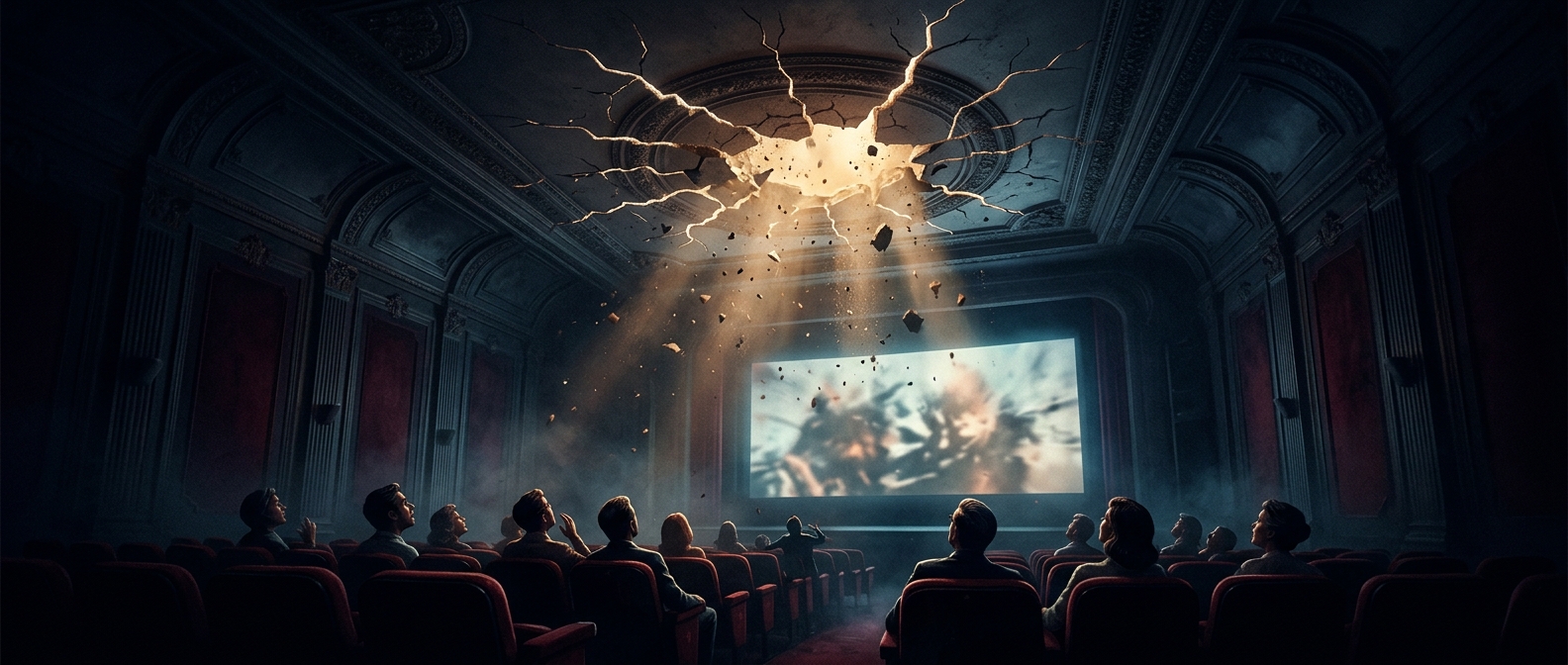
That physical sensation depended on the theater as much as on the soundtrack. A room’s surfaces and fixtures can respond to repeated vibration, especially when the force reaches a part that is already loose or prone to rattling. What felt like an earthquake to moviegoers could therefore shake dust or plaster from a ceiling.
One screening could affect another
The same vibrations did not necessarily stop at the auditorium walls. In a multiplex or a building with nearby screens, low-frequency energy could travel through connected floors and structure. That meant a neighboring theater might feel the rumble—or hear it—while showing a different film. The system’s immersive effect came with a building-wide engineering problem: the sensation could spill beyond the audience it was meant to reach.
Sensurround made the theater part of the special effect, rather than treating it as a neutral container for a movie. But that also made each venue’s construction and condition part of the experience. A convincing cinematic quake could turn into a very real maintenance issue overhead.