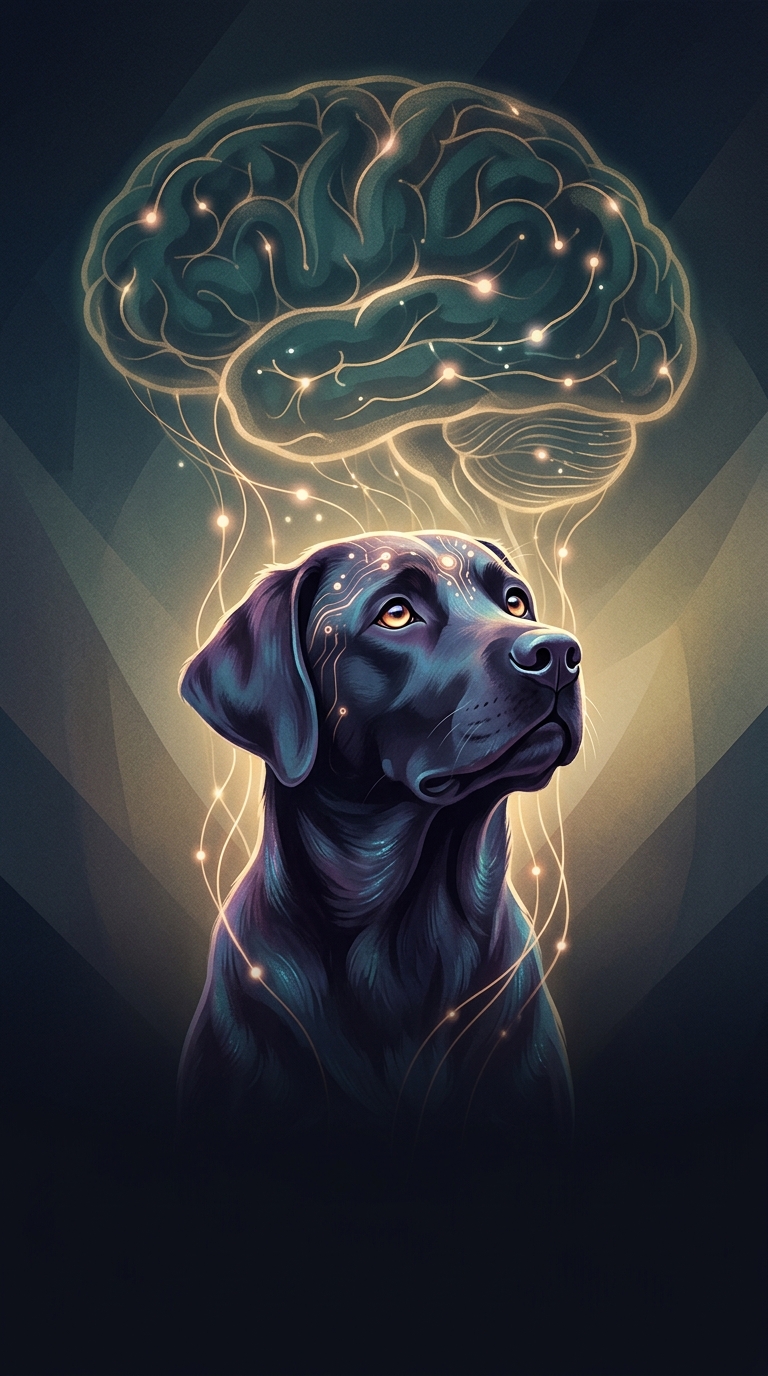
A bond built from attention
Dogs did not deliberately rewire human brains. Over thousands of years of living alongside people, however, dogs that were easier to approach, read, and care for had an advantage. That gradual selection helped shape an unusually responsive social partner—and gave humans many chances to form a powerful attachment.
One important cue is eye contact. A dog that looks toward a person can prompt the person to look back, speak, or offer touch and food. In research on familiar dogs and their owners, shared gaze has been associated with increased oxytocin in both. Oxytocin is a hormone involved in social bonding and caregiving; it is not a love potion, but it can support the warm, attentive state that makes interaction rewarding.
A feedback loop between dog and person
The exchange can reinforce itself. A dog seeks attention; a person responds; the dog learns which signals work and uses them again. Meanwhile, the person’s brain treats the dog as a social companion, interpreting looks, movements, and vocal sounds as communication. Repeated small interactions—greeting at the door, leaning close, checking in during a walk—build familiarity and attachment.
Dogs also tend to offer cues people readily find compelling: expressive faces, playful behavior, and dependence on human care. Some facial features resemble those of human infants, which may encourage nurturing responses, though no single feature explains the bond.
Why the connection feels so strong
Domestication did not produce a one-way trick. Humans shaped dogs through breeding and daily life, while dogs became skilled at reading human gestures and living in human spaces. The result is a two-sided relationship: dogs seek connection, and people’s social and caregiving systems respond.
That is the deeper “hack”: not a secret switch, but a repeated biological and behavioral loop. A glance can invite a response; the response strengthens the relationship; and the next glance carries the history of all the ones before it.