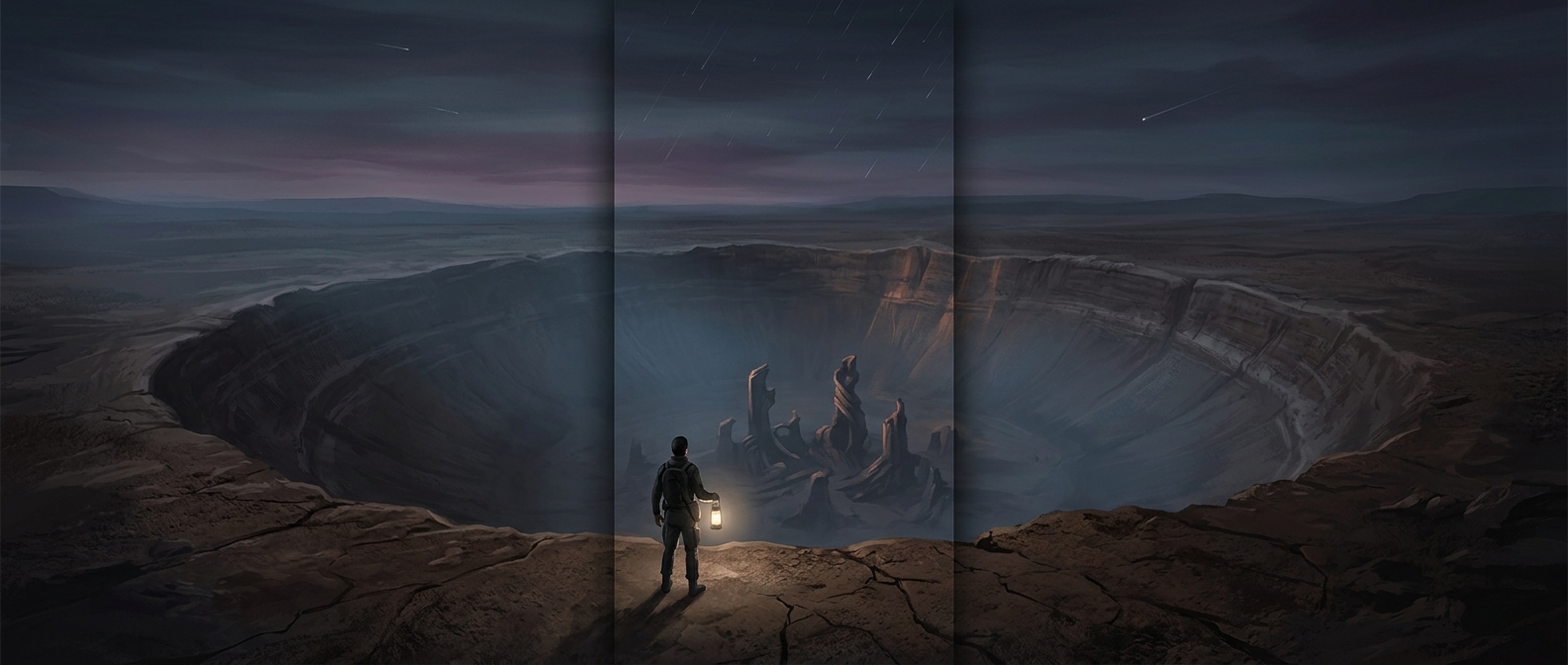
A crater is only the first draft of an impact’s history
When an asteroid or comet strikes, it compresses the ground so suddenly that rock is crushed, melted, and thrown outward. The impact can leave a circular depression with a raised rim and a central uplift, where buried rock rebounds after being driven downward. Geologists look for these shapes, but shape alone is not proof: volcanoes and other processes can also produce circular features.
The more decisive clues are often microscopic or chemical. An impact can create distinctive fractures in quartz, melt rock into glass, and concentrate elements that are scarce in Earth’s crust but more common in some meteorites. Together, those clues can distinguish an ancient impact site from a look-alike landscape.
Earth edits the evidence
After the collision, ordinary geology begins dismantling the crater. Rain and rivers cut into its rim; wind abrades exposed rock; sediments fill the depression. In some places, later lava flows or younger rocks cover the structure. Over longer spans, plate tectonics can fold, fracture, bury, or recycle the crust that holds it.
That means a crater’s present appearance is not a simple measure of the original impact. A once-prominent basin may survive only as buried rock layers or scattered impact debris. Conversely, erosion can expose clues that had been hidden underground. Finding a crater may require drilling, mapping subtle gravity or magnetic differences, and testing rocks for impact signatures—not just spotting a round hole from above.
The surviving record is uneven
Earth’s known impact structures are a filtered sample: they reveal that collisions happened, but not a complete count or map of them. Large impacts can leave evidence that persists even after the crater itself is altered, helping researchers connect a collision to changes in the wider environment. When an impact is associated with a global extinction, the crater and its rocks preserve a physical trace of the event; the extinction’s broader consequences must be pieced together from evidence around the world.
A crater, then, is less like an untouched scar than a page repeatedly rewritten by Earth. The surviving fragments can still tell a cosmic story—but the missing pages are part of the story too.