Vesta is a small world with layers
Vesta is more than a large rock drifting among asteroids. Early in the solar system, heat from short-lived radioactive materials warmed its interior enough for dense metal to sink toward the center while lighter rock rose. That sorting, called differentiation, gave Vesta a core, mantle and crust—an arrangement more familiar from planets than from most asteroids.
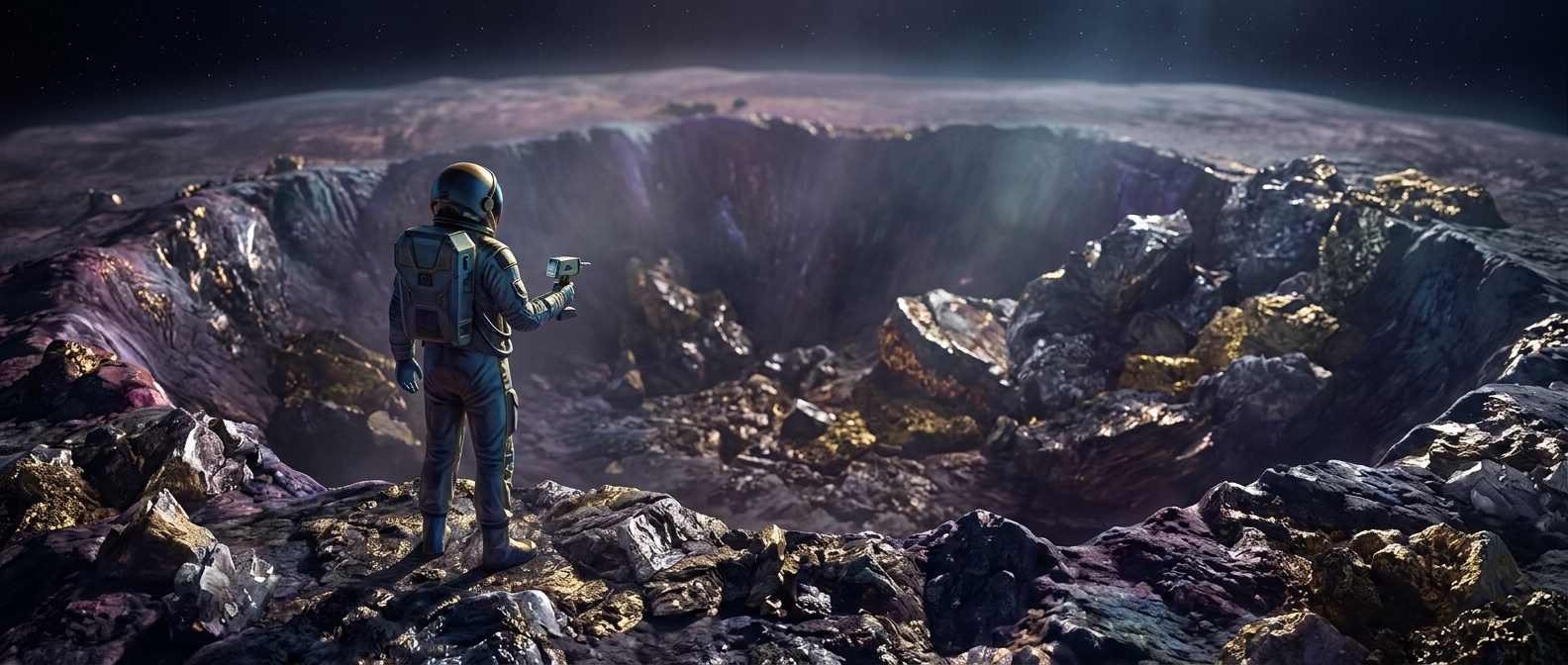
Its rocky surface preserves evidence of a violent past. NASA’s Dawn spacecraft found enormous impact basins near Vesta’s south pole. Collisions blasted material into space, and some of those fragments eventually reached Earth as meteorites.
A distant surface, studied on Earth
Scientists connect Vesta to a group of meteorites whose minerals and chemical signatures resemble the material Dawn observed there. These samples let researchers examine Vesta’s rocks in laboratories, while the spacecraft’s maps show where those rocks sit and how impacts reshaped the surface.
That combination makes Vesta unusually useful: it offers clues to how rocky bodies began to separate into layers, without requiring scientists to drill into a distant world. A meteorite in a collection can be a small piece of the same ancient, battered landscape Dawn photographed from orbit.