Temperature changes how the puck responds
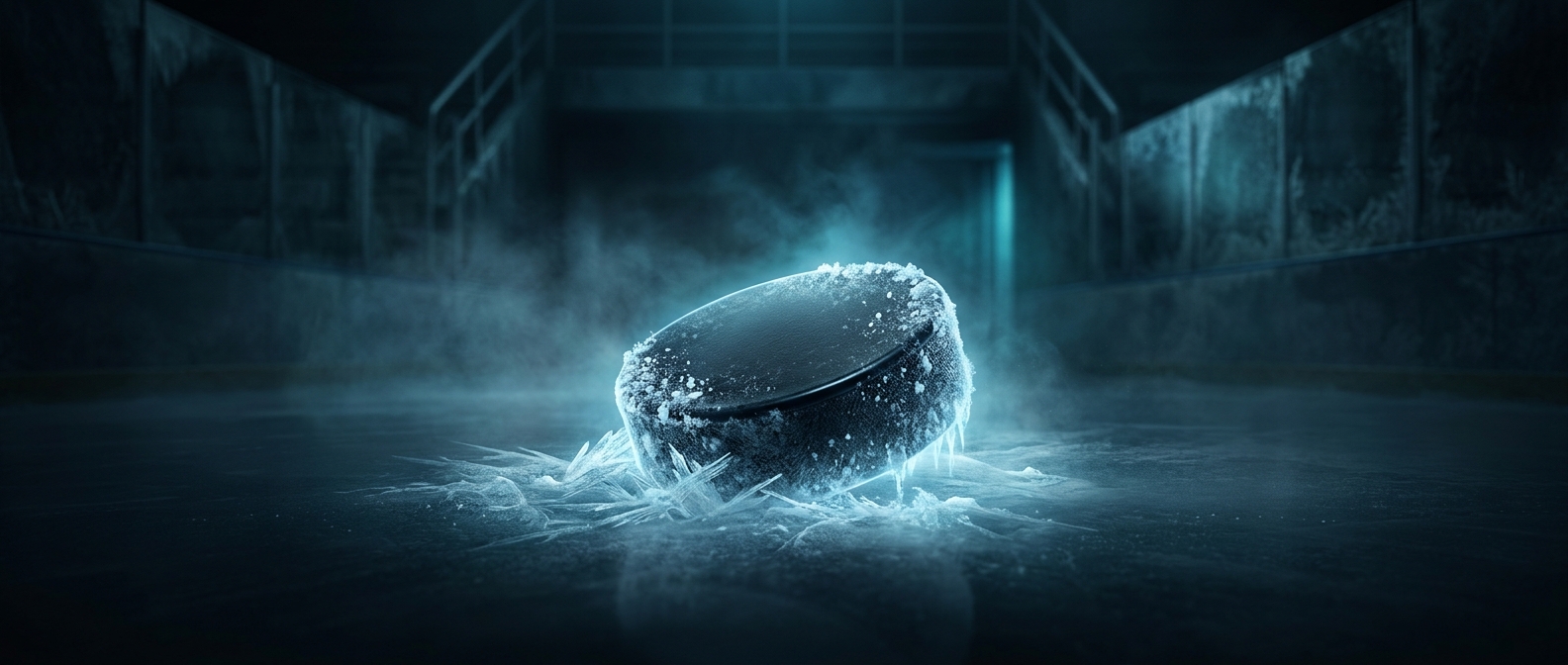
A hockey puck is made from dense vulcanized rubber: rubber whose ingredients have been heated and set into a tough, resilient material. Like many rubbers, it becomes more flexible as it warms and stiffer as it cools. That change matters when the puck strikes the ice, a stick, or another puck.
A warmer puck can compress more on impact and spring back with more energy, sending it into an unexpected hop. A colder puck resists that deformation, so it is more likely to stay low after contact. The difference is especially consequential in hockey, where players need to receive and redirect a fast-moving puck with a blade only a short distance above the ice.
A small control in a fast game
Chilling the puck does not make every bounce predictable. Ice is not perfectly smooth, and collisions can still lift or deflect the puck. But controlling its temperature reduces one source of variation. It also helps keep pucks used at different moments of a game behaving more alike, rather than letting a puck’s response shift as it warms.
That consistency affects more than clean passes. A puck that stays down is easier to handle, shoot, and track, while an erratic hop can turn a routine reception into a scramble. The freezer is therefore part of the game’s equipment preparation: it helps make the puck’s response depend more on the play than on how warm the rubber has become.