Why a glimpse of the future can make things worse
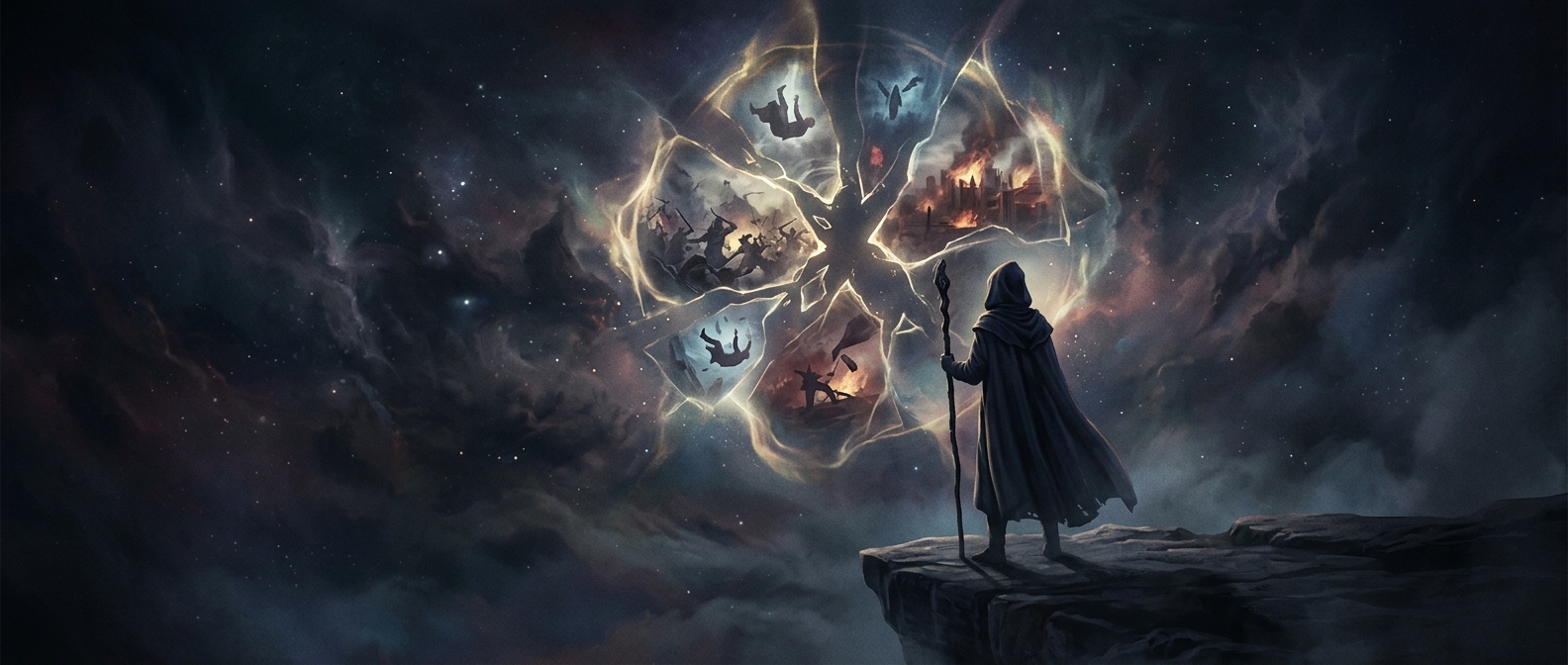
In stories about precognition—the supposed ability to perceive events before they happen—a vision rarely arrives like a clear recording. It is more often a fragment: a face in distress, a crash of sound, or a familiar place seen at the wrong moment. The person who receives it must guess what the fragment means before knowing what came before or after.
That gap turns foreknowledge into a problem of interpretation. A flash of someone falling might suggest an accident, a deliberate attack, or even a scene that has already passed. Acting on the first explanation can create new risks; doing nothing can feel like choosing to let the worst possibility happen.
The spoiler that changes the story
A useful dramatic consequence is the self-defeating warning: trying to prevent the vision may help bring about the event it seemed to predict. Someone hurries to stop a loved one from reaching a dangerous place, for example, and the rushed intervention creates the very confusion or collision the vision appeared to show. The glimpse does not simply reveal a fixed outcome; it becomes part of the chain of events because the character reacts to it.
This also explains why such visions can provoke anxiety without offering control. A warning is useful only when it identifies what is happening, when it will happen, and what action can safely change it. A fragment supplies none of those guarantees. The recipient is left with urgency but no reliable plan.
Uncertainty is the point
As a storytelling device, the vague vision keeps two possibilities alive: the future may be avoidable, yet the attempt to avoid it may matter. The character must make decisions with incomplete information, while the audience watches each choice acquire a second meaning. The most unsettling spoiler is not knowing exactly what comes next—it is knowing just enough to fear that every attempt to find out may help decide.