A Voice That Became a Political Argument
Joan’s reported visions mattered in a kingdom where religion and government were tightly intertwined. She said saints had given her a mission to drive the English from France and help the dauphin, Charles, become king. The dauphin was the heir to the French throne, but his claim was contested, and years of war had left his position precarious.
For Charles, accepting Joan was a gamble—but so was doing nothing. Her certainty offered a powerful story of divine backing at a moment when his cause needed momentum. Churchmen examined her before she was allowed to join the campaign. That process did not make her visions verifiable; it helped officials decide whether she could be presented as a credible religious messenger rather than a threat to Charles’s standing.
A Banner, Not Just a Weapon
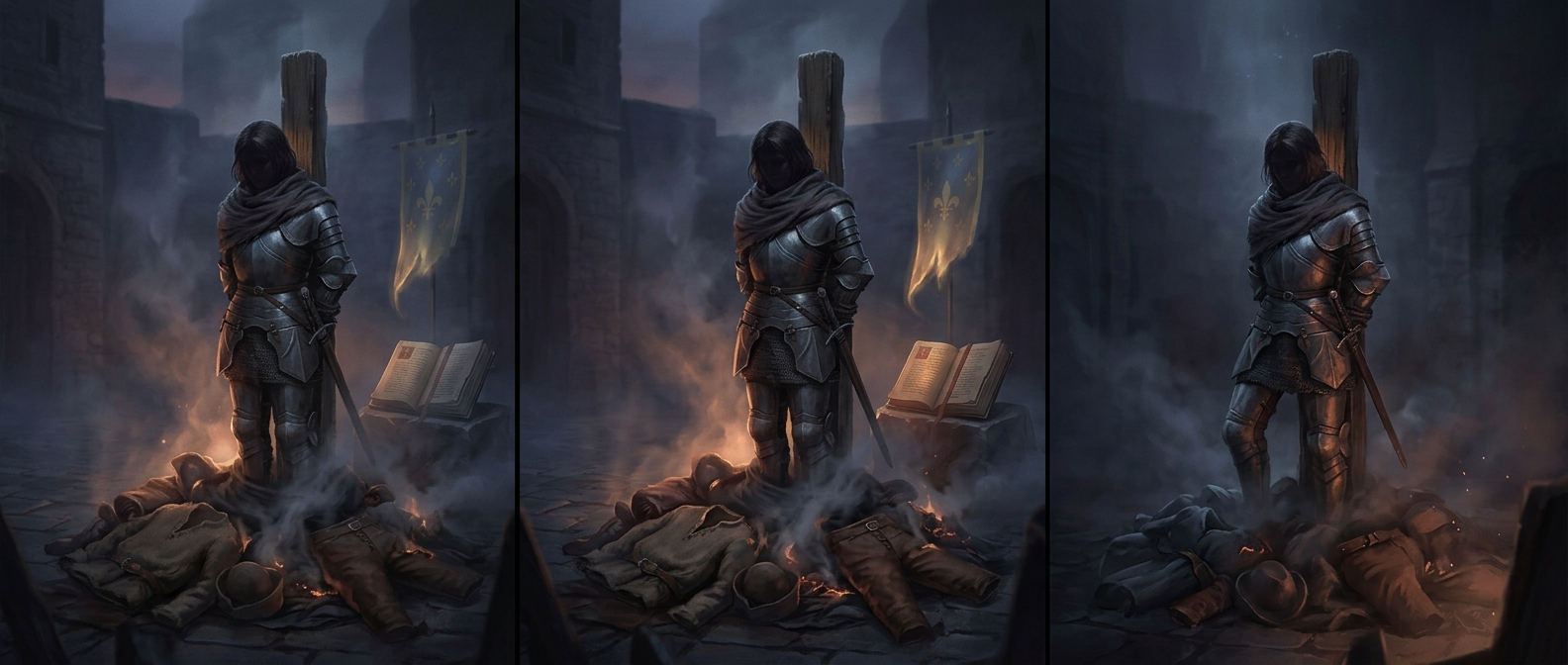
Joan was not an experienced military commander in the usual sense. Her influence came partly from what she represented: a young woman who claimed an unmistakable calling, standing beside an uncertain heir. Her white banner—marked with religious imagery—made that message visible. Carried above the fighting, it could serve as a rallying point and keep attention on the mission she said she had been given.
Armor also made sense in practical terms for someone accompanying troops into danger. But the most consequential result was not a new style of warfare. Joan’s presence helped turn a military effort into a public test of faith and legitimacy. After the French relief of Orléans and Charles’s coronation at Reims, the dauphin became King Charles VII. The banner’s force lay in connecting battlefield hope to the claim that France had a rightful king.