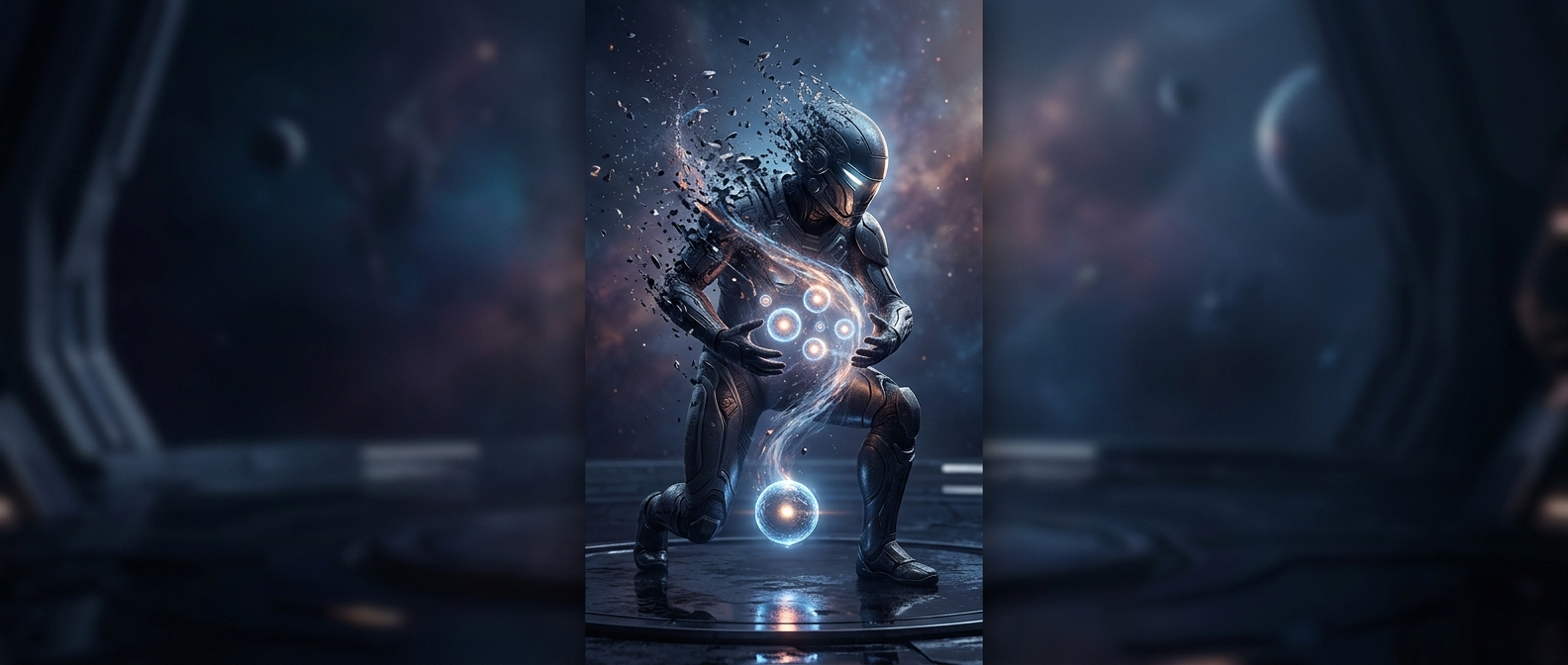
A body becomes a key to the level
The tiny sphere is more than a compact version of the hero. It changes what parts of the world are reachable. A narrow floor gap that blocks a standing figure can become a passage; a low tunnel can lead to a hidden room or a route around an obstacle. The suit’s transformation turns the environment’s geometry into a puzzle: the player must notice not only where a path goes, but whether it is wide enough for the current form.
That creates a useful contrast between two ways of moving. Upright, the hunter can navigate open spaces and meet threats directly. Rolled into a ball, the character trades that broad movement for access to cramped routes. The player is not simply shrinking to save time; they are switching tools to match the space.
One impossible trick, many design choices
In ordinary anatomy, curling up cannot reduce an adult body to a metal sphere. The game sidesteps that problem by making the suit—not the body alone—the instrument of transformation. That lets designers use a striking visual shorthand: instead of explaining every joint and mechanism, the game shows a familiar figure fold into a shape with new capabilities.
The trick also asks level designers to build passages that feel deliberate. A tunnel must be tight enough to make the ball form matter, yet clear enough that players can read where it leads and maneuver through it. If those spaces connect to rewards, shortcuts, or new routes, the transformation becomes part of exploration rather than a novelty. A body that should not fit through the gap becomes a key the player carries from room to room.