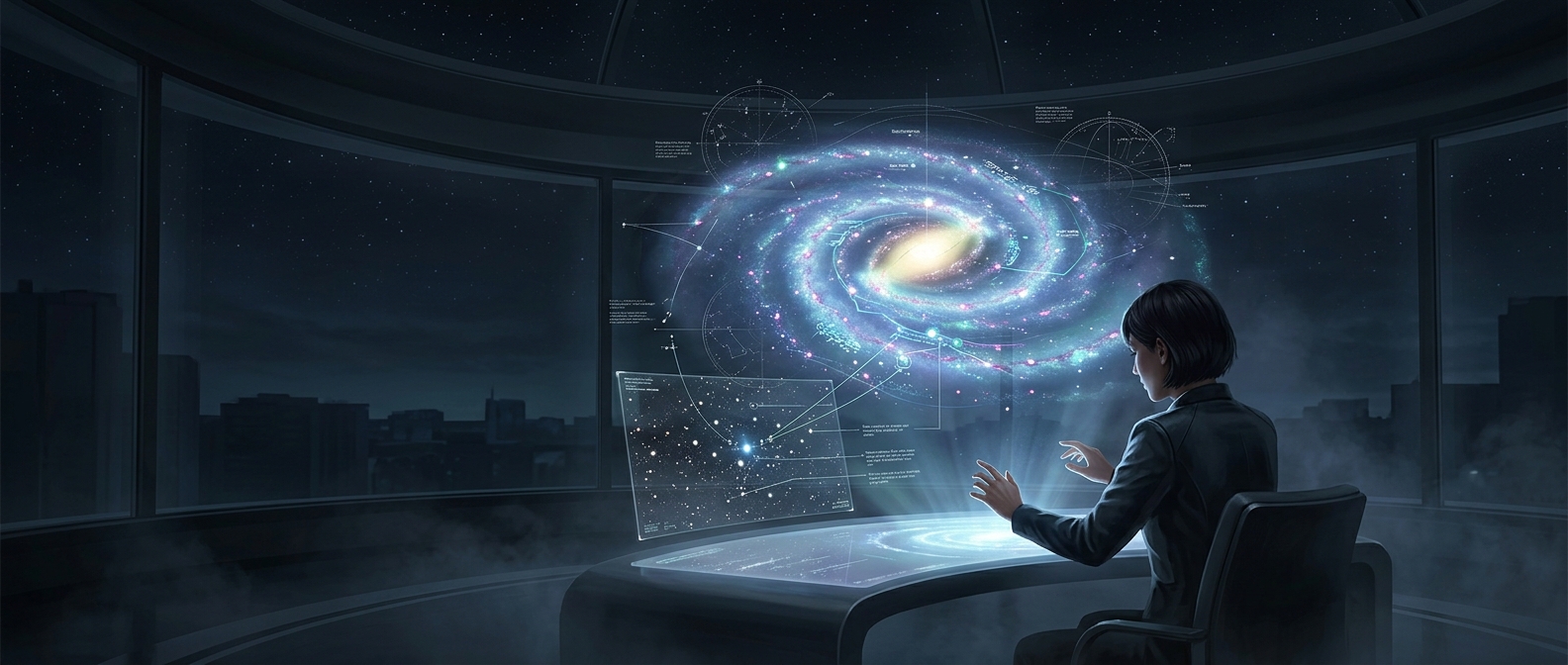
Real star catalogs gave Mass Effect a galactic framework
A science-fiction galaxy can feel arbitrary if every star is placed wherever the story needs it. BioWare’s use of celestial databases gave the Milky Way in Mass Effect a more grounded starting point: real astronomical observations supplied a framework for where stars and other objects belong, rather than leaving the map entirely to invention.
Astronomers do not see the galaxy as a complete, evenly detailed map. They gather observations of individual objects, including clues about their positions and properties. That evidence can make a star system a plausible setting, but it does not automatically reveal whether the system has a habitable planet, let alone a world with an atmosphere, oceans, or life.
Where astronomy ends and world-building begins
The game’s planetary settings therefore combine a real cosmic backdrop with creative extrapolation. Star locations and observed characteristics can lend a system a sense of place; the planets, environments, and conditions needed for exploration and storytelling must be imagined where observations do not provide them. In other words, scientific plausibility is not the same as a confirmed account of what exists in a particular system.
That distinction lets the map do two jobs. It gives the galaxy a recognizable astronomical structure, while leaving room for BioWare to make its worlds serve the game. The result is a setting that feels anchored to the Milky Way without pretending that astronomers have already cataloged every planet Shepard can visit.