How a field becomes a pattern
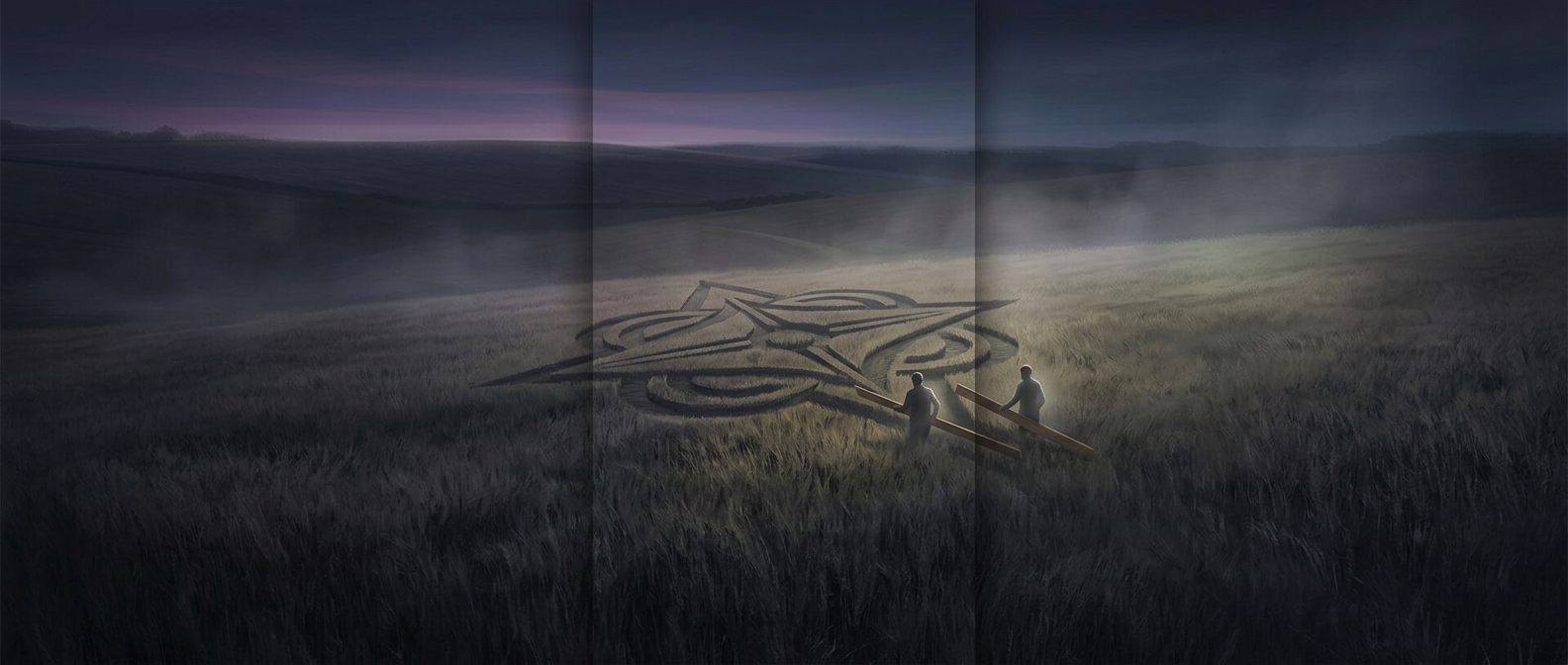
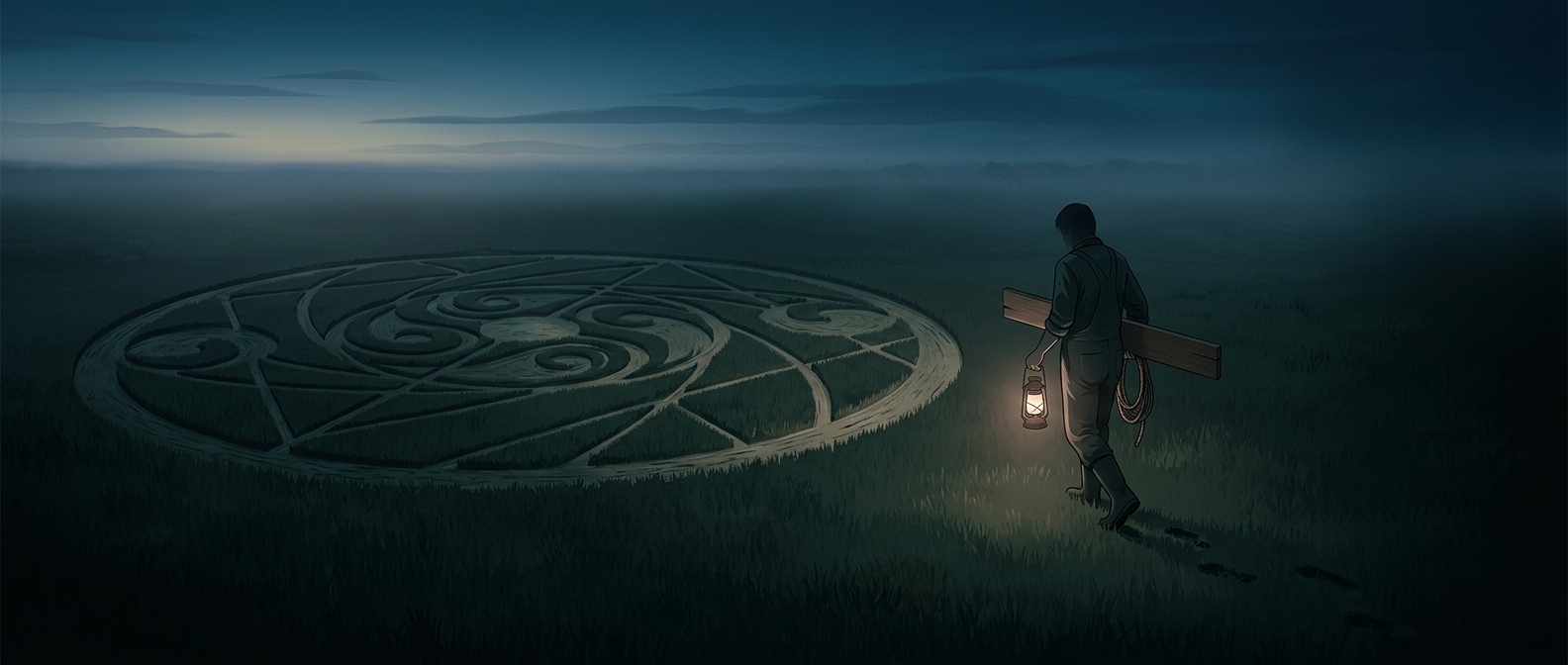
A crop circle is a design made by flattening standing plants, not by cutting a picture into the field. A board pressed across the stalks bends them down; repeated passes create a visible band. From the ground, that may look like a messy patch. From above, broad bands and open spaces combine into crisp shapes.
The apparent precision comes from treating the field like a drawing surface. Makers can mark centers and distances, then use simple guides such as ropes to lay out circles and straight lines. More complex designs take planning: each flattened strip has to meet the next in the right place, or the overall pattern loses its clean outline. That is a practical challenge, not evidence of an extraordinary force.
Why the result can look uncanny
A large geometric design is difficult to read from within the crop. Its symmetry and scale become obvious from a height, while a photograph taken from above hides the people, tools, and measuring work that produced it. That gap between what a visitor sees in the field and what an aerial image reveals helps make a deliberate construction seem mysterious.
The hoax depends on ordinary work being hard to see once it is finished. A board leaves no elaborate machinery behind; the flattened plants themselves are the message. What looks like a mark from beyond the field can be a carefully measured arrangement made by people standing right in it.