How a field becomes a drawing
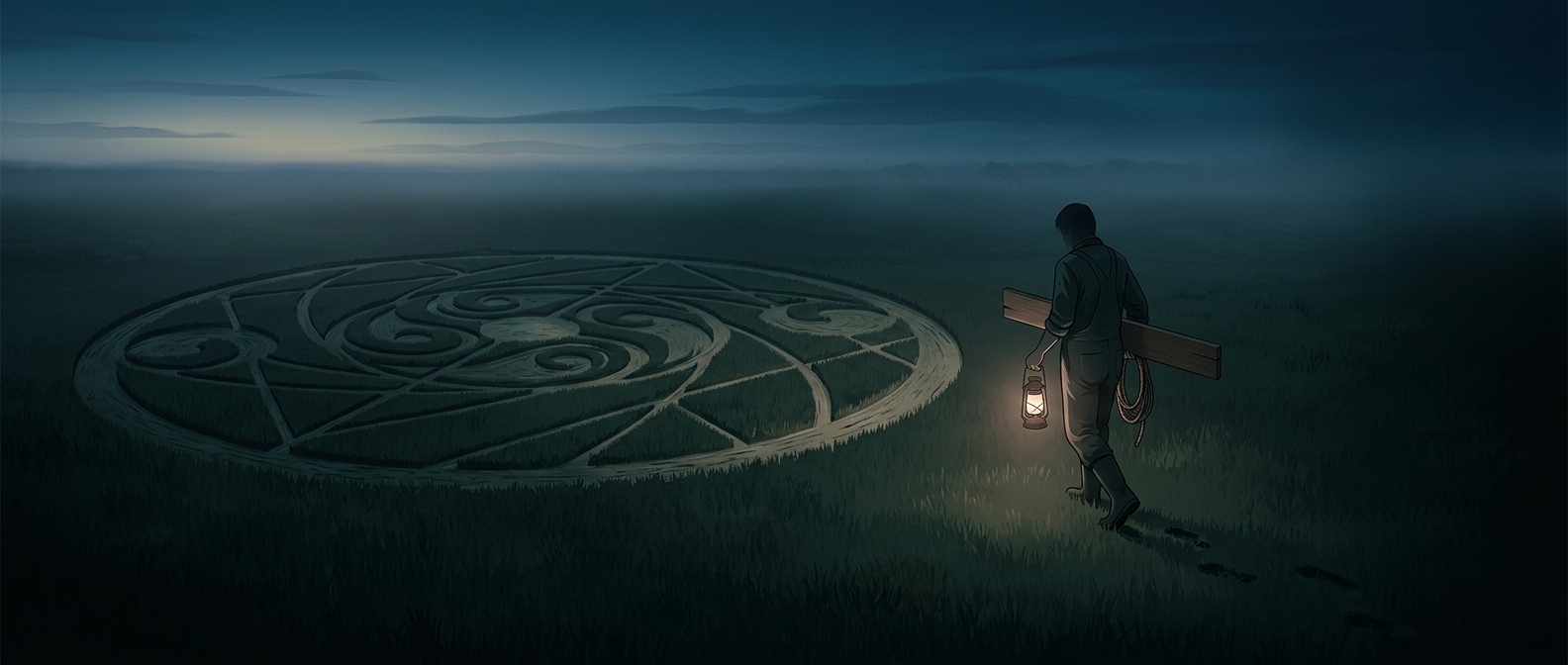
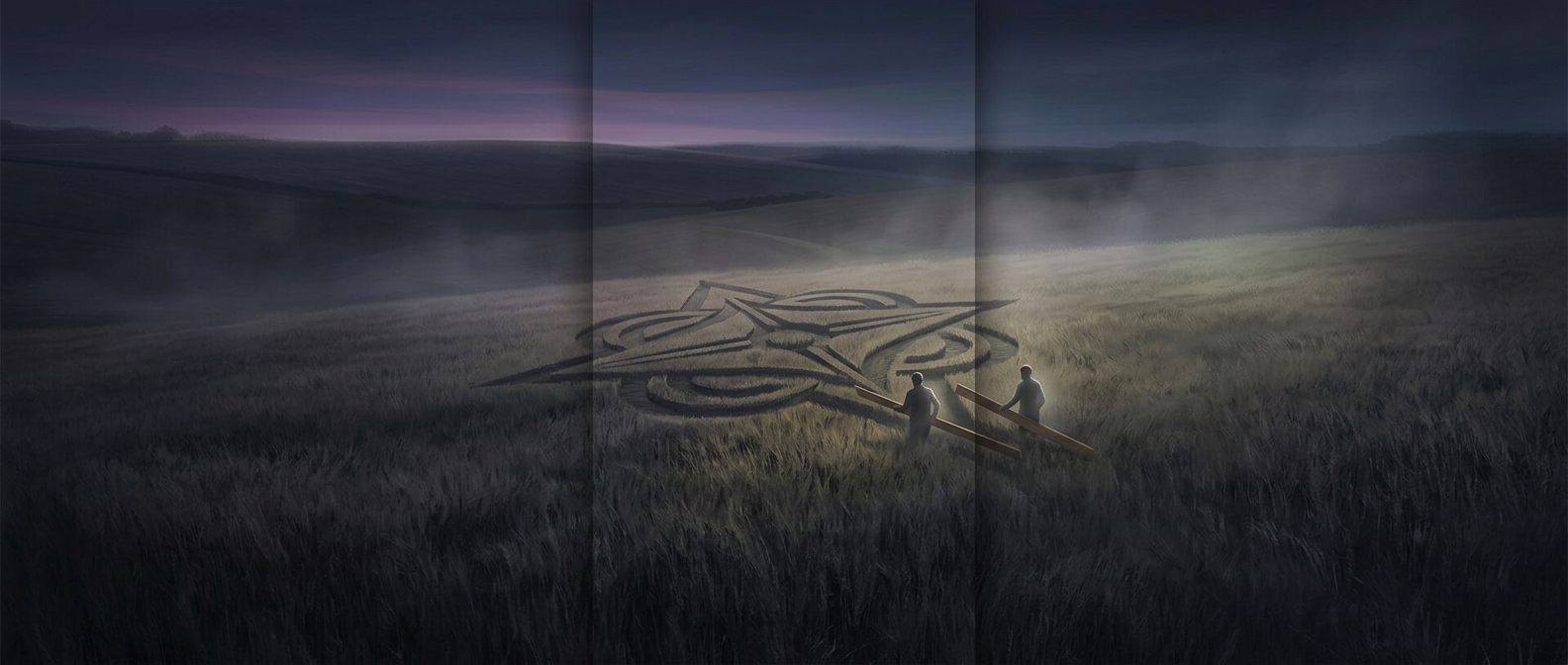
A crop circle is made by pressing standing plants down rather than cutting them away. A board distributes a person’s weight across the stalks; stepping or pulling it through the field bends the wheat into a flattened track. The plants can remain rooted, so from above the marked area reads as a shape against the surrounding upright crop.
The geometry comes from planning. A rope can act as a compass: anchored at a point, it gives a consistent radius for arcs and circles. Straight lines, repeated measurements, and overlapping circles can build more complex designs. The challenge is keeping the marks aligned across a large field, where a small error can distort the overall pattern.
Why the pattern can seem uncanny
From ground level, a flattened strip may look like a path through ordinary wheat. From a higher viewpoint, separate arcs and lines resolve into a precise image. That change in perspective, combined with the scale of the design and the difficulty of seeing the whole field from inside it, can make a human-made pattern feel inexplicable.
The alien interpretation grew from the impression that such order must have come from beyond the people standing in the field. But the visible effect does not require a message or unusual force: ropes establish curves, boards press stalks down, and careful layout turns those simple tools into geometry. The striking part is how dramatically a change in viewpoint can transform ordinary flattened wheat into something that looks like a signal.