How Lemuria became a hidden-world legend
“Lemuria” began as a proposed lost land, not a name from ancient records. In the nineteenth century, some naturalists suggested that a vanished continent might explain the distribution of animals such as lemurs. As geology developed, that explanation fell away—but the name found a second life in Theosophy, a spiritual movement that blended ideas about human evolution with hidden wisdom and ancient civilizations.
Theosophical writers recast Lemuria as a distant prehistoric world and its inhabitants as an earlier stage of humanity. Later occult stories could then turn that broad spiritual history into a more immediate adventure: survivors of a lost civilization, still alive and concealed from ordinary view.
Why Mount Shasta suited the story
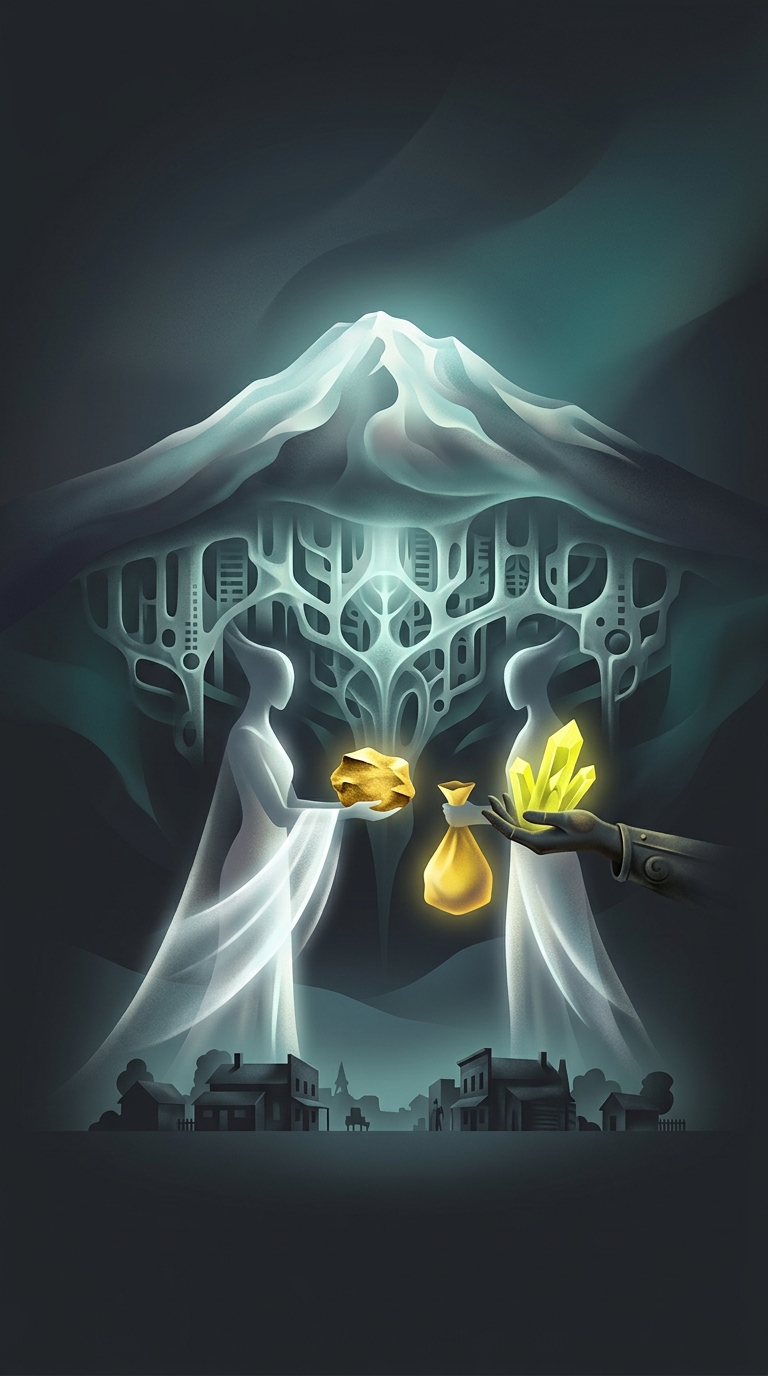
A remote, imposing mountain offers a ready-made setting for tales of a secret refuge. Mount Shasta’s scale and isolation made it easy to imagine an inaccessible world behind the visible landscape. In stories about Lemurians, the mountain became not just a landmark but a threshold between everyday life and hidden knowledge.
Details such as extraordinary height or payment in raw gold gave the beings a recognizable, almost practical presence. The gold nugget, in particular, made the fantastic claim tangible: a shopper might supposedly encounter evidence of an ancient civilization in an ordinary transaction. The legend worked by placing the impossible just outside the familiar world.
A spiritual claim, not a geological one
The story belongs to modern esoteric belief and folklore, not to evidence that a lost continent’s people survived beneath the mountain. Its appeal came from combining an older idea of vanished worlds with a dramatic local setting—and letting listeners imagine that a hidden history was still close at hand.