How a single letter becomes a meditation practice
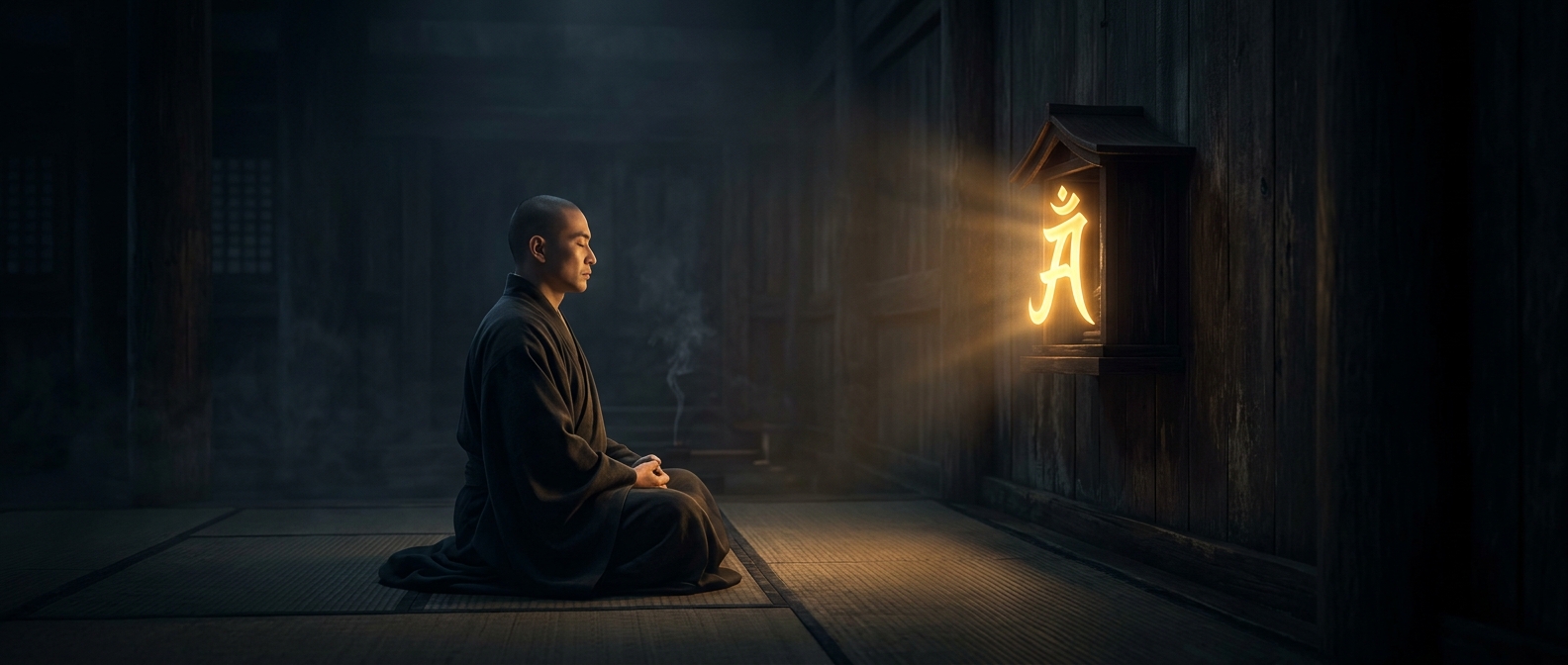
In Shingon Buddhism, the Sanskrit letter A is more than a shape to inspect. It is a seed syllable: a compact sign used to represent a Buddha and teachings associated with that Buddha. In Ajikan, the letter stands for Mahavairocana, the “Great Illuminator,” understood in Shingon thought as a Buddha whose presence encompasses all reality.
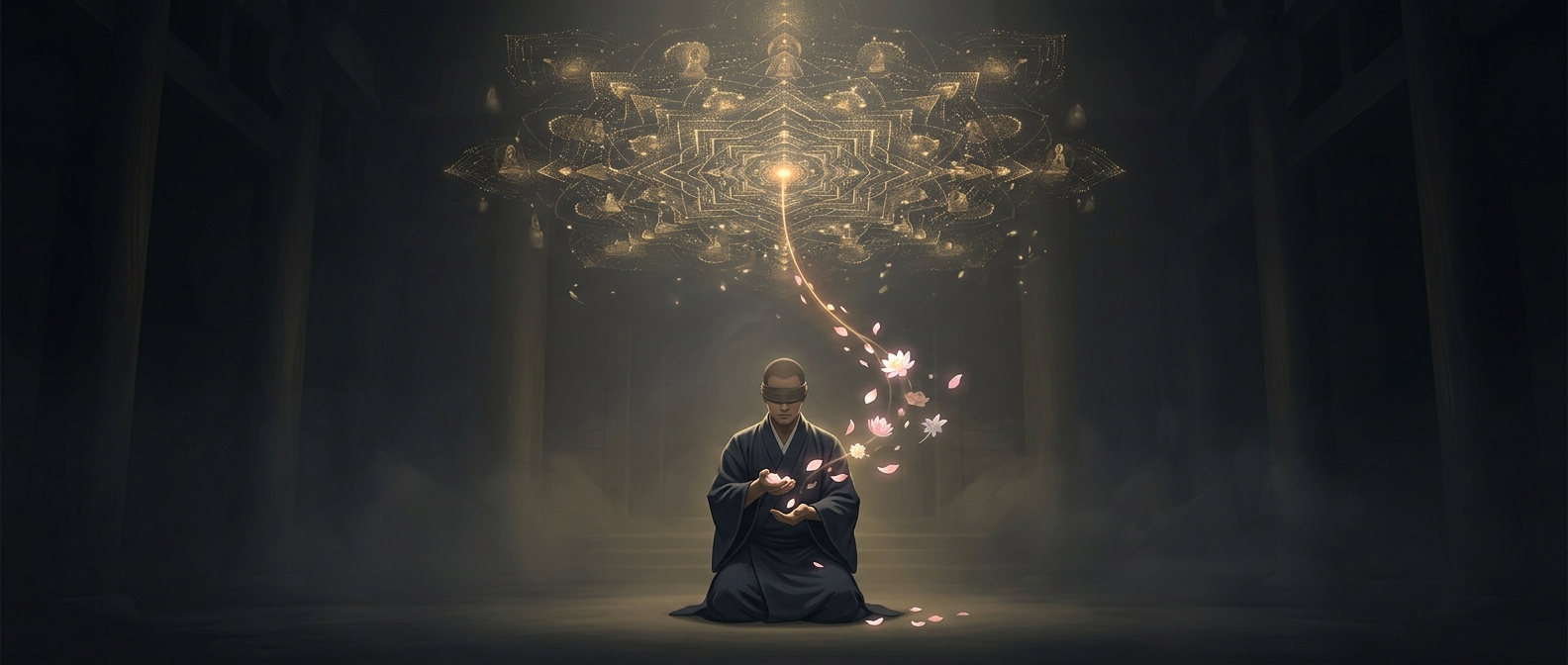
The practice gives the mind a precise sequence to follow. The practitioner attends to the letter set within a lotus and a moon disc, then imagines that image widening until it includes the whole universe. Finally, the image contracts and is brought into the heart. The movement from small to vast and back is not just a visualization trick; it expresses a central Shingon idea that the practitioner and the Buddha are not ultimately separate.
From looking to identification
A fixed image helps gather attention, while the imagined expansion changes the scale of what the practitioner is contemplating. Instead of treating the self as an isolated observer looking at a sacred object, the practitioner rehearses a different relationship: the Buddha’s enlightened reality fills the cosmos and is also present within the self.
Kukai, the monk who founded Shingon Buddhism in Japan, is closely associated with this tradition of esoteric practice. The story of enlightenment through the letter A captures its central aim: not merely to think about awakening, but to use a sacred form and disciplined imagination to experience oneself as united with the cosmic Buddha.