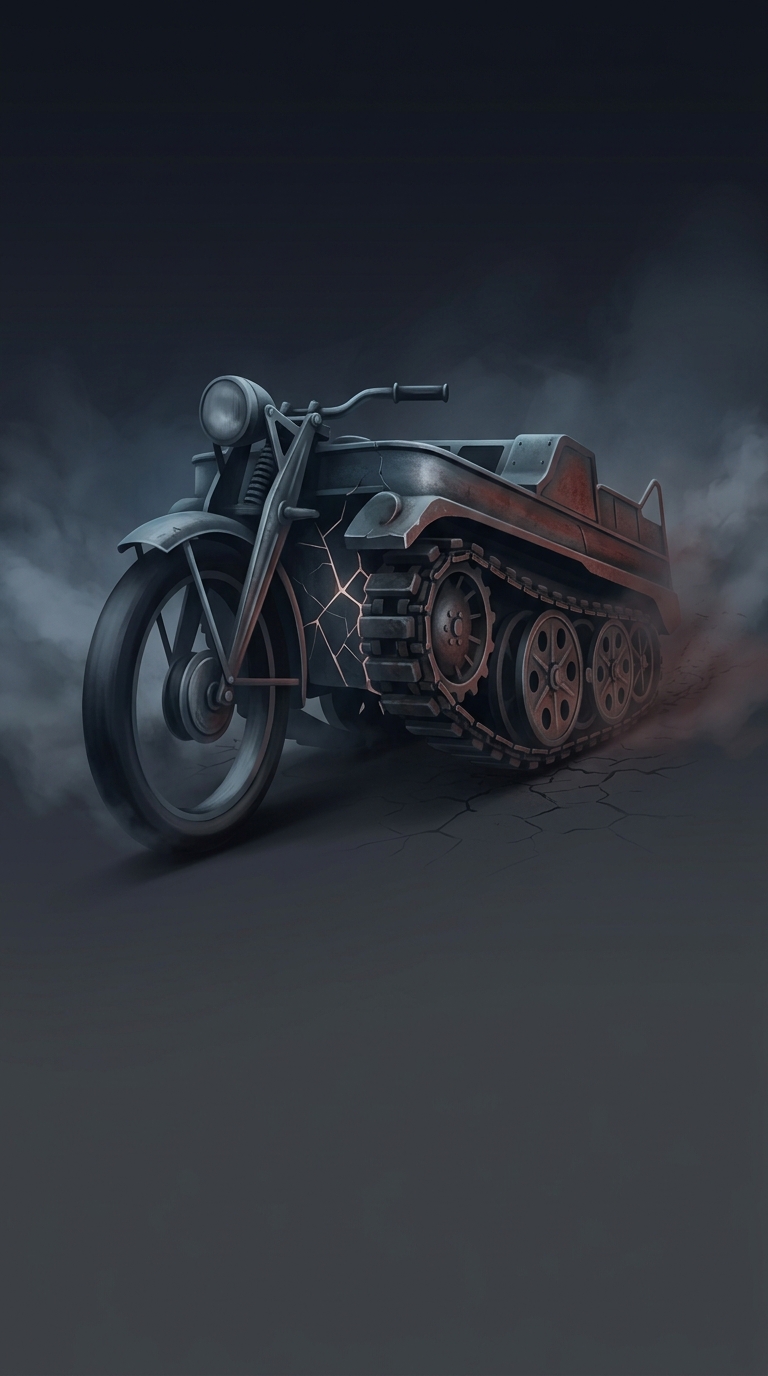
Why the Kettenkrad Had a Motorcycle’s Front End
The Kettenkrad was built to solve a problem that neither a motorcycle nor a small tracked vehicle handled well on its own. A motorcycle could steer quickly on firm ground but struggled in mud; tracks could grip soft terrain but made a compact vehicle harder to steer. The hybrid put a motorcycle-style front fork and wheel ahead of a tracked rear section, giving the driver familiar handlebars and the tracks the traction to cross rough ground.
The front wheel handled ordinary steering. When a turn grew tighter, the steering system also braked one track, helping pivot the vehicle. That combination made the machine more maneuverable than its tank-like rear end might suggest, though it was not simply a motorcycle with extra grip: tracks added weight, mechanical complexity, and a much different ride.
A Specialized Vehicle Found More Uses
Its compact shape suited the idea of carrying equipment and personnel where larger vehicles could not easily go. But in wartime, a vehicle’s value depended on what units needed, not only on the job its designers had in mind. The Kettenkrad could tow loads such as light artillery and carry communications cable into terrain that wheeled vehicles might find difficult.
Those tasks relied on the same feature that made the design unusual: a small machine could bring tracked traction into narrow or soft-ground routes without requiring a full-sized tank. The Kettenkrad’s lasting role was therefore less about its resemblance to a motorcycle than about how that front wheel and tracked rear end let it serve as a compact hauler and support vehicle.