When a ring sounded like a warning
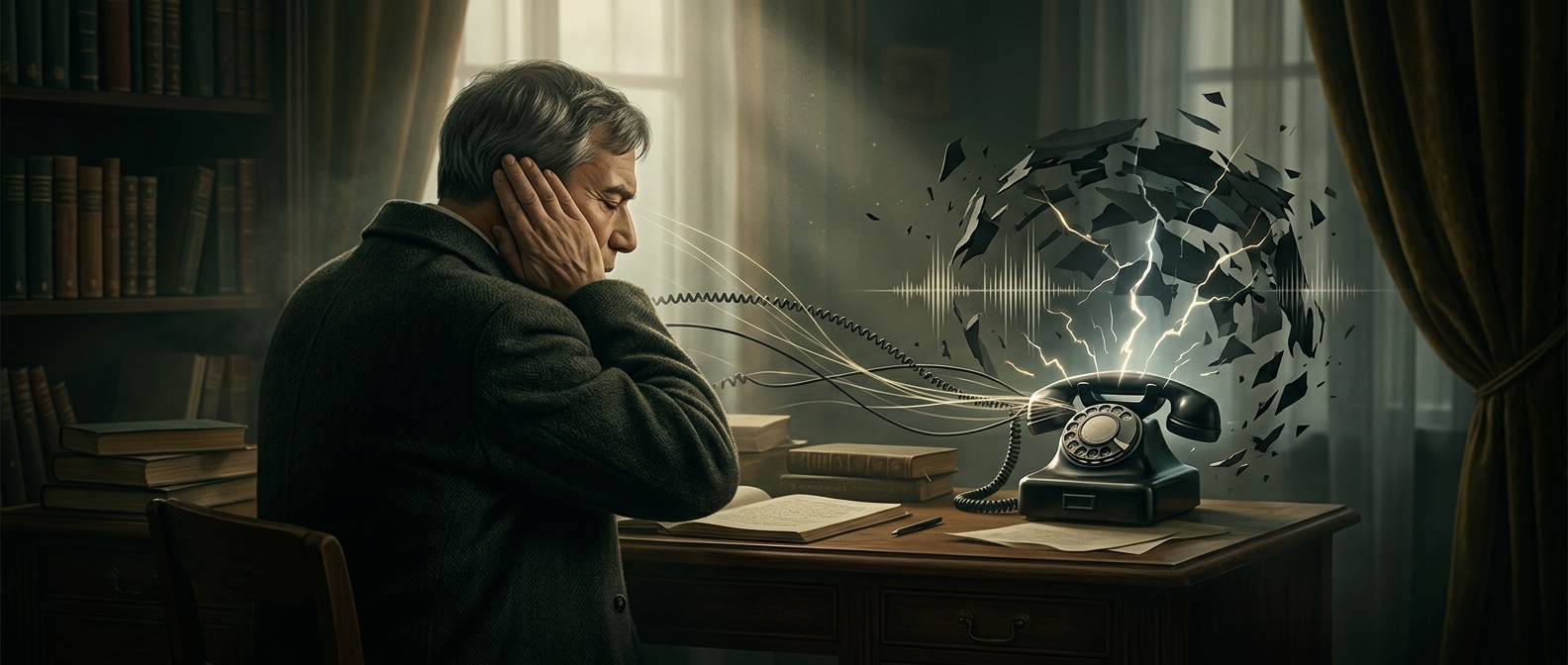
A telephone rings before its owner knows who is calling. That small delay can turn an ordinary device into a source of dread: the sound announces that something is coming, but gives no clue whether it is welcome. For Boris Pasternak, the receiver was not a neutral tool for conversation. He reportedly would not touch it and left the room when it rang, expecting terrible news.
The weight behind the interruption
Pasternak’s fear is striking in the context of his later life as a Soviet writer under intense public and political pressure. After Doctor Zhivago brought him international attention, the controversy surrounding the novel and his 1958 Nobel Prize made sudden contact feel capable of carrying serious consequences. That context helps explain why a ring might have seemed ominous, though it does not establish exactly what he expected each call to bring.
The telephone’s special power was its uncertainty: unlike a letter, it offered no time to prepare for its contents. For Pasternak, even before anyone spoke, the ringing itself could make bad news feel present.