Cooling depended on gases that could harm people
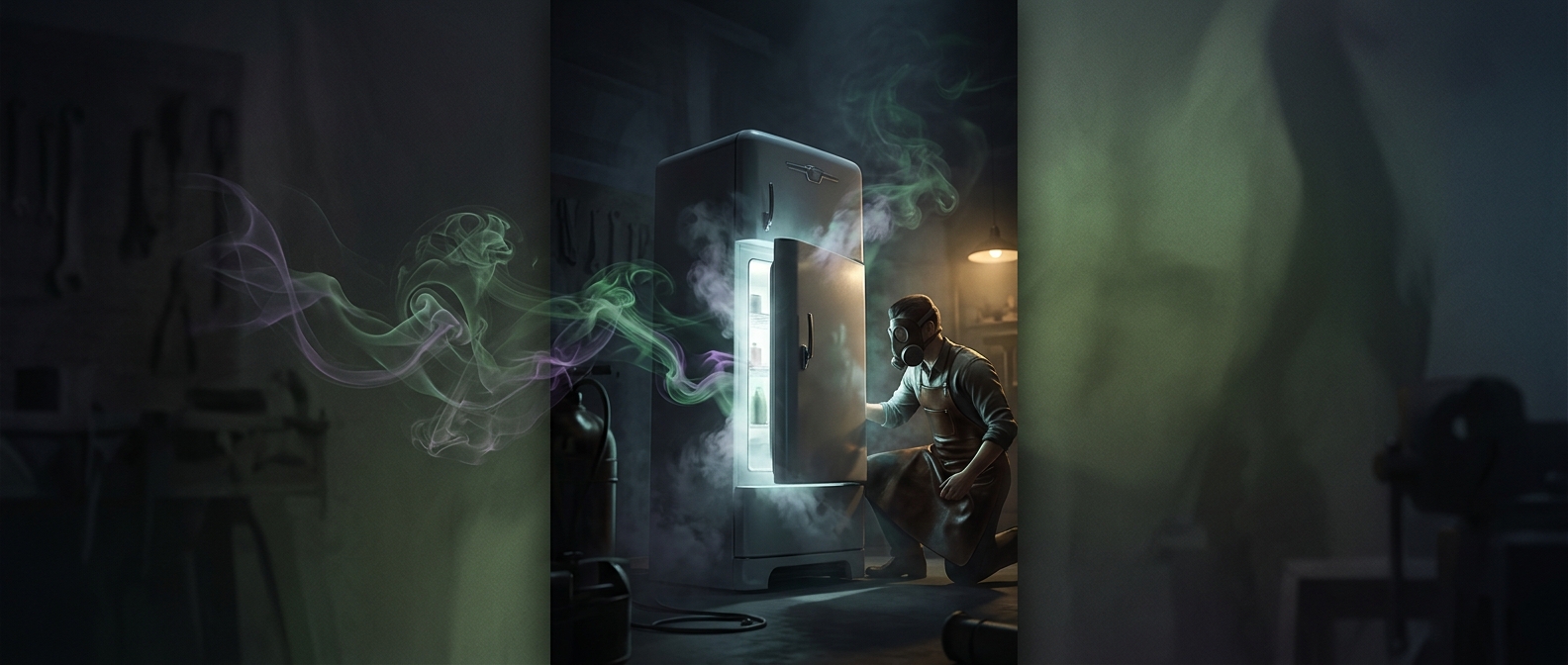
Early mechanical refrigerators worked by circulating a refrigerant: a substance that absorbs heat as it evaporates and releases that heat when compressed back into a liquid. The cycle let a machine move heat out of an insulated cabinet, but the refrigerants available to early builders were not benign. Ammonia and sulfur dioxide, for example, could be dangerous to breathe if they escaped.
A leak could turn a household machine into a hazard
Refrigeration systems relied on sealed pipes and joints. If one failed, refrigerant could enter the room instead of staying inside the cooling circuit. In a kitchen or other enclosed space, that made a leak more than a repair problem: it could expose people nearby to a poisonous gas. The risk was especially serious because refrigeration equipment was moving from industrial settings into homes, where occupants were not trained to handle chemical leaks.
Safer cooling brought a new tradeoff
Manufacturers had reason to seek refrigerants that were less dangerous in everyday use. In the twentieth century, synthetic refrigerants such as chlorofluorocarbons became popular partly because they were much less toxic than earlier options. That reduced one immediate hazard, but later brought a different environmental cost: some of these chemicals damage the ozone layer when they escape into the atmosphere. The history of the refrigerator is therefore also a history of changing tradeoffs—first making cooling practical, then making its working fluids safer for people and the planet.