A Page Had to Be Built Letter by Letter
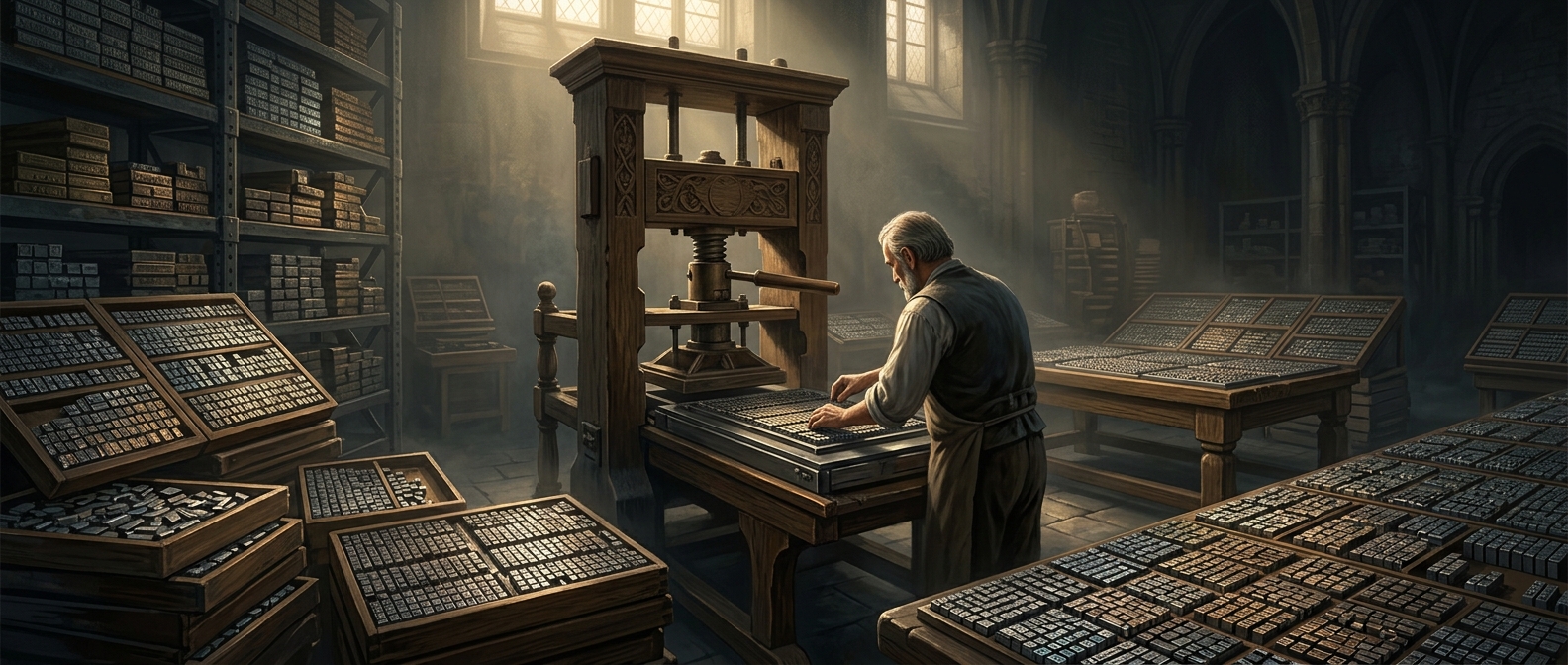
A printer’s “type” was a small metal piece bearing one raised character: a letter, numeral, or punctuation mark. The compositor—the worker who assembled the page—picked pieces from a type case and arranged them in a composing stick, a handheld frame that kept each line together. Because the raised letters would print in reverse, the compositor had to read and place them backward.
The challenge was not just finding the right letters. Lines had to fit a set width, so printers adjusted the spaces between words and used blank pieces of type to fill out the page. They then transferred the lines to a larger frame and locked them tightly in place. That locked assembly, called a forme, held the page’s type steady under the press.
The Press Reused the Machinery, Not the Setup
Once the forme was ready, the press could make repeated impressions from it. That was the breakthrough: the printer did not have to copy every page by hand. But a new page—or even a corrected line—still required arranging the type again. A dropped or misplaced letter could disrupt the line, and a late correction meant reopening the carefully locked forme.
Metal type was reusable, which made each letter valuable. After a print run, workers generally took the pieces apart and returned them to the cases so they could be used in other pages. Keeping a book’s pages permanently assembled would tie up a large supply of type. The press accelerated reproduction; the slow, skilled work of composing and resetting pages remained.