A handle built into a desktop computer
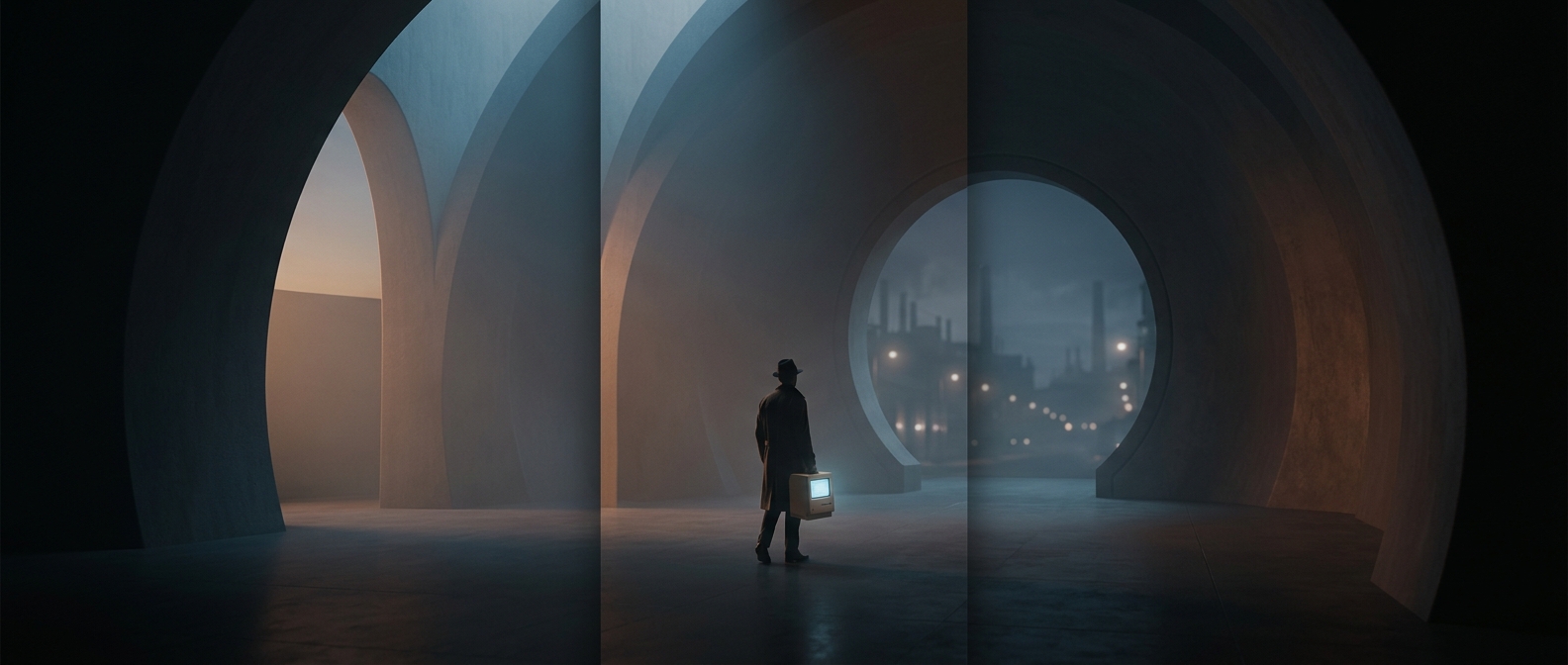
The original Macintosh put its screen, processor, and disk drive in one compact case. A recessed handle at the top made that case easier to lift and move—a practical answer to a machine that was smaller than many office computers but still substantial. Its shape invited a person to pick it up rather than treat it as a permanent piece of furniture.
The handle also helped communicate what made the Macintosh different: it was a complete personal computer, designed to fit into an ordinary workspace rather than require a separate monitor and a sprawling collection of components. The keyboard and mouse were separate, however, and the computer still needed a power connection. Carrying the case did not mean being able to use it anywhere.
Portability had limits
In the early 1980s, “portable” did not yet mean a battery-powered computer you could open on a train. The Macintosh’s handle made relocation easier—from one desk to another, for instance—but its roughly 16-pound weight and dependence on a wall outlet kept it tied to a place with power. The distinction is part of the design’s charm: the handle promised mobility in a desktop era, without pretending the machine was a laptop.
It was a small piece of industrial design with a clear job: make a computer feel liftable. The power cord, once plugged in, still decided where it could work.