How a falling weight became a measured hour
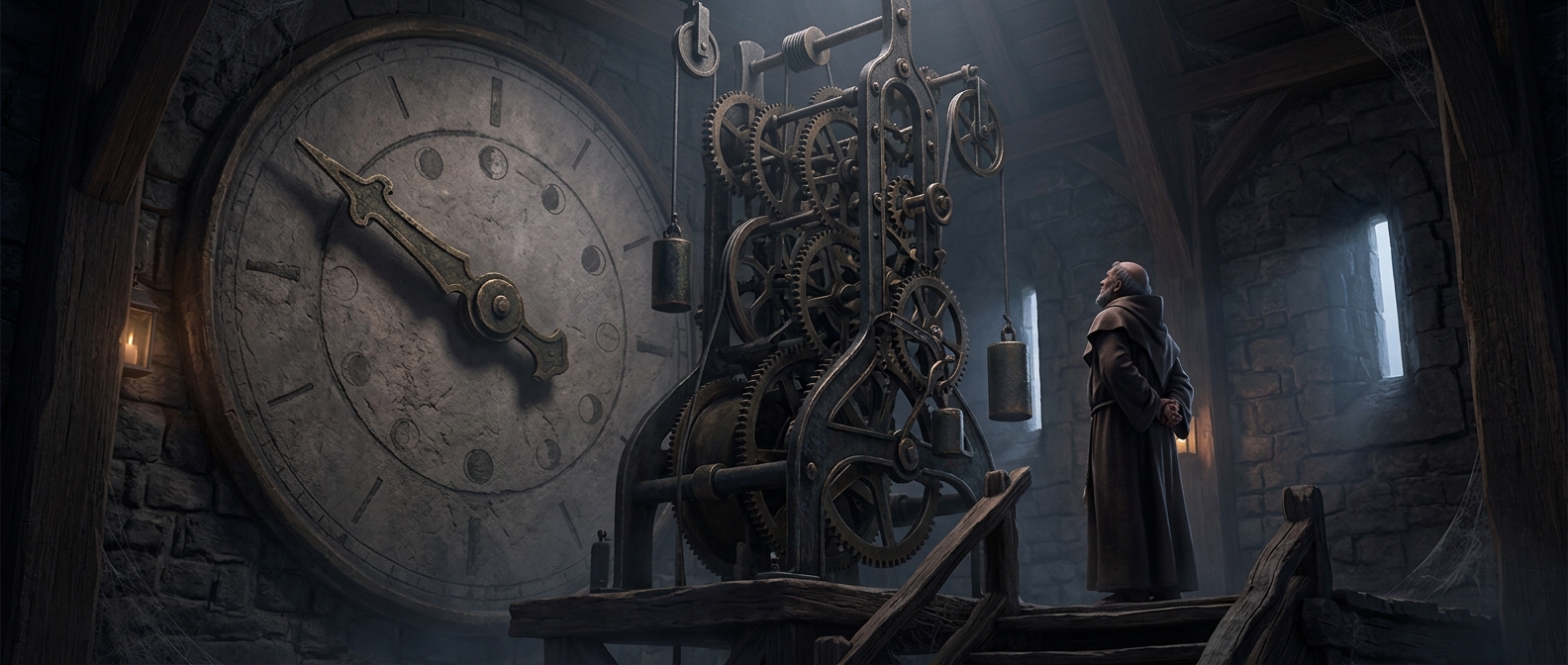
A hanging weight supplied a clock with energy, but it did not by itself make the clock keep time. Left unchecked, it would simply drop and spin the gears quickly. The crucial control was the escapement: a mechanism that let the gear train advance in small, repeated steps rather than run freely.
In many early mechanical clocks, a toothed wheel pressed against a part that alternately caught and released its teeth. Each release allowed the weight to descend a little and the clock’s hands to move. The escapement’s repeated motion set the pace; the weight kept supplying the force needed to continue it. Later designs often paired this mechanism with a pendulum, whose regular swings helped regulate the timing.
Why winding was part of keeping time
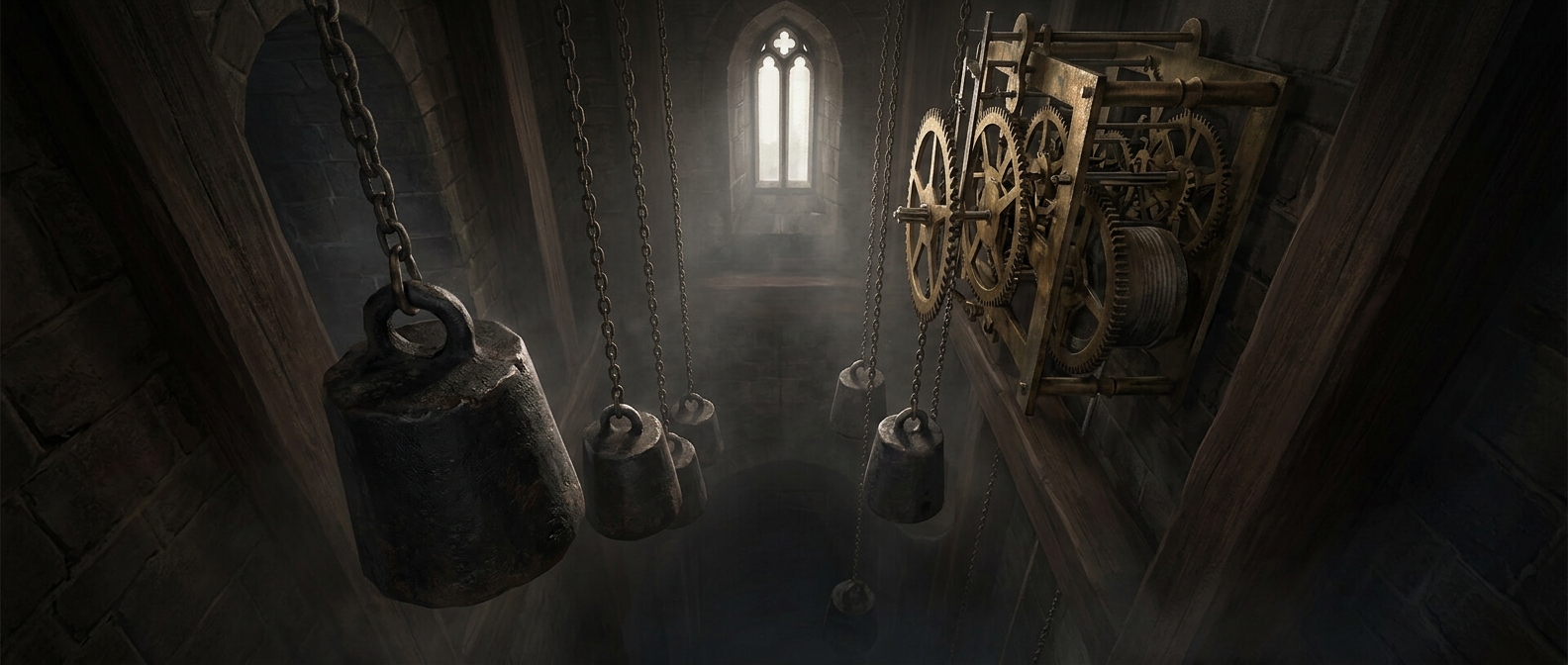
As the weight descended, it drove the mechanism until it ran out of room. Someone then had to turn a crank or otherwise lift the weight back up, storing energy for the next run. That task was not an incidental chore: without it, the clock had no power source.
The arrangement suited large clocks in towers and public buildings, where there was space for a long weight drop and people could tend the mechanism. It also made a clock’s limits visible and practical: its running time depended on how far the weight could travel before reaching the floor. The clock’s steady ticks were therefore the result of two things working together—a falling weight that provided energy and a mechanism that rationed it, one step at a time.