A clock built to keep the hour
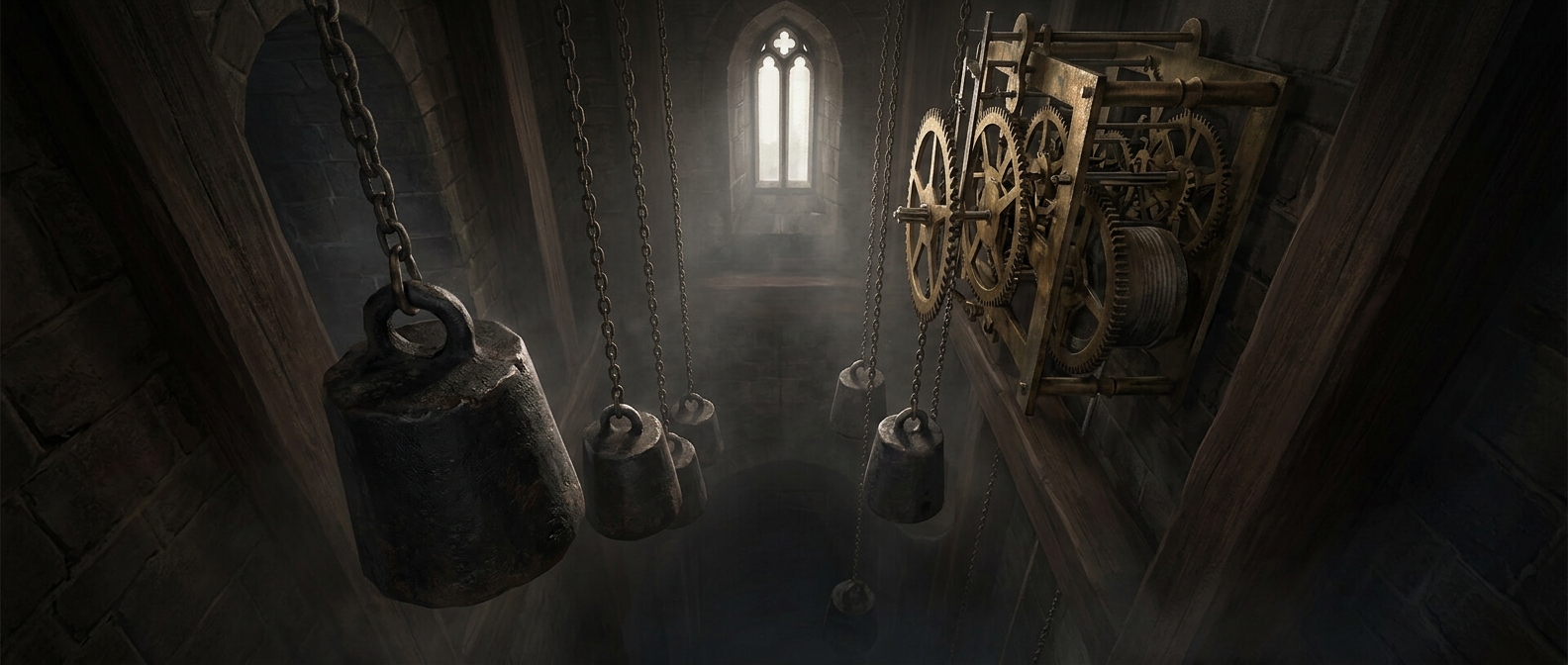
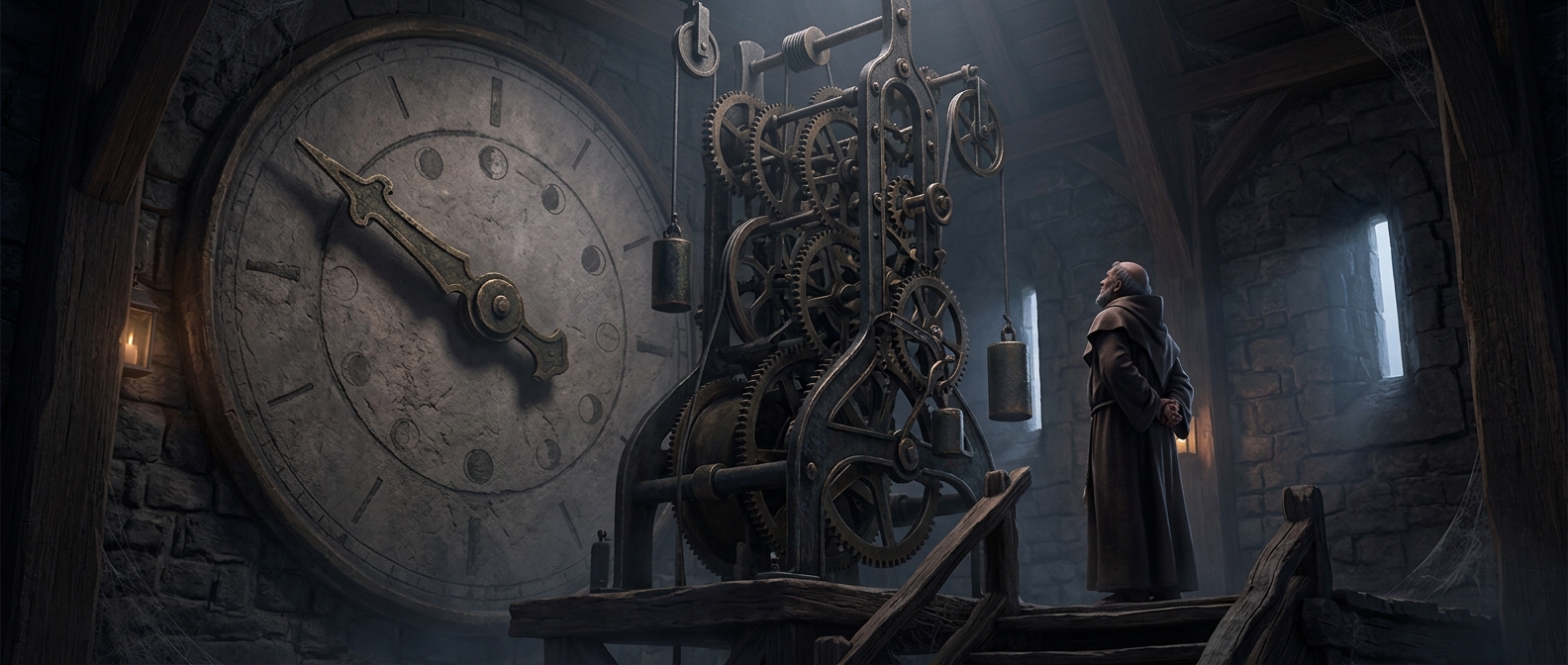
Early mechanical clocks were designed chiefly to make the hour public. In a tower, a moving hand could show the time while a mechanism sounded a bell, telling people across a town when to gather, work, or mark a religious service. The hand moved as gears turned, but the clocks’ mechanisms were not usually precise enough for minute-by-minute reading to be useful.
That limitation mattered. A minute hand would have swept around the dial much faster than an hour hand, making small errors in the clock’s rate more obvious. Before clocks could keep time reliably at that scale, dividing the dial into minutes promised a precision the machine could not consistently deliver.
Reading the space between marks
With only an hour hand, the dial still conveyed more than a single number. Its position between two hour marks let a viewer estimate how far the next hour had progressed. The estimate depended on where the hand lay—and on how carefully the viewer judged the interval—rather than on a separate pointer marking minutes.
As clockmaking improved and people had more reason to coordinate activities at finer intervals, minute hands became useful additions. The change was not just a matter of adding another pointer: it reflected a shift in what clocks could reliably measure and what their owners expected them to tell. For early clock readers, “2:20” was not a reading printed by the machine; it was a judgment made from the hand’s position.