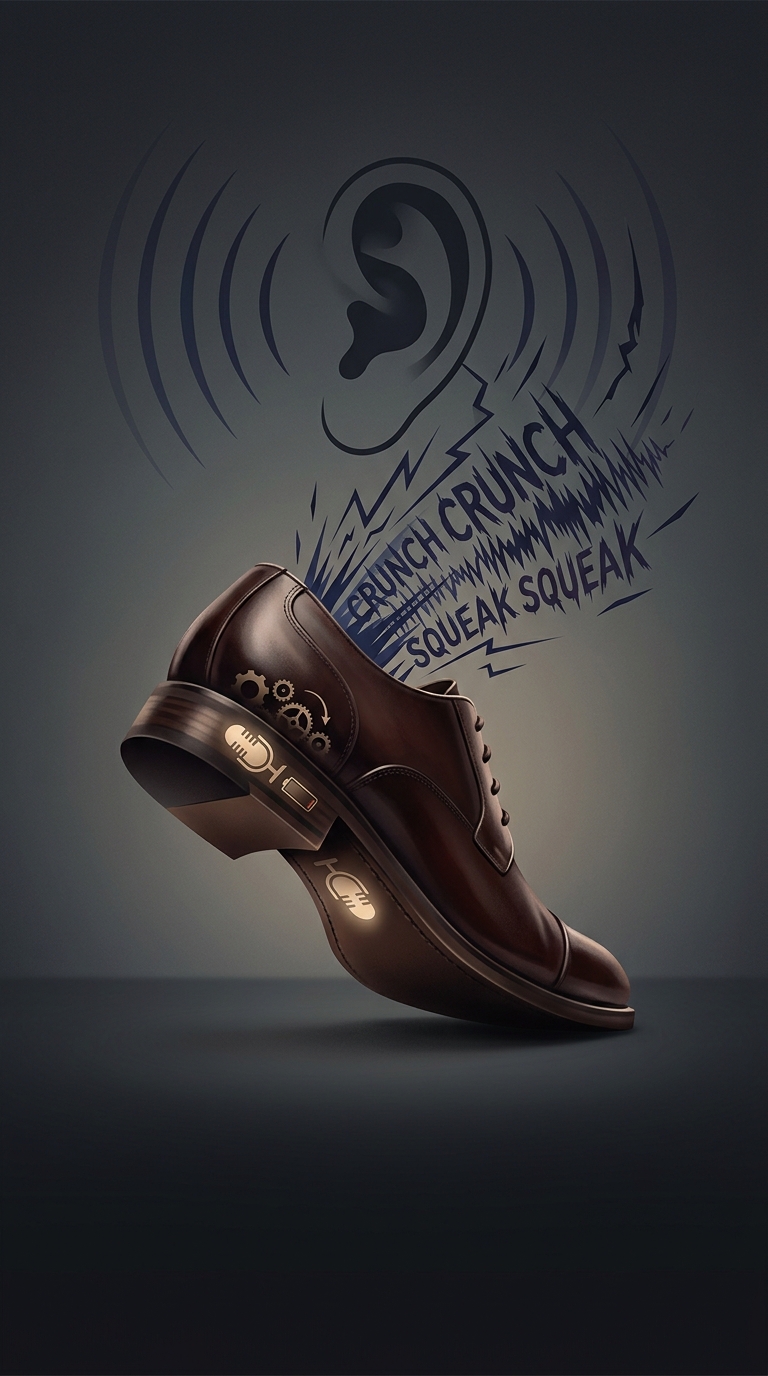
A listening device built into a shoe
A microphone hidden in a diplomatic shoe offered an obvious advantage: it could travel into rooms without looking like a separate piece of surveillance equipment. The heel provided a place to conceal the electronics, while the wearer carried the device along during ordinary movement.
But hiding a microphone in a shoe meant putting it in a noisy, moving environment. A microphone turns sound waves into an electrical signal; it cannot easily distinguish a nearby conversation from the thumps and scrapes produced by the shoe itself. Each footfall could mask speech, and the heel’s position close to the ground made the problem harder still.
Concealment came at a cost
The device also needed a power source small enough to fit inside the shoe. Miniature batteries could keep the package discreet, but their limited capacity meant they drained quickly. A larger battery might have lasted longer, yet it would have made the shoe bulkier and the concealment less convincing.
That left the operators with a device that was difficult to hide well and difficult to use well at the same time. Even when it was successfully planted, short battery life limited how long it could listen, while footsteps could ruin the recording moment by moment. The heel concealed the microphone, but every step made the concealment audible.