How abstract art became a Cold War argument
Abstract expressionism offered a striking contrast to the art promoted by the Soviet Union. Soviet cultural policy favored images that were legible, socially purposeful, and supportive of communist ideals. American painters such as Jackson Pollock instead made works that could look unruly or difficult to interpret. To U.S. officials, that very openness could be presented as evidence that artists were free to take risks—even when viewers disliked or did not understand the results.
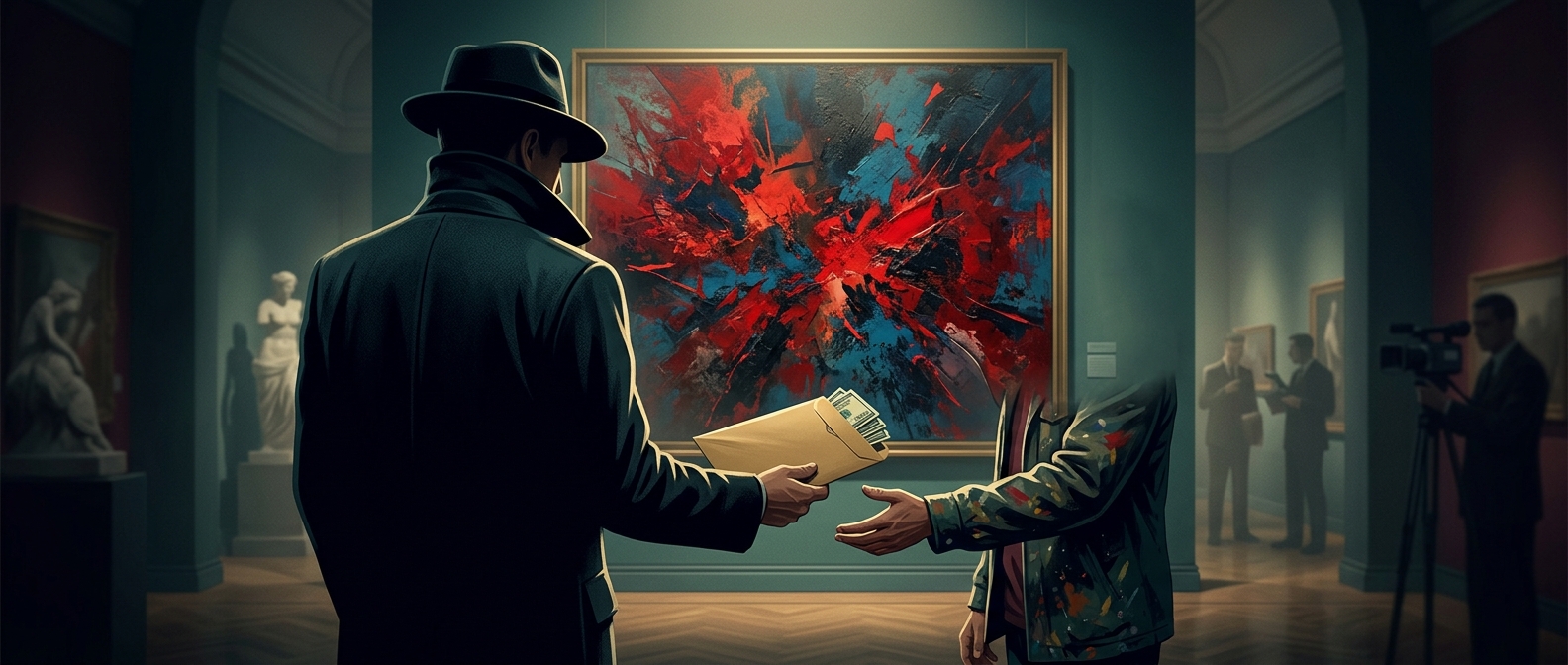
The CIA’s role was not simply to pay Pollock or other painters to produce particular works. Its cultural influence operated through intermediaries: organizations and cultural programs that received covert support and helped circulate American art abroad. This let the agency promote exhibitions and ideas while keeping the government’s hand out of view.
Why secrecy mattered
A government-sponsored campaign for “free” art would have weakened its own message. If audiences learned that Washington was promoting the paintings, the work could appear to be official propaganda—the very kind of state direction it was meant to contrast with. Keeping the support indirect helped preserve the impression that American artists and cultural institutions were acting independently.
That distinction also meant artists did not need to know they were part of a geopolitical strategy. Their work could serve a political purpose without being commissioned to express a political line. The paintings remained products of artistic choices, while exhibitions and cultural networks gave them a second life as evidence in an international contest over freedom.
A political use without a political script
The strategy was useful precisely because abstract expressionism did not deliver a tidy message. Its variety and difficulty could suggest that no single authority dictated what American art had to look like. The CIA sought to promote the conditions the art seemed to represent, not to make every painting a coded statement. That gap between an artist’s intent and a government’s use of the work is what made the campaign possible—and what made the episode a reminder that cultural freedom itself can become a tool of state policy.